
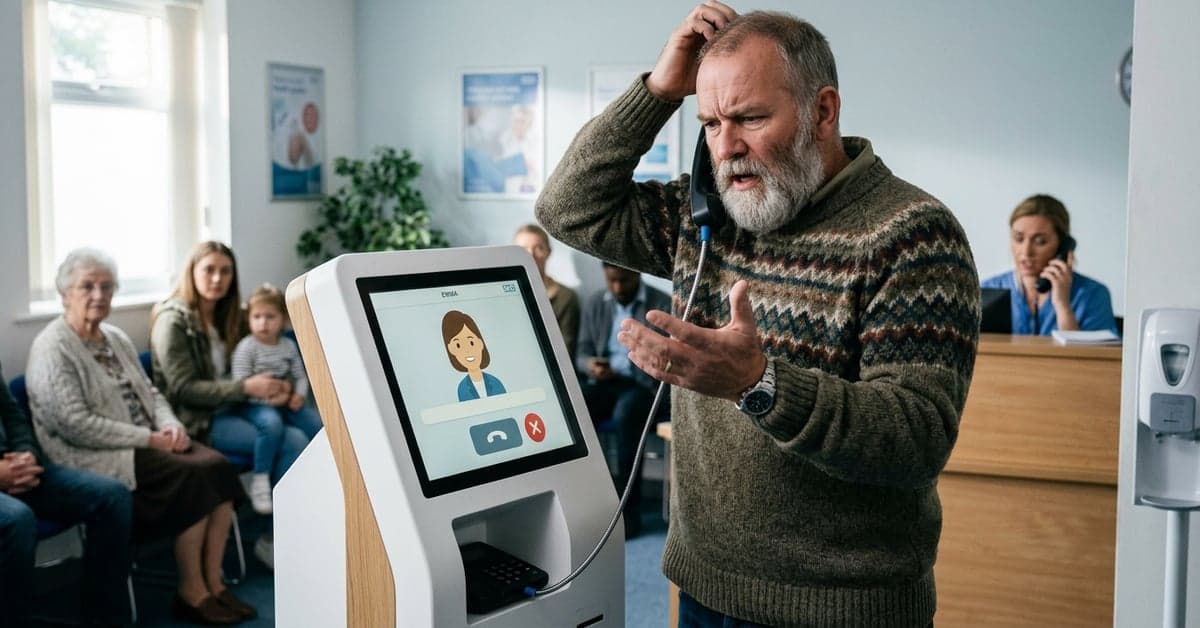
On August 20, 2026, The Guardian reported patients in Rotherham hanging up in frustration as an AI GP receptionist failed to understand Yorkshire accents. The system, branded “Emma,” is said to support 17 languages, yet the local health watchdog told the paper the bot struggled with local “twangs,” forcing callers back to busy phone lines. The BBC’s artificial intelligence topic page also flagged the accent issue, underlining how quickly the story has traveled across the UK’s health debate.
What happened with the AI GP receptionist
According to The Guardian, the virtual receptionist in Rotherham routes patients through a scripted dialogue. When it mishears or fails to parse a response, callers either repeat themselves, abandon the call, or wait for a human. That is an acceptable hiccup in a pilot; it becomes a risk when it blocks access to care. The BBC’s AI news topic listed the same Yorkshire accent complaint, signaling that the problem is not a one-off grumble but a service-impacting fault.
Vendors often demo slick call flows in quiet rooms. Real surgeries sound different. Line noise, hurried speech, and local idioms collide with models trained on cleaner, more standard speech. When that gap shows up at a GP’s front door, the service, not just the software, takes the hit.
Why speech systems miss local accents
Speech recognizers live or die on their data. If training sets skew toward broadcast English or a narrow band of speakers, error rates climb the moment a caller strays from that norm. Research on speech-to-text systems has shown persistent disparities across dialects and demographics; Stanford’s Human-Centered AI group highlighted higher error rates for some speakers and dialects in commercial systems, with safety knock-on effects when deployed at scale (Stanford HAI).
Healthcare adds complexity. Callers use medical terms and colloquialisms in the same sentence. They might be anxious, out of breath, or calling from a noisy bus. Accents vary block by block in northern England. A virtual receptionist built on generic speech models needs careful acoustic tuning, a local lexicon, and guardrails that hand off fast to a human when confidence drops. If a bot hesitates about “ear infection” versus “ear effection,” that is not a minor miscue—it’s a triage error.
These systems also depend on confidence scores that can be miscalibrated. A low score should trigger a human transfer quickly. If thresholds are set too high, the bot keeps asking callers to repeat themselves. That is where patience runs out.
Procurement and testing: fix the rollout, not just the model
Public bodies can avoid these stumbles with better contracts and live testing. Build acceptance criteria around real callers, not lab scripts. Include accent coverage targets based on local demographics. Require vendors to log misrecognitions and publish monthly error reports, redacting personal data. The UK’s data regulator has urged organisations to assess fairness harms in AI deployments; its guidance sets expectations for risk assessment and mitigation in real-world services (Information Commissioner’s Office).
Good governance also needs a playbook for failure. A virtual GP receptionist should have a visible, quick human bypass—press 0, say “human,” or be auto-routed when the model’s confidence dips. That path should be tested live during peak hours. Without it, an access tool turns into a gatekeeper.
Frameworks exist to structure this work. The U.S. National Institute of Standards and Technology’s AI Risk Management Framework lays out a simple pattern: identify, measure, and mitigate risks, then monitor them in production. Even if the framework is American, the steps translate well to UK health settings: track accent coverage as an operational metric, not a demo talking point.
What NHS leaders should ask vendors now
- Show local results: error rates by accent cluster from call logs on our phone lines, not a national average.
- Demand a fast-fail path: automatic human transfer on low confidence within two prompts.
- Insist on redress: if the bot blocks access, how will the supplier support catch-up slots or callbacks?
- Audit vocabulary: confirm coverage of regional slang and common medical terms; add them before go-live.
- Publish a service charter: plain-language rules for when the bot answers, when a person does, and how to complain.
These are procurement points as much as engineering ones. A surgery should not need an in-house ML team to get safe telephony. Clear contract terms, acceptance tests with real patients, and ongoing monitoring close most of the gap a virtual receptionist creates.
What the AI GP receptionist row signals for UK services
This saga is not just about one bot. It is a stress test for how the NHS buys and runs voice AI. The BBC’s technology pages are full of AI pilots across councils and services, many promising faster responses. Some will deliver. Others will stall on exactly this kind of detail. When language meets software, details decide outcomes.
Here is the broader lesson. The AI GP receptionist belongs on a short leash: local testing first, clear escape hatches, and public reporting of the misses as well as the hits. Do that, and voice assistants can reduce queues without shutting people out. Skip it, and every unanswered “Say that again?” becomes one more caller who gives up on care.
For practices planning a rollout now, a plain rule helps: design for the caller you struggle to understand. If your system can handle them, it will handle everyone else. For more on this, see reuters.com and bloomberg.com and nytimes.com.
Related reading: NVIDIA • Meta AI • AI & Big Tech