
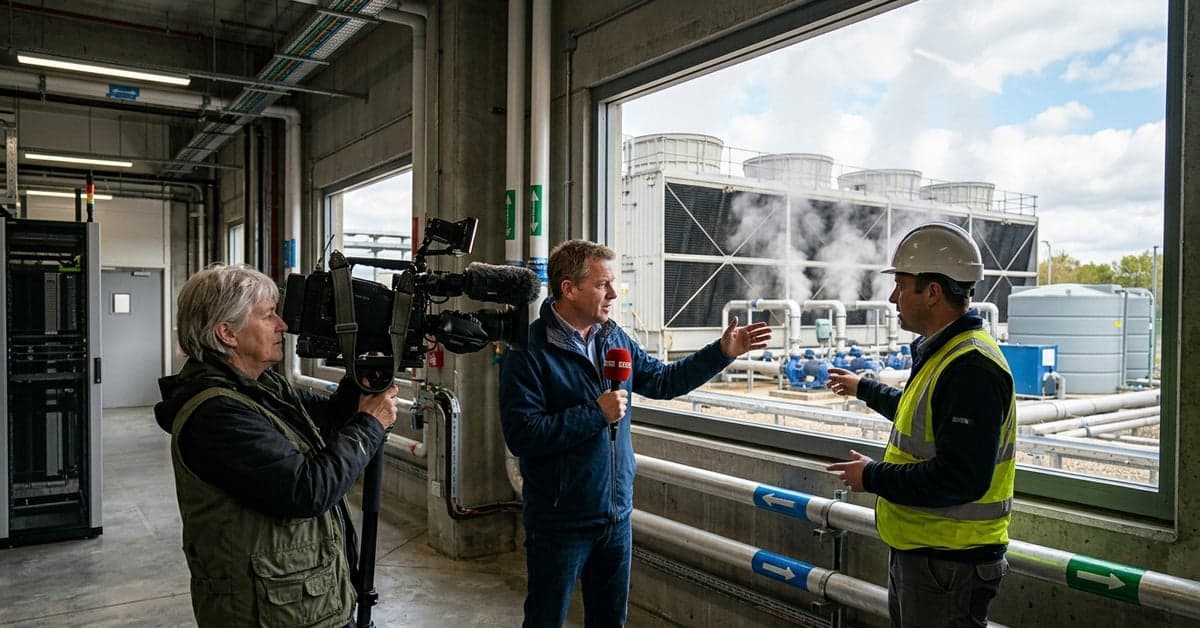
On September 5, 2026, BBC News published a video fact-check examining a US official’s claim that data centres “don’t use water.” The segment, featured on the BBC Technology page, drops into a live argument that now stretches from Washington to Scotland: how to weigh data centre water use against the need for more digital infrastructure. The numbers, and the choices behind them, decide which towns get built in and which don’t.
What the BBC fact-check tested, and why the claim matters
BBC News set out to test the statement that data centres use no water, a claim that clashes with years of industry practice and public records. Evaporative and chilled-water cooling are common in server farms, and each can draw on local supplies. The BBC segment, highlighted on the Technology homepage, brings that tension into focus: operators tout efficiency gains, while communities ask who pays when aquifers drop.
Public pushback is growing. According to The Guardian, hundreds gathered on September 3, 2026 to urge the Scottish government to pause new datacentre projects. Water and power were central concerns at those rallies. The two reports, taken together, show a widening gap between national ambitions for cloud capacity and local worries about basic resources.
How much water do data centres use, really?
The short answer: it varies by site, cooling method, weather, and design. The industry’s Water Usage Effectiveness (WUE) metric tracks litres of water used for cooling per kilowatt-hour of IT load. A low WUE signals efficient cooling or a design that leans on dry air systems. A high WUE can indicate heavy evaporative use, especially in hot, dry climates.
Context helps. The International Energy Agency notes that data centres’ local impacts depend on both energy and water choices, from grid mix to cooling strategies, which can change season by season. Its overview on data centres and data transmission networks makes a simple point: site decisions convert abstract efficiency targets into real demand on nearby utilities.
So when a politician says facilities don’t touch water, they skip the conditional math. Evaporative cooling can slash electricity use for cooling, but it trades kilowatt-hours for litres. Air-cooled or liquid-to-liquid systems can cut water draw to near zero, but they often require more power or higher capital spend. There’s no free option. Operators pick a balance based on climate, tariffs, and uptime goals.
Where the siting fight lands next: cooler, wetter regions
Protests in Scotland point to the next front. As hotter regions tighten rules on evaporative cooling, hyperscale projects look north and west, where ambient air is cooler and water is historically plentiful. That shift reduces evaporative stress but raises other questions: grid capacity, river temperature limits, and discharge permits for chilled-water loops. Communities near potential sites will want specifics about data centre water use in both average and peak conditions.
Regulators also face seasonal risk. A site that models fine at 12°C ambient may push into dry-cooler bypass limits during heat waves. When that happens, operators may switch modes, bumping power draw or water use to hold server inlet temperatures steady. The planning file needs to disclose those thresholds. Otherwise, a tidy annual average hides ugly summer spikes.
Local context matters as much as design. In regions that already meter agricultural irrigation tightly, even a moderate industrial draw can reshape allocation politics. The U.S. Geological Survey tracks how sectors share water. Data centres are a small slice nationally, yet can loom large in a county or river basin with thin margins during drought. That’s where the debate turns from models to lived experience.
What planners should require before permits are signed
Surface-level promises won’t cut it. Planning bodies can lower risk with a short list of disclosures that make sense to residents and engineers:
- Publish hourly cooling-mode thresholds across a full design weather year. Show when the site will switch between dry, adiabatic, and chilled-water modes.
- File annual and peak-day water budgets, with contingencies for one-in-10 and one-in-20-year heat events.
- Disclose WUE alongside energy metrics, and tie both to guaranteed performance bands in permits.
- Show sources and sinks: municipal supply vs. on-site reuse, plus discharge temperatures and treatment steps.
- Outline demand-response plans that don’t simply swap megawatts for megalitres when the grid is tight.
These are not anti-growth hurdles; they are the map to durable builds. Communities that can see the trade-offs tend to tolerate them better, and operators that document limits avoid angry headlines when a heat dome arrives. The BBC fact-check and the Scottish protests suggest that silence only invites suspicion.
Why the messaging broke—and how to fix it
Operators often market sustainability with single headline figures: a stellar PUE, a carbon-free energy target, a reclaimed-water hookup. Those are good steps. They also leave room for confusion when a site’s water draw depends on temperature bands and operating modes that rarely make the press release. That gap gave space for the “no water” claim that BBC News interrogated on September 5, 2026.
Clear baselines would help. A standard fact sheet for each facility—covering power, cooling, and water in one place—would let residents and journalists test claims. The Green Grid’s WUE gives a starting vocabulary, but planning files need real numbers, not just metrics. Linking those numbers to enforceable conditions would move promises from marketing to law.
This debate won’t fade. AI buildouts, edge networks, and cloud migrations keep demand high, and each new campus restarts the conversation. The fastest way to keep projects on track is to treat data centre water use as a knowable, auditable part of design. That’s a better answer than slogans, and it’s one both investors and neighbours can live with. For more on this, see bloomberg.com and nytimes.com.
Related reading: NVIDIA • Meta AI • AI & Big Tech