
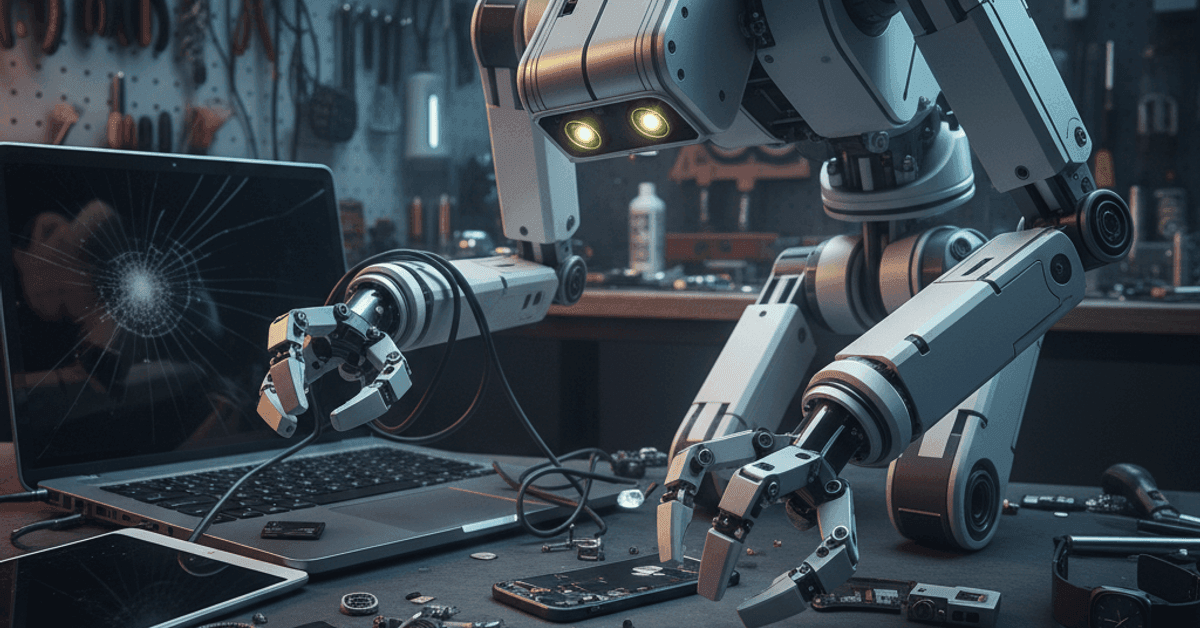
IFixit’s new AI troubleshooting tool is struggling in early use. In a hands-on, the iFixit FixBot beta failed to repair multiple devices. The shortfall highlights the gap between promise and practice for AI-guided repairs.
A senior editor tested the chatbot on real problems. The list included a classic Sony CRT that would not power on. It also included a Mitsubishi heat pump and a region-locked Nintendo 64. The bot offered steps, but the fixes did not land. The outcome raises questions about the approach and data sources.
iFixit FixBot beta: what the tests showed
The FixBot trial suggests uneven advice and limited device specificity. According to a detailed hands-on, the chatbot struggled to deliver workable fixes across three cases. It provided generic guidance that did not resolve the issues. That pattern undermines trust in an AI tool intended for precise repairs.
The test matters because iFixit sits at the center of the repair movement. The company hosts manuals and community guides for countless devices. Therefore, an AI built on that corpus should excel with step-by-step support. Instead, the results show that model knowledge may be too shallow or broad. The bot appeared to miss model-level nuance and diagnostic depth.
Moreover, consumer hardware often demands exact details. A faulty power board, a failing flyback transformer, or a thermal sensor mismatch can look similar. Yet the remedy differs by brand and revision. AI that lacks schematics, error codes, or service bulletins will guess. Consequently, it risks sending users down time-wasting paths.
The Verge’s hands-on underscores that risk in practice. It shows where AI-generated instructions diverge from proven workflows. It also shows why human-in-the-loop checks still matter. Readers can explore the full account in the publication’s report on the FixBot trial at The Verge.
Why AI repair advice still struggles
Repair guidance demands context, telemetry, and verified procedures. Many consumer devices hide diagnostic modes behind service remotes or codes. Additionally, safety risks complicate matters. CRT televisions store dangerous charges. Heat pumps involve high voltage and refrigerants. An AI that errs may cause harm if guardrails fall short.
Another barrier is data access. Service manuals, wiring diagrams, and firmware logs remain locked behind vendor portals. Therefore, models cannot learn from the best sources. Right-to-repair policies aim to open that pipeline. The FTC’s right-to-repair report outlines how restricted information hinders independent fixes. Without schematics or error tables, AI guidance stays generic.
Furthermore, troubleshooting is multi-turn and iterative. Real repair techs probe, measure, and isolate faults. They use oscilloscopes, multimeters, and thermal cameras. A chatbot must plan that workflow and adapt to readings. It must also explain risks in plain language. For now, many systems default to broad checklists. As a result, users get steps that appear plausible but lack diagnostic certainty.
Evaluation also lags. Benchmarks for repair accuracy are rare. Teams need test rigs, diverse devices, and controlled faults. They need to measure resolution rates and time-to-fix. Until then, success stories will be anecdotal. Likewise, failures will be hard to localize and learn from at scale.
Consumer AI accelerates elsewhere
While repair bots falter, consumer AI is advancing in other domains. Spotify is rolling out Prompted Playlists in testing. The feature lets listeners type requests and build dynamic sets with AI. Users in New Zealand can direct tone, tempo, and refresh cadence. The company details the rollout and controls in its announcement reported by The Verge.
Meanwhile, platform strategy continues to shift at the model layer. Meta is reportedly developing a new system called “Avocado.” Reports suggest the project could be proprietary, not open source. That would mark a strategic turn for the company’s AI portfolio. It also follows delays and debate around Llama 4 releases. You can read the coverage via Engadget’s report on Avocado. The direction matters for developers, safety reviews, and ecosystem access.
Taken together, these updates show uneven progress. Entertainment curation benefits from clear feedback loops and dense data. Conversely, hardware repair requires scarce, gated, and safety-critical knowledge. AI traction differs by sector. Users feel that split when a playlist improves while a broken TV remains dark.
What builders should do next
Developers of repair assistants can tighten scope and uplift reliability. Start with narrow device families and public service manuals. Then layer validated diagnostic trees and part cross-references. Additionally, incorporate voltage, resistance, and temperature checkpoints. The bot should guide tool use and safe measurement points.
Human oversight remains vital. A handoff to community experts after a few uncertain steps can reduce risk. Moreover, confidence thresholds should gate advanced procedures. When uncertainty spikes, the bot must pause and warn. It should recommend professional service or detailed forum threads. Clear disclaimers and escalation options protect users.
Data partnerships will help. Manufacturers can share canonical schematics under standard licenses. Regulators can encourage secure data access frameworks. Consequently, models can learn from authentic failure modes. Over time, repair knowledge can become both accurate and traceable.
Implications for right to repair
AI could amplify the repair ecosystem if fed with credible inputs. It can map symptom clusters to known fixes. It can surface part numbers and compatible substitutes. It can translate manuals and summarize long threads. However, it cannot replace electrical safety training or expert judgment.
Policy momentum may unlock the needed materials. As jurisdictions pass repair laws, documentation will broaden. AI tools can become both safer and sharper. The end game is a hybrid model. Humans lead, and AI assists with search, planning, and reminders. That balance can improve outcomes without overpromising.
Conclusion
The iFixit FixBot beta illustrates today’s limits for AI-driven repairs. The tool did not deliver fixes in a notable real-world test. Nevertheless, the path forward is clear. Tighter scopes, better data, and human checkpoints can raise reliability. Meanwhile, consumer AI keeps evolving in music and model platforms. Users should expect steady gains, but not magic. As always, safety and verified documentation must come first.
Related reading: Meta AI • NVIDIA • AI & Big Tech