
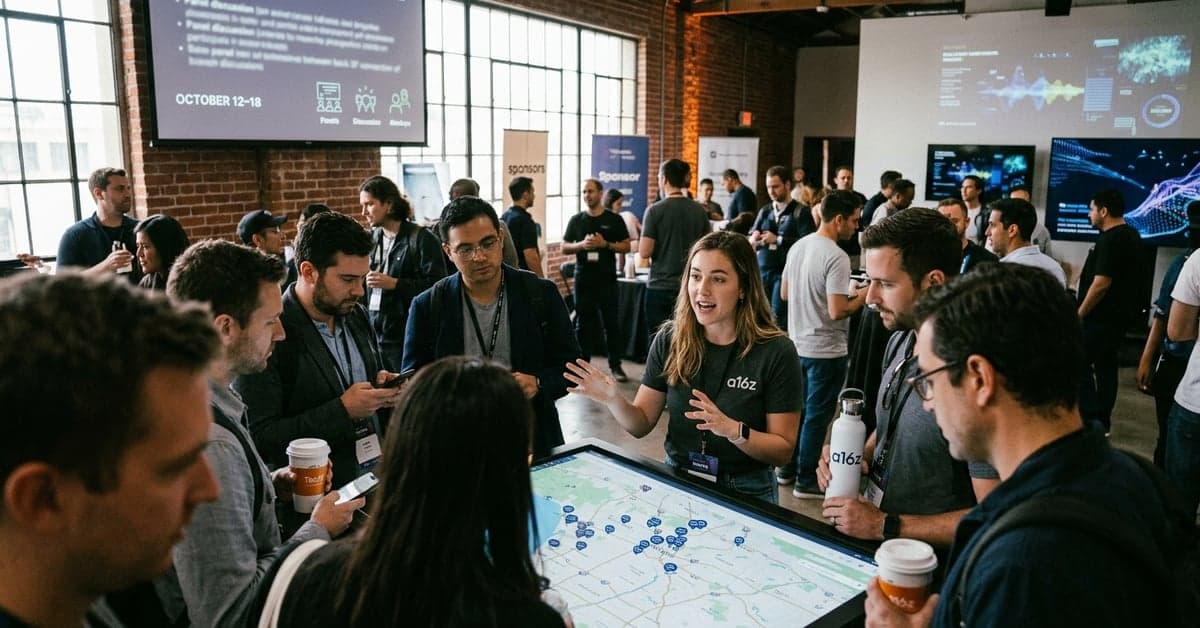
Two dates set the tone: San Francisco, October 5–11. Los Angeles, October 12–18. According to the event’s official site, Tech Week’s West Coast run will again operate as a decentralized, citywide festival hosted by a16z, with hundreds of independently organized meetups, hackathons, and panels spread across both metros (Tech Week). Against that calendar, LA Tech Week 2026 isn’t just a sequel to San Francisco’s opener. It is the week when momentum either compounds or fizzles for founders and investors chasing the same audience, seven days later, 380 miles south.
Back-to-back weeks compress attention—and raise the bar
By staging SF and LA on consecutive weeks, organizers create a rolling, two-city circuit that concentrates attention and travel. The pitch is simple: if you can keep your story hot for 14 days, you’ll meet a larger slice of the same capital and talent pool without a new flight across the country. That’s an advantage for scrappy teams with one launch to spend. It’s also a filter. Events that feel duplicative the second week will fade fast, because schedules are jammed and repeat attendees will prioritize only what’s new or harder to access.
The official listing reinforces the format. The conference is “decentralized,” meaning the anchor brand convenes but doesn’t centrally program. Startups, VCs, and companies run their own sessions across the city, which the site says can range from small dinners to large public talks and hackathons (Tech Week). That structure rewards hosts who can curate the right room, not just book the biggest stage.
What LA Tech Week 2026 adds to a16z’s circuit
LA Tech Week 2026 inherits energy from SF—then rewrites the guest list. Los Angeles pulls founders and funds with a bias toward consumer products, media, and AI-driven creative tools, alongside gaming and e-commerce operators. That mix matters this year because several confirmed speakers straddle enterprise and creator ecosystems: IBM’s Arvind Krishna, WHOOP’s Will Ahmed, and HubSpot co-founder Brian Halligan are featured on the official roster, alongside founders and a16z partners such as Cristóbal Valenzuela of Runway and David Haber (Tech Week; see also IBM and Runway for company context). That blend signals a program where developer infrastructure meets content engines and go-to-market playbooks.
Because LA follows one week after SF, founders can test a narrative north of the 101, then refine it in Santa Monica or Downtown with a better demo, clearer pricing, or a sharper ask. Investors will arrive with memory of who drew a line around a real market in San Francisco. The teams that evolve in seven days will be the ones they take second meetings with in LA.
Why Los Angeles Tech Week matters for founders
For early-stage companies, LA is where the tour either scales or stalls. The second week gives three concrete advantages:
- Iteration time. Founders can turn first-week feedback into a new pitch deck, a live feature toggle, or a tighter experiment. That’s scarce time you don’t get when the next big tent is a quarter away.
- Network compounding. Many of the same funds and operators attend both weeks. Warm intros from SF can turn into panel seats, stage time, or dinner invites in LA if you show progress.
- Segment switching. Los Angeles convenes different creators and studios. Teams with AI video, music tooling, or UGC moderation can reach decision makers who weren’t in the Bay.
That’s the upside. The catch is focus. A second appearance that replays the same content risks thinning your message. Make LA Tech Week 2026 the place you announce partner pilots, ship a public waitlist, or show numbers. If the metric moved between Sundays, say so.
How to get on the calendar—and get noticed
The door isn’t closed. The site confirms that event submissions remain open for both cities, including Los Angeles in the October 12–18 window (Tech Week). Hosts propose their format and wait for approval. That’s the mechanical step. The strategic one is programming for scarcity.
Plan a session that only makes sense in LA. Pair a studio tour with a model safety roundtable. Bring a creator, a rights lawyer, and an infra lead to the same table. If you’re in AI video or music tooling, co-host with a production partner. If you’re selling to sales or support teams, orient your talk around revenue impact, bring a customer, and publish a one-pager with your benchmarks. Your goal is to turn a listing into a must-book slot for people who already have a full week.
For founders aiming at investor attention, pick one of three tracks: a small, invitation-only breakfast for targeted funds; a public workshop that gives away real code or templates; or a live customer story with Q&A. Each can work, but only if it advances the narrative you framed in San Francisco.
Key dates, speakers, and the decentralized format
Here are the confirmed facts—and how to use them:
- San Francisco runs October 5–11; Los Angeles runs October 12–18 (Tech Week). Book travel as a single block if you’re attending both weeks; that saves time and lifts serendipity.
- The format is decentralized, with startups, companies, and VCs hosting their own events across the city (Tech Week). Don’t wait for a central agenda to surface your niche. Create it.
- Featured speakers include IBM CEO Arvind Krishna, WHOOP’s Will Ahmed, and HubSpot co-founder Brian Halligan, alongside a16z partners and founders like Runway’s Cristóbal Valenzuela (Tech Week; company backgrounds at IBM, WHOOP, and HubSpot).
LA Tech Week 2026 lands where that lineup intersects with creators and studios. Expect sessions that blend AI infrastructure, content workflows, and growth math. If your product sits at those seams, anchor your event there.
What to watch next
Two things will determine how much heat LA gathers. First, how many SF hosts bring a fresh angle south. Second, how effectively Los Angeles operators and creators pull the conversation into their back yard. The early signal comes from the event page as new sessions are approved, so refresh the listings and look for small-format gatherings near the industry clusters you care about (Tech Week).
Founders get one final prompt: decide what you want from the week before you land. Customer pilots? Talent? Press? Pick one. Then make LA Tech Week 2026 the moment you move that number, and be ready to show it the same day. For more on this, see bloomberg.com and nytimes.com.
Related reading: Meta AI • NVIDIA • AI & Big Tech