
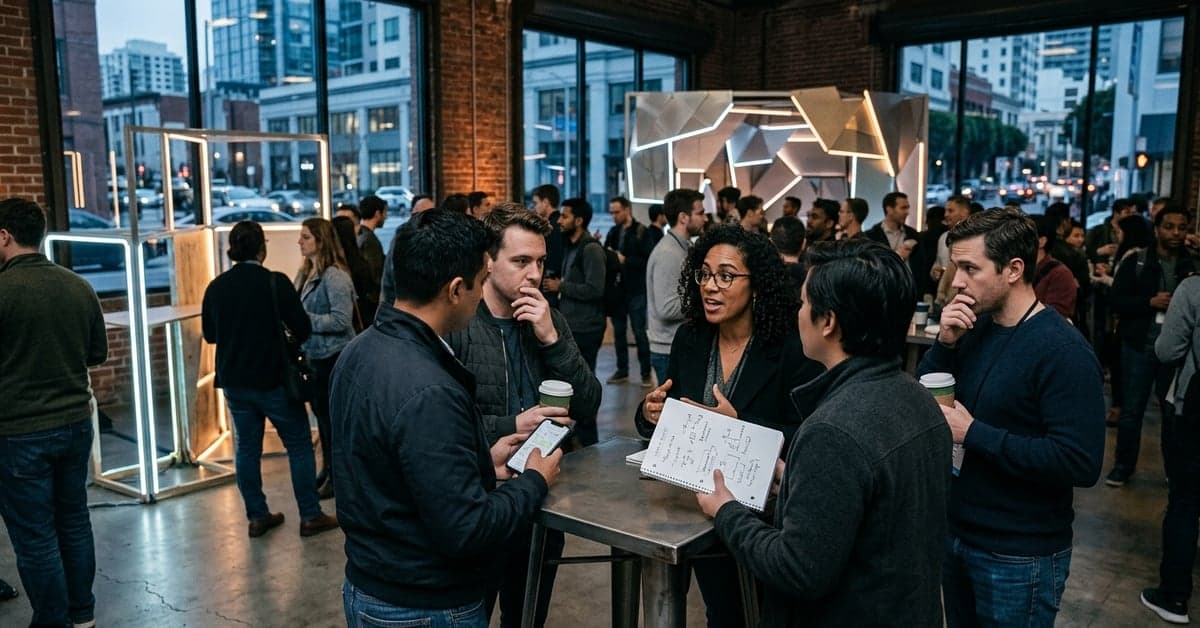
October 5-11, 2026 in San Francisco and October 12-18, 2026 in Los Angeles cap a sprawling Tech Week 2026 that now spans four U.S. cities. The a16z-presented series has added Boston (May 26-31, 2026) and New York City (June 1-7, 2026), turning what began as a Bay Area experiment into a rolling season for founders, funds, and operators. The event site also lists headline names like IBM CEO Arvind Krishna and Twitter co-founder Biz Stone on the speaker slate, underscoring how mainstream this decentralized format has become (Tech Week).
What’s new in Tech Week 2026: cities, dates, scale
According to the organizer’s page, Tech Week 2026 is staged in four stops. Boston debuted from May 26-31. New York followed from June 1-7. San Francisco runs October 5-11. Los Angeles closes out October 12-18 (Tech Week).
The format remains the same: hundreds of individually hosted meetups, panels, hackathons, and socials scattered across each city. The team says the Bay Area and LA hosted more than 1,000 events last year, a scale that turns the week into a citywide deal grid rather than a single venue conference (Tech Week). That density drives serendipity. It also tilts the roster toward operators and investors who want speed dating over stages.
Speaker names posted by the organizers reflect that mix: Arvind Krishna (IBM), Biz Stone (Twitter), Brian Halligan (HubSpot), Steve Fredette (Toast), and founders from Deel and WHOOP, alongside a16z investors from multiple funds (Tech Week). The lineup blends enterprise incumbents with AI-native builders like Runway’s Cristóbal Valenzuela, a sign of where the conversations will go.
A decentralized deal week built around AI
Two signals stand out. First, the presence of Krishna, who has spent 2026 arguing that enterprises will win or lose on AI orchestration, hybrid cloud, and agentic systems — themes laid out in IBM’s Think 2026 keynotes (IBM Think 2026). Second, creative AI leaders like Runway’s co-CEO suggest text-to-video and synthetic media will get real airtime, not just hallway buzz. Put together, the docket points to a through-line: practical AI deployments, from boardroom to post-production bay.
That matters because Tech Week 2026 isn’t a product launch show. It’s a matchmaking circuit. Founders use it to pressure-test roadmaps with potential customers and coinvestors. Funds use it to run fast diligence. If the week’s center of gravity is enterprise AI on one end and creative tooling on the other, expect a big crowd in the middle: data platforms, safety and governance startups, and workflow products that plug into both.
There’s also a timing tell. The Boston and NYC runs landed around midyear planning; SF and LA sit just as budgets get locked for 2027. That cadence gives startups two shots: validate in spring, convert in fall. In that sense, Tech Week 2026 behaves less like a conference and more like a calendar.
Why the a16z Tech Week model matters to founders
Because each event is independently organized, the barrier to entry is lower than a monolithic expo. Organizers invite companies to propose anything from panels to hackathons, happy hours, or experiential formats. Submissions for San Francisco and Los Angeles are open, with approvals managed by the central team, per the site’s guidance (Tech Week).
That decentralization spreads risk and creates a long tail of niche rooms. A founder in applied AI for healthcare can find the five rooms that matter, rather than fight for attention on a single stage. An infra startup can host a small, technical lunch next to a larger evening showcase. The mix suits buyers too. They can skip the keynote ritual and stack a day with targeted sessions.
It’s also why bigger-company voices fit. Krishna’s 2026 messaging on winning the enterprise AI race and architecting AI-first organizations gives smaller firms a read on what large customers will demand (IBM Think 2026). Meanwhile, Runway’s progress in generative video gives creatives and marketers a concrete sense of where the tools are headed (Runway). Those poles bookend a market where budgets are moving.
How to read the rest of Tech Week 2026
Expect San Francisco to emphasize infrastructure, data platforms, and developer workflows. LA tends to skew content and consumer experiences. The Boston and NYC weeks likely primed the pump for those conversations by surfacing early traction and gaps. Watch for repeat themes across stops: model governance, TCO of AI workloads, and the scramble for video rights and licensing in creative pipelines.
For anyone attending, the job now is curation. Build a simple map: which customers, which partners, which hires. Keep time for unplanned collisions; that’s where this format shines. And if your company plans to host a session, the organizer’s guidance is plain: creative formats win attention, and approvals are rolling through the site’s submission flow (Tech Week).
What’s different this year isn’t just the roster. It’s that the series now crosses four markets and two seasons. That shifts Tech Week 2026 from event to drumbeat. For founders operating on AI’s compressed cycles, that’s a feature, not a glitch.
As October approaches, the final chapters in San Francisco and Los Angeles will test the thesis implied by the speaker slate: AI at the core, with enterprise buyers and creative teams meeting in the middle. If that’s right, Tech Week 2026 will read less like a parade of talks and more like a rolling pipeline review.
Related reading: Meta AI • NVIDIA • AI & Big Tech