
On August 31, 2026, Salon published a commentary arguing that “local control” over data centers is a Big Tech con, pointing to public distrust and thinly resourced town halls that face heavyweight negotiators from the world’s richest firms (Salon). The piece cites polling sentiment — that most Americans view AI and its infrastructure as an intrusion — and spotlights how the slogan flatters democracy while preserving asymmetries at the bargaining table. The debate over data center local control now sits at the center of fights from Tennessee to the Upper Midwest.
What data center local control really delivers
Salon’s Nicholas Liu frames the pitch for local decision-making as a political escape hatch for candidates caught between donors and voters. The article quotes Wisconsin gubernatorial contender David Crowley embracing local boards as the “end all be all” on siting decisions, after earlier cheerleading for turning the state into a global hub (Salon). That shift is a tell. It swaps a statewide bet on growth for a story about neighborhood choice — without changing who writes the contracts, or who can wait out delays.
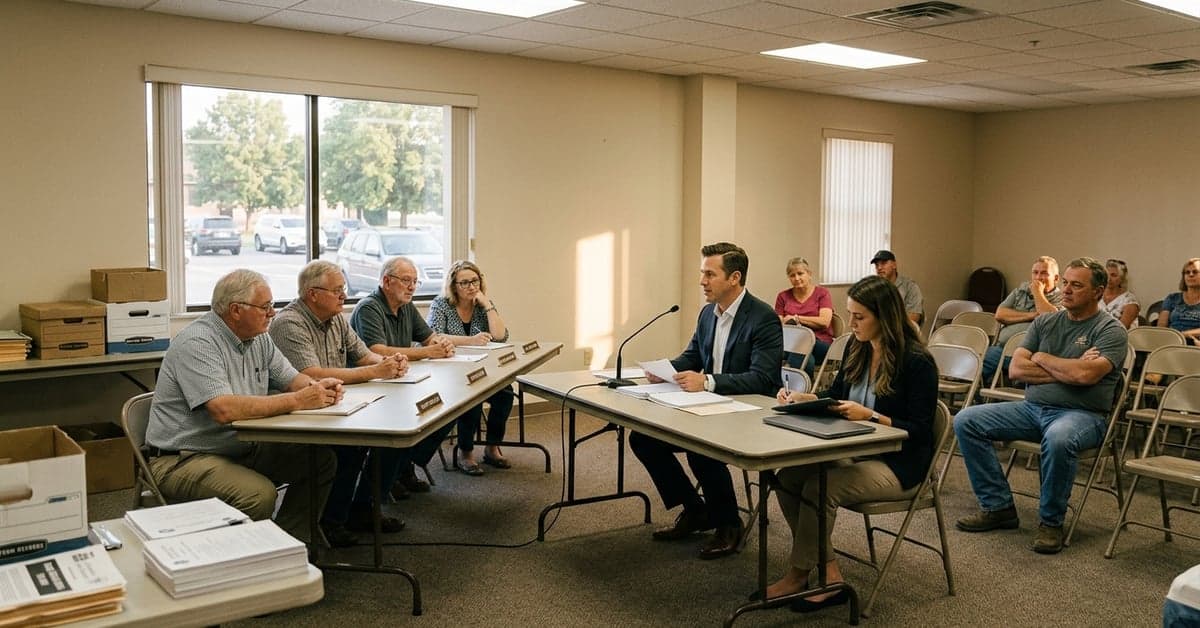
The imbalance isn’t subtle. Developers arrive with consultants, lawyers, and a playbook honed across dozens of jurisdictions. Many councils have a part-time attorney and a handful of staff juggling routine permits. That’s the terrain where data center local control operates. The slogan sounds democratic; the process often isn’t. When project economics hinge on tax abatements, water allocations, and gas or grid upgrades, the side with more expertise and patience tends to win better terms.
The environmental side of the ledger is also getting harder to wave off. The Guardian’s AI coverage has highlighted a growing datacenter backlash that crosses party lines, as well as rising public focus on energy and water footprints (The Guardian). Global analyses from the International Energy Agency explain why: even with efficiency gains, total electricity demand from data centers keeps expanding as workloads surge, which puts pressure on local grids and planning timelines. The IEA lays out the basic mechanics in its guidance on data centers and data transmission networks, which many city staffers now cite in briefings (IEA).
The incentives playbook: who holds the pen
Behind nearly every siting decision sits an incentives package. Companies request multiyear property tax abatements, sales tax exemptions on equipment, and expedited permitting. State energy offices and utilities weigh in on substation upgrades or new gas connections. Local leaders ask for jobs, training funds, or a park. On paper, this looks like two sides meeting in the middle. In practice, the initial term sheet often comes from the developer’s side, and small governments react under time pressure.
That’s the quiet power of the process. Procurement literatures call it the first-draft advantage. In the data center world, it becomes the default template for entire regions. When one county agrees to a 20-year abatement, neighbors see it as the new floor. The race resets. The U.S. Department of Energy’s explainer on data center efficiency shows how facilities stack choices about cooling, power, and redundancy into a tight cost model; modest shifts in tax or land terms can swing a build decision (DOE). That leverage makes it easy for firms to play jurisdictions off one another while maintaining a stance that they simply “follow local will.”
Salon’s critique is less about whether a data center is good or bad for a town, and more about where the negotiating power sits. Even when councils win concessions — road improvements, workforce funds, noise limits — enforcement rests with the same stretched offices that approved the deal. When timelines slip or generators run louder than promised, the remedy is another round of letters, hearings, and compliance plans.
A bipartisan backlash, but fragmented power
The Guardian’s AI section flagged on August 30, 2026 that backlash to datacenters is bringing both left and right together against tech tycoons (The Guardian). That alignment is rare. It signals a shared reading of costs — on rates, water, land use, and aesthetic impact. Yet the remedies proposed differ. Some state lawmakers push expedited siting to meet national capacity goals; others want freezes or moratoria until infrastructure catches up. Caught in the middle are city councils asked to decide fast, with limited leverage, while the political fight moves above their heads.
In that context, data center local control can become a rhetorical bridge that lets statewide actors avoid picking a side. It tells residents they hold the gavel, while incentive rules and utility planning — the parts that matter most — are set elsewhere. Even supporters of more capacity concede that fragmented decisions pile risk onto the smallest entities. Grid planners work on multi-year horizons; water authorities do, too. A town voting alone rarely has the models or staff to project compounding regional effects.
Public sentiment, as described by Salon, is reacting to those gaps. Residents don’t see a system that prices externalities fairly or shares upside predictably. They see late-night generator noise, bigger bills, and promises of “future jobs” that often mean a few dozen roles in a highly automated building. The Guardian’s coverage suggests that this is no longer a niche concern of activists. It is a mainstream political issue drawing attention to the terms of the deals, not just the logos on the buildings.
What real community say would look like
Testing Salon’s claim means asking what “real” local power would change. Here are four signals that separate PR from practice:
- Floor, then local choice: A statewide floor for labor, water, noise, and grid-impact standards, with cities free to go stricter. Floors end bidding wars on safety and shift talks to fit and benefits.
- Independent impact reviews: Third-party studies of grid, water, air, and traffic impacts paid from developer escrow, selected by the locality, with public release before any vote.
- Public, enforceable CBAs: Community benefits agreements with clear milestones, penalties, and a public dashboard tracking compliance over time.
- Transparent incentives: A public ledger of tax abatements and subsidies, including expected and realized jobs, so neighbors can compare deals across counties.
None of those elements block projects that make sense. They just change who writes the first draft and who can enforce it. They also align with what national and international guides already explain about the technology itself. The IEA’s overview makes plain that siting and design decisions have spillovers; so do cooling choices and backup power. Local boards can handle those trade-offs, but only if the framework gives them time, data, and teeth. Without that, data center local control remains a story about choice that rarely changes outcomes.
Where the “local say” debate goes next
Expect more campaigns to lean on the language of hometown choice. It polls well, and it blunts the cross-partisan anger The Guardian describes. But the test for candidates is simple: do they back minimum standards and transparent ledgers that curb subsidy races, or do they prefer case-by-case bargaining behind closed doors? The first shifts power to residents; the second keeps it with those who can afford to wait out meetings.
Voters also have better tools. Public records requests can surface draft incentive terms. Utility filings can show pending substation work. National reporting, from Salon’s critique to The Guardian’s tracking of backlash, gives communities a baseline to ask sharper questions. If a proposal can’t meet a statewide floor, publish independent studies, and sign an enforceable CBA, it isn’t local control. It’s marketing.
That’s the point buried in this summer’s fights: the argument over data center local control isn’t about whether towns get a vote. It’s about whether the rules let that vote matter when it counts — before the first draft becomes the only draft. For more on this, see reuters.com and bloomberg.com.
Related reading: NVIDIA • Meta AI • AI & Big Tech