
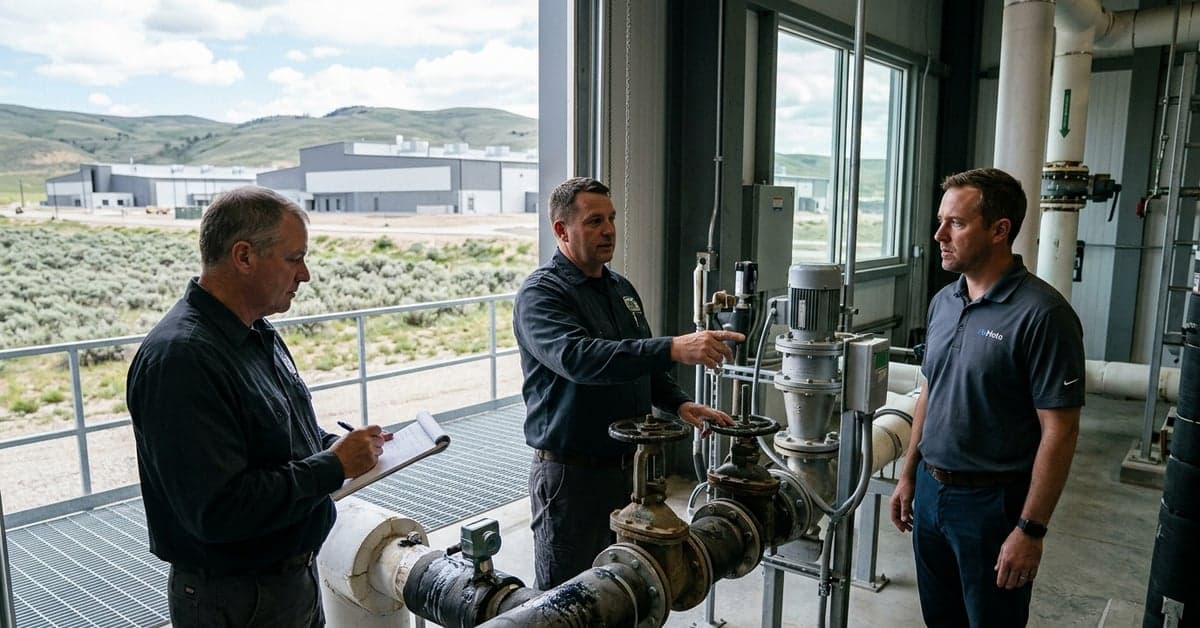
July 8, 2026 — Wyoming tightened wastewater rules after a Meta datacenter contractor flushed contaminated water, according to The Guardian. The move turns a local mishap into statewide policy, and it arrives as AI buildouts push utilities and regulators to their limits.
What changed in Wyoming, and why it matters
The Guardian reported on July 8, 2026, that state officials stiffened wastewater controls following the Meta contractor discharge. The new posture signals a simple message to hyperscalers and their vendors: mistakes at industrial sites will shape rulebooks, not just fines. That matters for any company planning AI capacity in the Mountain West. Stricter Wyoming datacenter rules raise the bar on siting, operations, and contractor oversight.
States administer most industrial discharge permits under the U.S. Environmental Protection Agency’s National Pollutant Discharge Elimination System, which sets the framework for what can enter waterways and sewers. Readers can find the federal baseline on the EPA’s NPDES overview page epa.gov. Wyoming’s shift suggests closer scrutiny of data center cooling water, chemical handling, and any on-site treatment—areas where a single lapse can become a regulatory inflection point.
How tougher Wyoming data center regulations ripple beyond one site
Permitting and grid constraints have already slowed several buildouts. On July 7, 2026, The Guardian warned that stalled datacenter projects risk throttling AI’s momentum. The Wyoming episode adds a new constraint: water compliance as a gating factor, even in regions that long courted hyperscale investment with land and tax breaks.
Here’s the likely chain reaction. First, developers will add months to project timelines to de-risk permits, engage utilities earlier, and rework cooling choices. Second, landlords and contractors will absorb higher compliance costs and pass them through. Third, states competing for AI investments will tout water resilience and permitting capacity, not just tax incentives.
Those shifts don’t just affect one company. They redraw the map for AI infrastructure, favoring sites with low water stress, proven industrial sewer capacity, and regulators able to move fast without cutting corners. The World Resources Institute’s Aqueduct tools, which map water risk, already guide siting for other industries; expect hyperscalers to lean on them more heavily (WRI Aqueduct).
The AI water problem states can’t ignore
Cooling drives most of a data center’s water footprint. Operators can build air-cooled systems to cut withdrawals, adopt closed-loop designs, or use reclaimed water where available. But tradeoffs stack up: air cooling can increase energy use; closed-loop systems need capital and maintenance; reclaimed supplies depend on municipal infrastructure. The Department of Energy’s guidance on data center efficiency outlines many of these levers and their limits (DOE: Data Center Energy Efficiency).
AI workloads push the same system harder. High-power GPUs pack into dense racks that shed more heat per square foot. That can force expanded cooling plants or new approaches—immersion, cold plates, or hybrid setups—which bring their own materials, handling, and discharge risks. The International Energy Agency has warned that data centers and network traffic are set to climb sharply as AI scales, tightening the water-energy nexus in many regions (IEA analysis).
That nexus is now a regulatory issue as much as an engineering one. The Guardian’s TechScape column on July 8, 2026, argued that Big Tech’s climate goals are straining under AI’s energy demand. Water sits in the same crosshairs, which explains why Wyoming’s tougher stance resonates far beyond a single discharge event. It’s a preview of the questions planning commissions and water boards will ask before signing off on the next GPU hall.
What companies should expect next under Wyoming datacenter rules
Expect three near-term shifts. More frequent audits of contractor practices. Tighter conditions in industrial discharge permits. And faster escalation when reporting looks incomplete. Those trends are consistent with how states operationalize NPDES authority after a headline-making incident, and they align with the direction many utilities are already taking on industrial users.
For developers, it means earlier engagement with local utilities and water authorities, plus facility designs that minimize liquid discharge risk. For operators, it means continuous monitoring and clearer lines of accountability with contractors. For investors, it means build timelines will stretch, and budgets will include more contingency for environmental compliance tied to Wyoming datacenter rules and similar state-level frameworks.
There’s an upside to clarity. Identifiable standards reduce permitting ambiguity and can speed approvals for well-prepared projects. Public guidance from energy and water agencies helps, too. The Department of Energy’s Center of Expertise for Energy Efficiency in Data Centers offers resources that can help operators cut both energy and water use while staying within permit bounds (DOE Center of Expertise).
The bigger signal for AI buildouts
Wyoming’s action shows that environmental compliance is now a first-order constraint for AI infrastructure, not a box to tick late in design. That conclusion tracks with The Guardian’s July 7, 2026, reporting on stalled projects and with its July 8 coverage of the Meta contractor incident. Companies that treat water and discharge planning as core design inputs will win permits faster and absorb fewer surprises.
Expect other states to move in the same direction, especially where water stress or public concern runs high. Some will publish sector guidance, others will update permit templates or fee schedules. Either way, the signal is clear: Wyoming datacenter rules are an early marker for how AI’s physical footprint will be judged in 2026 and beyond. For more on this, see ai.meta.com and reuters.com and bloomberg.com.
Related reading: Meta AI • NVIDIA • AI & Big Tech