
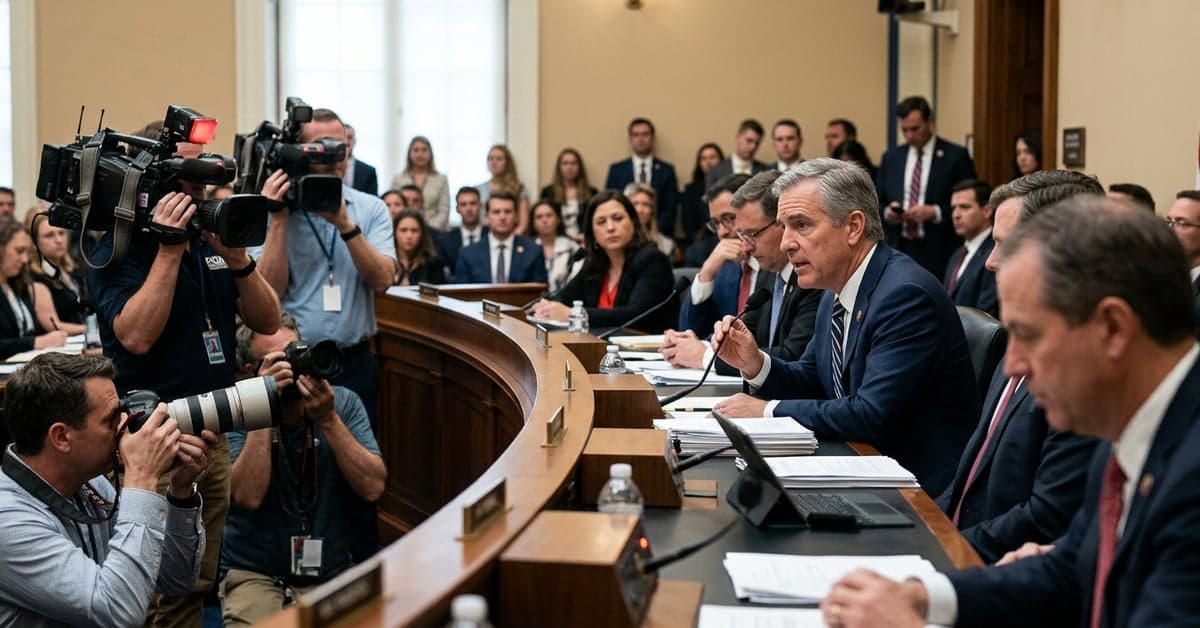
On September 10, 2026, the House Committee on Oversight and Accountability warned about a D.C. plan to use AI surveillance on property owners. One day earlier, it flagged concerns about “surveillance pricing practices” affecting consumers. Read together, the week’s notices point to a focused turn: a House Oversight AI surveillance push that now pairs municipal monitoring with data-driven pricing.
What the House Oversight AI surveillance docket shows
The Committee’s own mission stresses efficiency, effectiveness, and accountability across federal agencies, and a check on Washington’s power. That mission is front and center on its site, where the panel, led by Chairman James Comer (R-Ky.), lays out its mandate and public work in plain terms.
Against that backdrop, two notices during the week of September 9, 2026 stand out. According to House Oversight press releases dated September 10, 2026 and September 9, 2026, the Committee signaled pressure on a District of Columbia AI monitoring plan aimed at property owners, and opened a probe into surveillance-driven pricing and its impact on American consumers. On September 11, 2026, Chairman Comer also announced a markup to hold financier Leon Black in contempt of Congress, underscoring the panel’s appetite for high-stakes enforcement on separate matters. The same day range included hearing notices on fraud in federally funded homelessness services and a push to lower the cost of oral chemotherapy—evidence of a wide docket that still makes room for targeted tech oversight.
The common thread in the tech items is data. Municipal monitoring rests on camera feeds and analytics. Algorithmic pricing rides on behavioral and transaction histories. Both push the Committee into questions that bleed across local and federal lanes: when public data capture or private data mining starts shaping taxes, fines, or prices, who sets the guardrails and checks the error rates?
From property cameras to pricing bots: where scrutiny lands next
The D.C. proposal—described by the Committee as an AI surveillance plan targeting District property owners—will likely draw demands for documentation. Expect requests about model training data, error auditing, and recourse for false flags. Those asks align with federal guidance such as NIST’s AI Risk Management Framework, which stresses testing, documentation, and human oversight for high-impact uses.
The pricing probe reaches a different corner of the economy. “Surveillance pricing practices” hints at hyper-personalized offers or dynamic pricing tied to extensive tracking. Academic and policy work has warned that such systems can raise fairness and transparency issues, especially when consumers cannot see how a price was set. For context, economists have examined when algorithmic personalization may harm buyers, through opacity or tacit coordination among sellers; see Brookings’ summary of the debate brookings.edu.
For small landlords and local retailers, the two threads converge. A city using analytics to police properties could pair with private platforms that churn on customer data to set prices. That creates new compliance risk on one side and margin pressure on the other. For consumers, the upside is possible waste reduction and better targeting; the downside is higher bills with little explanation. The Committee’s choices—witnesses, subpoenas, and draft letters—will set a tone for how far Congress will push on disclosure and audit rights.
Why the timing matters for voters and markets
September 2026 is late in the 118th Congress, a period when committees often push visible themes. The panel’s site highlights its “never sleeps” brand and a record of active oversight under unified GOP control of Washington. The new AI items sit alongside health care affordability and anti-fraud work, signaling that technology isn’t replacing bread-and-butter oversight. It’s blending into it.
Regulators and auditors beyond Congress are moving in parallel. The Government Accountability Office tracks federal AI deployments and related risks across agencies, with a growing library of reports available here. Statehouses are also weighing municipal AI use, from traffic analytics to rental enforcement. Markets will zero in on how any House Oversight AI surveillance findings translate into disclosure rules for model accuracy, data provenance, and consumer notice. Firms that can show clear documentation and appeal channels will be safer if subpoenas arrive.
There is also a political read. Chairman Comer’s announcements—on contempt, pricing practices, and D.C. AI—signal an appetite to marry headline enforcement with technology governance. That blend gives members talking points that cross ideological lines: fairness for consumers, due process for property owners, and transparency for vendors selling analytics to government.
What to watch in the next hearings and subpoenas
Three signals will tell readers where this goes:
- Scope: If the pricing probe names specific sectors—airlines, ticketing, food delivery—that will show whether the inquiry targets personalized pricing or broader data mining tied to ads and fees.
- Standards: References to model cards, impact assessments, or third-party audits would bring congressional oversight closer to technical practice, not just policy rhetoric.
- Remedies: Watch for proposals on consumer disclosures or opt-outs, as well as penalties for vendors selling analytics that flunk accuracy tests or due process requirements.
Background frameworks will creep into the record. NIST isn’t law, but it gives members a shared vocabulary for risk controls. Civil society groups like the Electronic Frontier Foundation maintain long-running critiques of public surveillance and vendor opacity, useful for witness lists and context; see their overview of surveillance issues eff.org. If those voices meet industry engineers under oath, details on error rates, false positives, and pricing logic should follow.
The stakes for the Committee’s mission
The House panel says it exists to ensure an effective, efficient, and accountable federal government, and to give the public a voice. Tech oversight tests all three. AI that flags a property as noncompliant may promise efficiency, but a high false-positive rate can waste agency time and erode trust. Algorithmic prices that tilt based on tracking can look like market efficiency, yet still raise accountability questions if buyers cannot understand or contest them.
That’s why the next steps matter more than the headlines. If the Committee’s September notices turn into detailed letters, hearings, and fact sheets, the House Oversight AI surveillance agenda could move from broad alarms to workable checks: disclosures that make sense to buyers, procurement rules that force better testing, and recourse paths when software gets it wrong.
One week of press releases does not make policy. But it sets direction. September 9–11, 2026 shows a panel threading technology through consumer protection, city governance, and classic oversight muscle. Companies selling analytics and pricing engines should prepare for paperwork. Cities piloting AI enforcement tools should expect to explain their math. And voters should look for whether the Committee can turn alarms into fixes that actually lower errors and raise accountability.
That’s the measure to watch as the House Oversight AI surveillance focus moves from docket lines to sworn testimony. For more on this, see bloomberg.com and nytimes.com.
Related reading: AI Copyright • Deepfake • AI Ethics & Regulation