
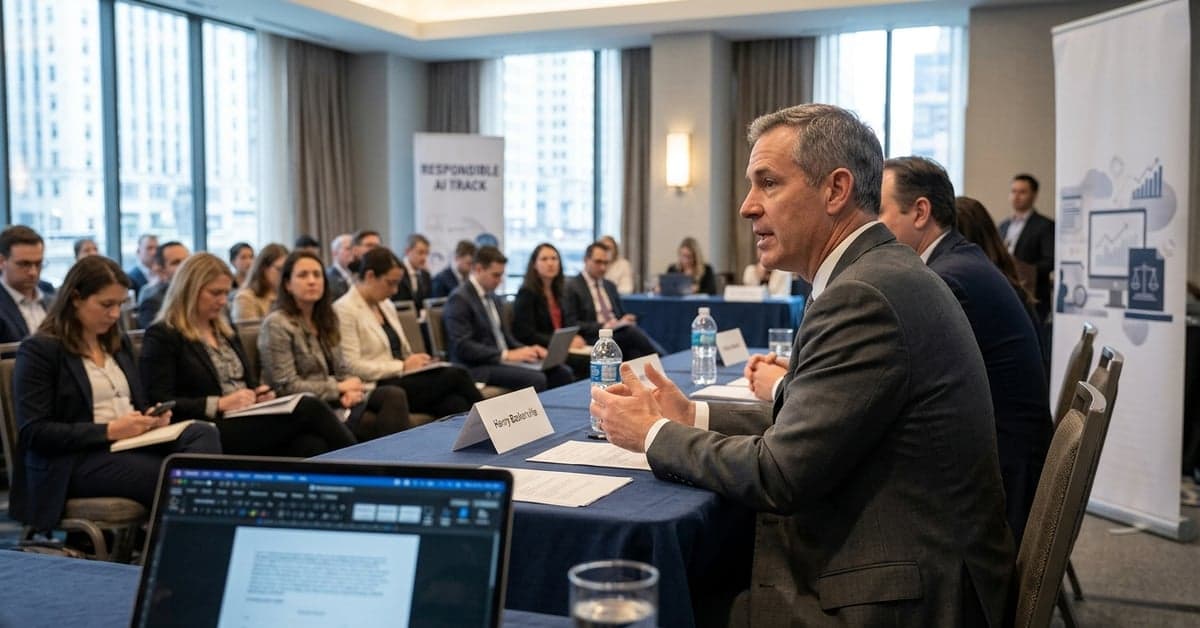
Responsible AI track opens at 11:05 CT in Chicago
At 11:05–11:50 AM CT, the Responsible AI, Ethics, Regulation & Governance track convenes at the Renaissance Chicago Downtown Hotel, according to a LinkedIn post by Arnab Bose, PhD. One live policy fight sits squarely in its path: judicial AI labeling—the wave of court directives that force lawyers to disclose any use of generative AI in filings. The stakes reach beyond etiquette. They touch costs, risk, and the scope of lawyers’ duties under Rule 11.
Why judicial AI labeling is on trial
On August 18, 2026, Law Week Colorado published an opinion from trial lawyer Henry Baskerville arguing that court-imposed AI labeling rules are unnecessary, unworkable, and risky. He points to a growing trend in Colorado case-management orders that require prominent notices when attorneys use tools like ChatGPT. Those orders sometimes even ask lawyers to mark the exact lines generated by AI.
Baskerville’s core claim is direct: existing Rule 11 already compels lawyers to certify their filings are grounded in law and fact after a reasonable inquiry. If a brief includes hallucinated cases, sanctions are already on the table. The industry has a vivid example. After fake citations appeared in the Mata v. Avianca filing, a federal judge sanctioned the attorneys involved, as reported by Reuters. His point: courts don’t need a new flag on the cover page to punish misuse; they already have the hammer.
The opinion also takes aim at feasibility. Marking every AI-generated line sounds simple, until work spans edits, snippets, and iterative drafting across a team. It becomes a record-keeping chore that misses the real question: did the lawyer do competent, independent verification? He warns that performative stickers can distract from that duty.
What court AI labeling would change in practice
For firms and legal departments, blanket disclosures change incentives. They signal risk to clients, even when lawyers use vetted enterprise tools and verify outputs. Baskerville writes as a frequent user of Harvey—an enterprise legal AI platform built for confidentiality and compliance—and argues generative tools can cut discovery and drafting time. He fears mandated disclaimers could chill adoption that lowers costs for clients. That argument matters for in-house counsel tracking budgets and outside counsel billing models.
The practicality test is harder than it looks. Many mandates require identifying specific pages or lines touched by AI. Real drafting is messy. Lawyers paste from templates, revise each other’s paragraphs, and run snippets through multiple tools. Who owns the log that proves which sentence came from where? The filing lawyer signs under Rule 11 either way. According to Law Week Colorado, adding disclosure rules risks moving responsibility from professional judgment to paperwork.
There’s also a confidentiality angle. Enterprise products like Harvey wall off data and audit usage, while public chatbots can expose sensitive facts if used carelessly. A flat “AI was used” label conflates those contexts. Clients reading a docket don’t see the difference between a consumer chatbot and a locked-down legal system. That reputational fog could push firms to skip safe tools and stick with slower methods, even when verification practices are strong.
Rule 11, costs, and the real risk calculus
Rule 11’s center of gravity is reasonableness. The certification applies to the filing as a whole, not the provenance of each sentence. If the research is sound and cites real law, the rule is satisfied. Baskerville’s argument is that judicial AI labeling reframes the risk. It invites courts to police tools rather than outcomes and diligence. That could reallocate effort to tracking metadata instead of improving accuracy.
Courts adopted disclosure rules because hallucinations happen. The Avianca order was a wake-up call, and the sanctions were a deterrent. But deterrence already worked without a label. The hard policy problem isn’t telling judges that AI touched a draft. It’s ensuring that human lawyers check sources and keep client data safe. Those are duties Rule 11 and professional conduct rules already cover.
Cost matters here. If enterprise AI trims hours on repetitive drafting or document review, clients benefit. Per the Law Week Colorado piece, blanket labels could scare clients off even well-governed tools. That reaction would hit small clients first, the ones who most need affordable representation.
Questions to press at 11:05 — and what comes next
The Chicago session’s theme is broad. But its timing is perfect for a focused ask: how should courts balance transparency with existing duties? Here are the questions that move the debate from slogans to workable policy during the 11:05 discussion.
- What specific harms does a label prevent that Rule 11 sanctions and bar rules do not already cover?
- If a label remains, should it distinguish vetted enterprise tools from public chatbots to avoid chilling safe adoption?
- How can any disclosure avoid exposing confidential workflows or strategy to opposing counsel and clients on the docket?
- What auditable verification steps should counsel document instead—source checks, citation validation, and red-team prompts?
Attendees will hear many takes. Some judges want bright lines after the Avianca mess. Practitioners want clear rules that map to how drafting actually happens. The best path likely centers on outcomes: validated citations, verified facts, and secure systems. That keeps accountability where it belongs—on the lawyer who signs—without performative stickers that confuse readers.
The Responsible AI track is built for these trade-offs. Expect questions about judicial AI labeling to surface through the day, even beyond the 11:05 slot. If the conversation lands on diligence and client harm, not tool stigma, it will have moved the ball. For more on this, see reuters.com.