
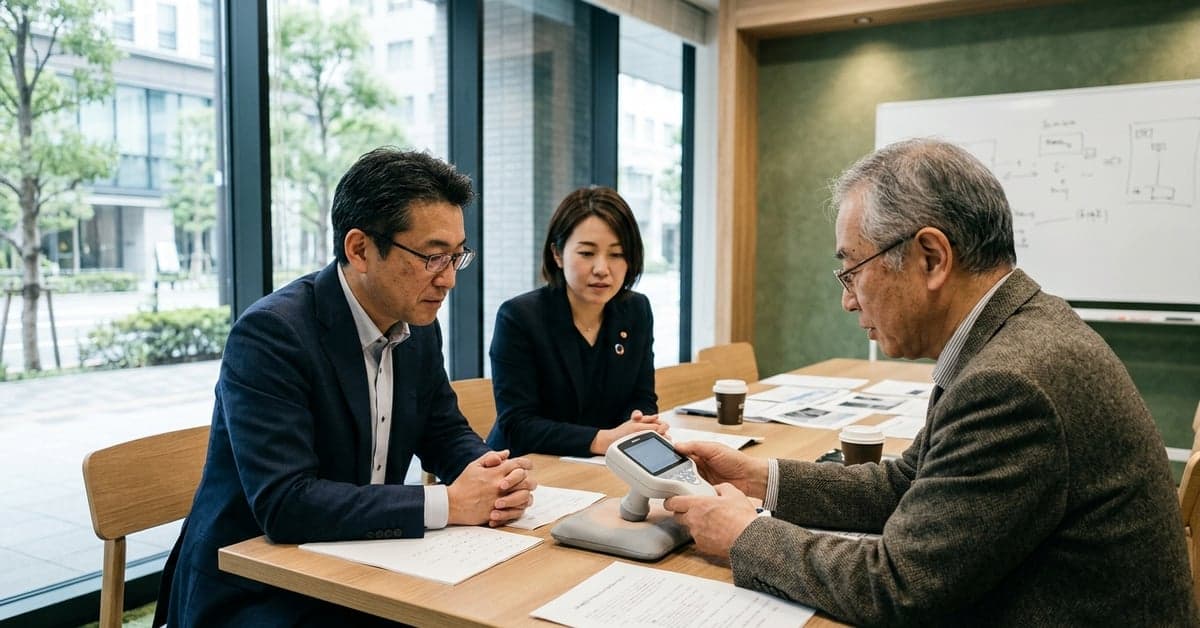
September 16, 2026 — IR‑MED and Dice Technologies signed a letter of intent to localize and prepare IR‑MED’s PressureSafe device for Japan. The companies framed the work as evaluation, evidence generation, and regulatory prep for a market with 36 million people aged 65+ and a care network of roughly 8,000 hospitals, 13,600 long‑term care facilities, and more than 16,000 home‑visit nursing stations, according to a GlobeNewswire release carried by Markets Insider. That scope makes the PressureSafe Japan collaboration one to watch, but the fine print—and the road to PMDA clearance—will decide whether it moves from pilot to standard practice.
What the PressureSafe Japan collaboration actually covers
The LOI lays out cooperation on evaluation, research support, localization, commercialization prep, and regulatory planning for PressureSafe, which uses infrared spectroscopy with a proprietary algorithm to detect early tissue damage. The document is explicitly non‑binding on most fronts, aside from confidentiality, IP, and device handling terms, per the Markets Insider post. That framing matters: it signals intent and workstreams, not a guaranteed launch.
Clinical activities are expected to include collaboration with the Department of Plastic Surgery at Kobe University, subject to ethics review and institutional approvals, the release states. Kobe University Hospital is a major research center; partnering there can speed study setup and recruitment. The hospital’s English site outlines its research remit and specialties, providing a suitable base for wound care investigations (Kobe University Hospital).
Dice Technologies brings on‑the‑ground coordination for trials, localization, and regulatory planning in Japan. That’s the right division of labor for a foreign device maker. IR‑MED owns the technology stack; Dice knows the workflows, language, and documentation standards local regulators and hospitals expect.
The market case: pressure injuries and an aging Japan
Japan’s rapidly aging population concentrates risk for pressure injuries in hospitals, long‑term care, and home care. The LOI cites the country’s sizable elder cohort and facility counts; those care settings include many immobile or high‑risk patients who need frequent repositioning and skin checks. International clinical bodies have long urged early detection and prevention, with protocols covering risk assessment, support surfaces, turning schedules, and device‑related pressure points. For background on those standards, see the international guideline from EPUAP/NPIAP/PPPIA (EPUAP guidelines).
Technology like PressureSafe aims to spot sub‑surface tissue changes before a wound is visible. If it reduces false alarms while catching more pre‑ulcer events, it can cut length of stay, avert infections, and reduce nursing workload. But adoption depends on two things: convincing outcomes in Japanese care settings and a clear path to payment.
Even without leaning on the LOI’s market estimates, Japan’s demographics underline the need. Government statistics show the share of older adults has risen for decades and remains among the world’s highest (Statistics Bureau of Japan).
Regulatory path: from ethics review to PMDA clearance
The press release signals research plans and regulatory prep, but it stops short of naming a filing route. In Japan, the Pharmaceuticals and Medical Devices Agency (PMDA) and the Ministry of Health, Labour and Welfare (MHLW) regulate devices. Depending on risk classification and novelty, a product may pursue third‑party certification (ninsho) for certain Class II devices or a full approval (shonin) for higher‑risk or novel technologies. PMDA describes the review framework and timelines on its English portal (PMDA device review).
For IR‑MED and Dice, the likely sequence looks like this:
- Secure ethics approvals and finalize study protocols with Kobe University.
- Run evidence‑generation studies in representative settings—acute, long‑term care, and possibly home‑visit nursing—to show accuracy and workflow fit.
- Complete quality management (QMS) and technical documentation in Japanese, including risk management and software lifecycle files if algorithms are in scope.
- Select the correct regulatory route (ninsho vs. shonin) based on device classification and predicate claims, then engage PMDA or a notified body.
- Plan reimbursement: align evidence with MHLW coding and pricing so hospitals and care facilities can be paid for using the device.
Localization is more than a translated manual. User interfaces must match Japanese clinical terminology, data export should map to hospital IT systems, and training needs to reflect local nursing practice. The LOI’s mention of “localization” and “commercialization preparation” hints that Dice will lead these details while IR‑MED focuses on core algorithms and device calibration.
Why a non‑binding LOI still matters for hospitals
Hospitals don’t buy press releases. They buy tools that fit care pathways, come with clear evidence, and get reimbursed. The LOI’s non‑binding nature means neither party has committed to a launch date, yet it does create a structure to produce the evidence and regulatory filings that buyers require. It also locks in responsibilities for data protection and IP, which lessen vendor risk during multi‑site studies.
If studies with Kobe University validate the algorithm’s performance across skin tones, body sites, and device‑related pressure, administrators gain options. A device that flags risk earlier than visual checks can prioritize turns, mattresses, and consults where they matter most. That change ripples through staffing plans and documentation. It can also support quality metrics that affect hospital payments and public reporting.
Care beyond the hospital is another test. Japan’s home‑visit nursing stations and long‑term care facilities operate with tight staffing. A device that is fast, battery‑reliable, and simple to interpret will have a better chance there than a system that needs calibration breaks or specialist oversight. That makes human‑factors testing as important as accuracy.
What to watch next for the PressureSafe Japan collaboration
Three markers will tell whether the PressureSafe Japan collaboration is moving from intent to impact.
- Study setup: formal ethics approvals at Kobe University and first‑patient‑in dates.
- Regulatory signaling: clarity on device classification and whether the team pursues ninsho or shonin.
- Payment pathway: early signs of coding strategy and whether evidence will target both hospital and long‑term care use.
IR‑MED and Dice have defined the work. Now they need to prove the device can fit Japan’s care realities and clear PMDA’s bar. If those pieces land, the PressureSafe Japan collaboration could show how algorithmic wound‑risk tools earn a place on the ward—and in the budgets that keep them there. For more on this, see reuters.com and bloomberg.com and nytimes.com.