
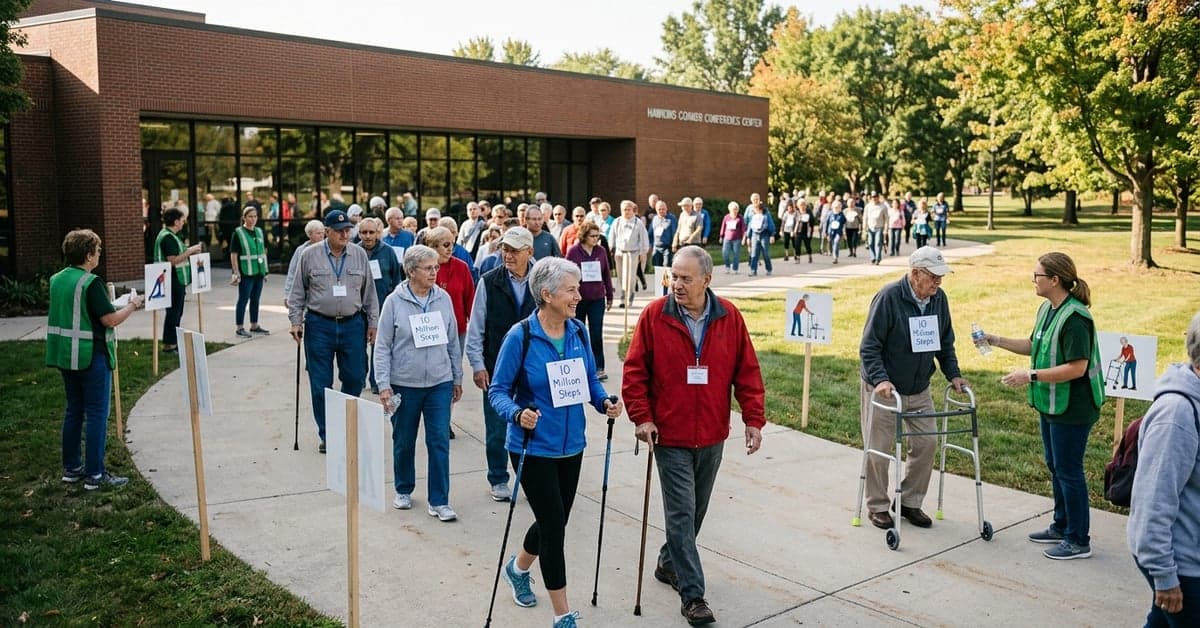
On September 10, 2026, an Ontario fall prevention walk will turn Hawkins Corner Conference Center into a community training ground for safer aging. The free event runs 9–11 a.m. at 2131 Park Avenue West, and no registration is required. According to the Mansfield News Journal on September 2, 2026, walkers can join staff from the Ohio District 5 Area Agency on Aging anytime during the window, pick up safety resources, and get flavored water with a reusable bottle.
What happens at the Ontario fall prevention walk
The Area Agency on Aging is teaming with Richland County Mobility Management to host a local stop in Ohio’s “10 Million Steps to Prevent Falls” challenge. The format is simple by design: show up, log steps with neighbors, then leave with practical tools for home and personal safety. The agency told the Mansfield News Journal the event will cover balance and mobility basics along with checklists for safer living spaces. Caregivers are encouraged to attend.
It’s part of National Falls Prevention Awareness Month, which uses community walks and yard-by-yard checkups to move prevention from theory into habit. These gatherings make space for those small, sticky lessons—how to measure a trip hazard, where to place a grab bar, why a medication review matters—that rarely land in a doctor’s office visit.
Why the walk matters for healthy aging in Ontario
Falls hit independence first. One in three Ohioans age 60 and older will experience a fall this year, the agency said via the Mansfield News Journal. That single number explains the urgency behind the Ontario fall prevention walk. A broken hip can turn a house into an obstacle course. A head injury can erase confidence long after the bruise fades.
Nationwide, the Centers for Disease Control and Prevention reports that falls are the leading cause of injury-related deaths among older adults, sending millions to emergency departments each year. Those injuries often start a decline that is hard to reverse. The CDC’s overview of risks—from lower-body weakness to certain medicines—underscores how many of the drivers are changeable with steady practice and planning (CDC).
Ohio’s answer has been to pair education with a clear target: more daily movement. The state’s “10 Million Steps to Prevent Falls” campaign encourages residents to count and contribute steps, then connect those steps to evidence-based habits. The Ohio Department of Aging points residents to programs and checklists that turn walking gains into fewer hazards at home (Ohio Department of Aging).
From steps to fewer slips: evidence-based fixes
Walking builds leg strength and improves balance. It also gives people a low-pressure way to restart activity after a scare. But steps alone are not the whole plan. The most effective fall-prevention efforts layer simple, proven moves at home and in routines.
- Clear the path: Remove loose rugs, secure cords, and keep everyday items between hip and shoulder height. That trims sudden reaches and trips. The National Council on Aging offers a concise room-by-room guide (NCOA).
- Light the way: Use nightlights in halls and bathrooms. Replace dim bulbs. Good lighting turns late-night steps into safe ones.
- Grip and glide: Install grab bars in the shower and near the toilet. Add non-slip mats. Consider contrasting tape on stair edges.
- Check meds and vision: Ask a pharmacist or clinician to review prescriptions for side effects like dizziness. Update eyeglass prescriptions on schedule.
- Practice balance: Simple heel-to-toe walks, single-leg stands near a counter, or evidence-based classes can build stability over weeks, not months.
Community events bridge knowledge and action. Many people know they should secure a throw rug; fewer have felt the difference after one small change. The walk format lets residents compare notes, try quick drills, and leave with a plan. That’s where awareness turns into fewer ambulance rides.
How to join the September 10 event in Ontario
The Hawkins Corner Conference Center walk is open to older adults, caregivers, friends, and any resident interested in safer mobility. The host site is 2131 Park Avenue West. Drop in anytime between 9 and 11 a.m. The organizers will provide flavored water and reusable bottles, according to the Mansfield News Journal. No sign-up is needed.
Bring comfortable shoes and, if you track steps, a phone or pedometer. If transportation is a barrier, the partnership with Richland County Mobility Management signals local support for getting people to the site; residents can contact county mobility programs to explore options.
For those who can’t attend, the Ohio Department of Aging keeps fall-prevention resources online year-round, including home safety checklists and links to balance programs (Ohio Department of Aging). The CDC and NCOA pages listed above are also practical starting points for spotting risks and building safer routines.
What this means beyond one morning walk
The Ontario fall prevention walk is more than a date on a calendar. It is a template any town can copy: meet in a familiar place, move side by side, and share steps that turn fear into practice. When local groups put prevention on a path people already take—a short, social walk—adoption rises.
That’s the message behind Ohio’s “10 Million Steps” push. The number matters less than what it stands for: steady activity, safer homes, and fewer injuries that steal hard-won independence. For Ontario residents, showing up on September 10 is a chance to log miles and leave with one small change you’ll keep. That’s how a community lowers fall risk—one practical fix, and one shared mile, at a time.