
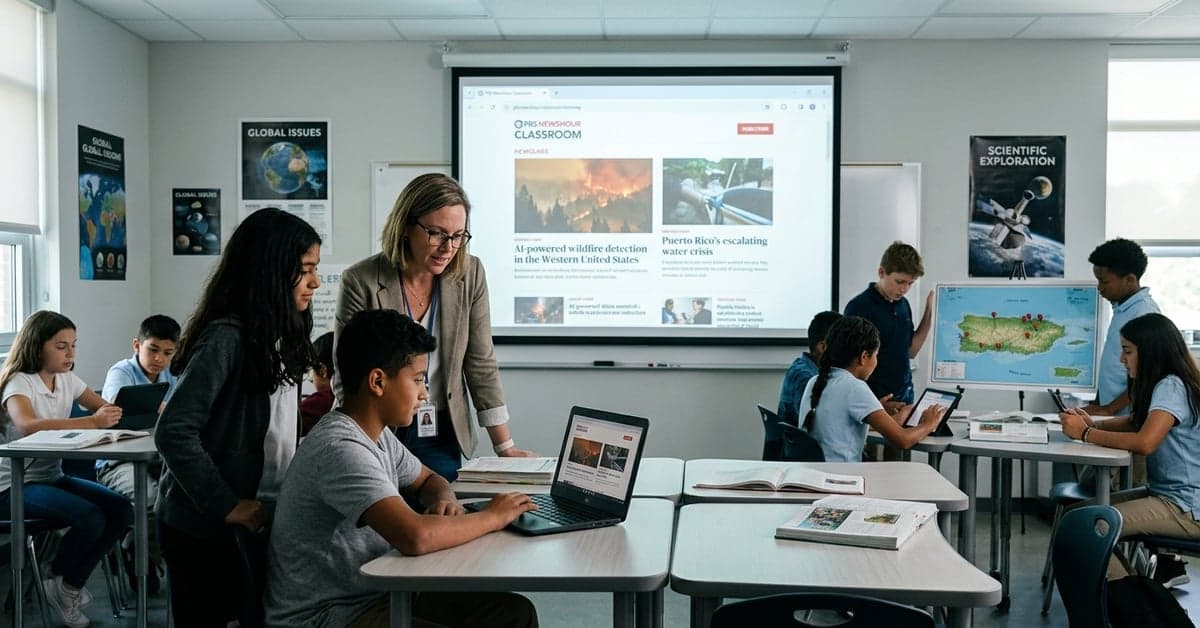
On August 10, 2026, PBS NewsHour Classroom highlighted a new lesson on Puerto Rico’s escalating water crisis for grades 6–12, bookending a week that also brought updates on the midterms and AI-powered wildfire detection. The cadence isn’t accidental. For teachers setting up the first month of school, these releases signal which real-world stories will anchor discussion, writing, and data analysis in class.
What PBS NewsHour Classroom just published
PBS describes the hub as “News for Students and Teacher Resources, Grades 6–12.” Its menu emphasizes Daily News Lessons, longer Lesson Plans, and subject strands in Civics & Social Studies, ELA & Arts, STEM, and Media Literacy. According to the PBS NewsHour Classroom homepage, August opened with three time-sensitive entries:
- August 10, 2026: Drought and aging infrastructure pushing Puerto Rico into a water crisis.
- August 7, 2026: “Monitoring the Midterms,” framing Abdul El-Sayed’s primary win and what it could mean in November.
- August 5, 2026: How AI cameras are spotting wildfires before they get out of control.
That mix—climate stress, electoral stakes, and applied AI—maps closely to where many secondary classrooms will spend their first units: bridging civics and science with current events, then asking students to interrogate sources and claims.
Why these topics matter for the first month of school
Start-of-year planning usually favors issues that are local enough to feel urgent and broad enough to connect across subjects. The Puerto Rico lesson checks both boxes. Students can track drought severity and infrastructure strain, then explore policy trade-offs. For context, the U.S. Drought Monitor’s Puerto Rico map offers current conditions and historic comparisons that can power quick data-literacy activities.
The midterms entry slots cleanly into civics: it brings a named race and a concrete date into focus, the raw material for analyzing turnout, messaging, and regional dynamics. Teachers can introduce standards-aligned concepts—like primary vs. general elections or the role of independents—without lifting the unit out of the headlines.
The AI wildfire lesson is the STEM-and-media literacy bridge. It lends itself to asking what sensors measure, how algorithms triage alerts, and where false positives matter. Programs like UC San Diego’s ALERTCalifornia show how camera networks and machine learning support human dispatchers. That gives students a tangible case study instead of a hype reel.
There’s another reason this slate lands now. AI’s social and climate implications are dominating front pages and op-eds. The Guardian’s AI coverage on August 11, 2026, ranged from energy and emissions debates to political uses of the technology, underscoring how charged the topic has become (The Guardian). Bringing AI into a concrete, local hazard—wildfire detection—helps teachers keep the conversation specific and evidence-based.
How teachers can use NewsHour Classroom lessons this fall
Daily News Lessons are built for bell-ringers and short seminars; the longer Lesson Plans can anchor multi-day work. Pairing the August releases offers three clear paths:
- Cross-curricular mini-unit: Use the AI wildfire lesson to teach observational claims and data bias in science, then pivot to the midterms piece to analyze claims and counterclaims in civics.
- Place-based inquiry: Start with Puerto Rico’s water crisis. Have students pull two data points from the Drought Monitor, draft a short claim-evidence-reasoning paragraph, and close with a policy exit ticket.
- Media literacy thread: Ask students to compare headlines and source types around each story, then diagram what counts as primary data versus commentary.
Departments can split the workload. Science leads on sensors and verification. Social studies frames trade-offs and institutions. ELA coaches source analysis and argument writing. Because PBS NewsHour Classroom materials are tied to current dates and events, they also support spiraled practice: revisit the same themes with new stories as the semester unfolds.
For families, these topics are accessible. Water access, fires, and elections affect daily life. Posting a weekly summary of in-class prompts lowers the temperature around political content and shows that students are practicing skills, not echoing pundits.
What to watch next from PBS NewsHour Classroom
Expect the hub to keep balancing civics, climate, and technology as the news cycle turns. If hurricanes intensify or new wildfire data emerges, science tie-ins are obvious. If legal fights shape ballot access, civics lessons will have fresh case studies. Given the attention on AI’s benefits and downsides, teachers will likely see more applied-technology entries—ideally, each paired with clear methods students can examine.
The value of PBS NewsHour Classroom isn’t just speed; it’s the framing. Lessons point to verifiable facts and public sources, then ask students to reason from them. In August 2026, that means starting the year with three live tests of civic discourse: where the water goes, how the votes add up, and when a machine’s alert should trigger human action.
Districts looking to build coherence across courses can treat PBS NewsHour Classroom as a weekly anchor. Set the cadence now, and by November, students will have a body of work they can cite—data they collected, arguments they refined, claims they checked—when the big questions arrive on the ballot and in the news. For more on this, see nytimes.com.
Related reading: AI in Education • Data Privacy • AI in Society