
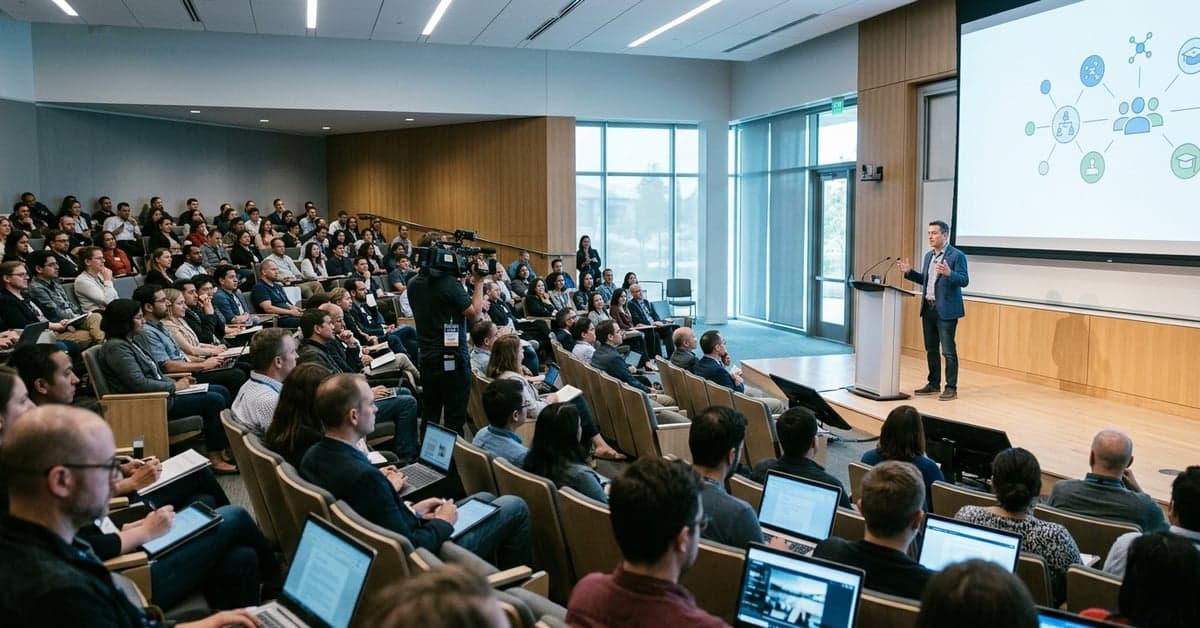
From July 8-10, 2026, more than 400 technology professionals met at UC Merced for the UC Tech Conference 2026, according to UC Tech News. The gathering’s stated aim was simple: share knowledge, build connections, and advance higher education, research, technology, and patient care across the University of California. The message between the lines was sharper. UC is moving from campus-by-campus projects to shared tools and communities.
What happened at UC Tech Conference 2026
In a visual recap published by UC Tech News on July 21, 2026, organizers highlighted the scale and mix of attendees and sessions at UC Merced. The conference foregrounded collaboration across campuses, with practitioners trading playbooks rather than just slide decks. That tone matters for a system that spans 10 campuses, five medical centers, and thousands of technologists.
The recap framed the event around outcomes that reach beyond IT. Sessions tied technology work to research breakthroughs, student services, and clinical care. That aligns with a growing push in higher ed to form cross-functional communities of practice, a model EDUCAUSE has tracked for years as a driver of reuse and speed in university IT programs. For context on why these structures work, see EDUCAUSE’s take on communities of practice supporting innovation.
The UC Tech Conference 2026 recap also underscored the host role UC Merced played as a younger campus showing mature convening power. That symbolism lands: the system’s newest campus setting the stage for shared practices that older campuses can adopt as well. It’s a visible shift from tradition to shared momentum.
How the UC technology summit is centering accessibility and AI
UC Tech News paired the conference with features that point to where the collaboration is headed. One story describes how a community-built GPT is improving accessibility at UC, arguing that “AI is a team sport.” The phrasing is more than rhetoric. A shared assistant built with input from disability services, IT, and faculty can cut duplication and keep solutions aligned with WCAG accessibility standards. It also helps staff spot gaps early, because many eyes look at the same model and prompts.
That model of co-development got more ballast with the launch of a UC Digital Accessibility Community of Practice, which UC Tech News said drew strong systemwide interest. Communities of practice give large systems a way to turn policy into day-to-day checklists. In accessibility, that can mean consistent captioning workflows, shared testing scripts, and faster remediation when students flag issues.
The AI angle isn’t only about building tools. Governance showed up too. UC Tech News flagged “AI Vetting: Balancing Innovation and Risk,” a sign the system is trying to operationalize review without freezing progress. That tracks with the federal NIST AI Risk Management Framework, which many campuses now reference to standardize model assessment, data controls, and post-deployment monitoring.
Put together, these posts suggest a pattern. What started as demos and hallway conversations at the UC Tech Conference 2026 is turning into named groups, shared assets, and a common language for risk.
Awards, cybersecurity, and governance push the work forward
Recognition can nudge culture as much as policy. UC Tech News highlighted the UC Tech Awards 2026, designed to showcase bold ideas and measurable impact across UC. Awards send a clear signal about what gets valued: projects that cross campus lines, involve students or clinicians directly, and can be reused without months of rework.
Security is following the same collaborative arc. UC Tech News announced speakers for the 2026 UC Cybersecurity Summit, reinforcing that information security is a shared responsibility, not a series of isolated audits. Expect discussion to include supply chain risks, identity, and detection in operational tech environments. Those topics are now standard in higher ed and healthcare, and they benefit from common playbooks and tabletop exercises that repeat across campuses.
The connective tissue is governance that practitioners can live with. The NIST AI framework emphasizes documentation and continuous evaluation rather than once-and-done approvals. That matches the tone in UC Tech News coverage of AI vetting: move fast, but write down how and why, then measure the effects. The same approach fits accessibility and cybersecurity, where changes land daily.
One more cultural signal came on July 22, 2026, when UC Tech News launched a “UC Tech Leaders” Q&A series with a profile of Ramadan Barasi, an information systems analyst at UC San Diego. Spotlights like this anchor systemwide goals in the careers of individual builders. They also make it easier for peers at UCLA or UC Davis to find the person behind a good idea and reuse it.
What to watch after UC Tech 2026
The next six to twelve months will test whether the conference energy sticks. Three indicators will show progress. First, the adoption rate of shared AI tools built in the open. If the accessibility GPT spreads beyond its starter group, the model works. Second, the growth and output of the accessibility community of practice. Regular artifacts—checklists, templates, code snippets—beat slogans. Third, visible reuse in award submissions. If entries cite prior UC work by name, the habit of building once and borrowing often is taking hold.
Another marker will be cross-pollination between security and accessibility teams. The more these groups co-author guidance, the less likely it is that one set of rules blocks the other’s gains. UC can also watch outcomes on the ground: fewer repeat audits, faster response to accommodation needs, and clearer vendor expectations in RFPs. Campus staff should not have to reinvent contract language that another UC team already tuned.
Location matters, too. Hosting at UC Merced put the Valley in the center of a systemwide conversation. Keeping future gatherings distributed can surface ideas that start far from the biggest campuses. That makes the network more resilient, because solutions don’t depend on one office or leader.
The through line is clear. The UC Tech Conference 2026 wasn’t just a calendar event; it was a marker that UC tech is choosing shared tools, open governance, and repeatable playbooks. If UC keeps that pace, the next visual recap on UC Tech News should show fewer silos and more borrowed code. For more on this, see bloomberg.com.