
On July 16, 2026, Nature reported record US cases of cyclosporiasis and an urgent hunt for the food source behind them. The US Cyclospora outbreak has pushed investigators to follow a familiar, difficult trail through the fresh-produce supply chain.
What Nature reports about the US Cyclospora outbreak
Nature’s news desk said cases have hit record levels and scientists are racing to find where the Cyclospora parasite entered the US food supply (Nature, July 16, 2026). The illness it causes, cyclosporiasis, is marked by prolonged watery diarrhea, fatigue, and weight loss. Most infections in the United States trace to raw produce, often herbs or salad mixes, consumed during warmer months, according to the US Centers for Disease Control and Prevention (CDC).
That seasonality matters. It narrows the likely products and growing regions. It doesn’t make the search easy. The parasite is microscopic, doesn’t grow in routine lab culture, and is usually identified by PCR in stool, the CDC notes. Finding the exact item—let alone the farm or water source—often takes weeks.
How investigators trace Cyclospora in produce supply chains
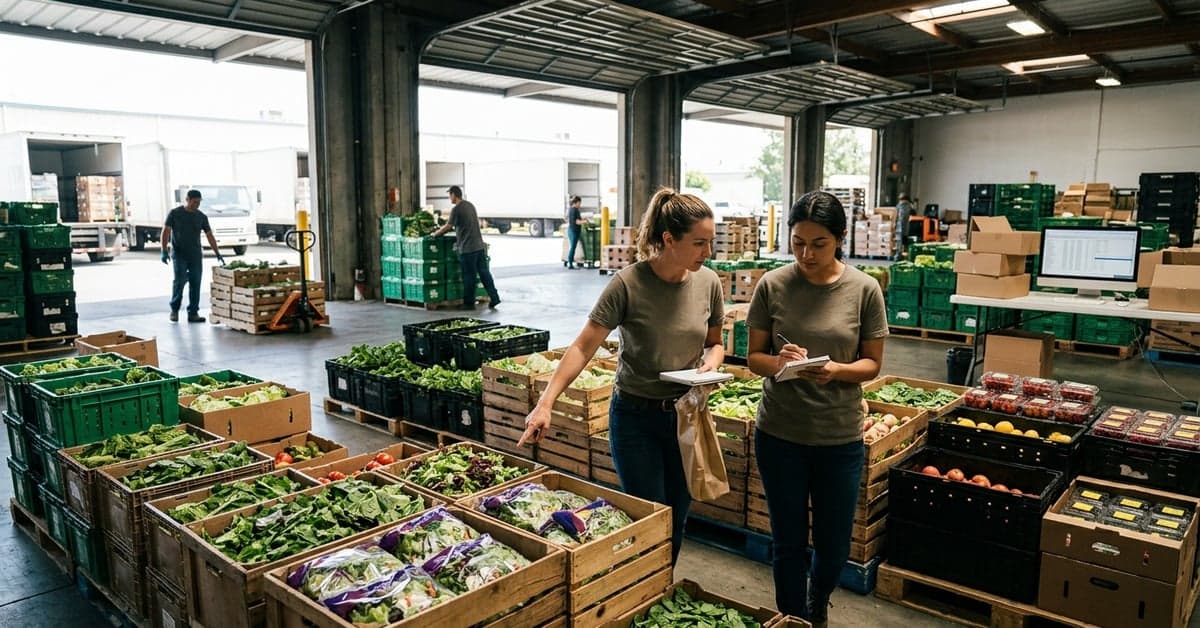
Outbreak work starts with interviews and receipts. Investigators ask patients to list what they ate and where they shopped. Loyalty card histories and digital receipts can fill memory gaps. From there, public-health teams build distribution maps that link stores to distributors and, finally, to packing houses and fields. The Food and Drug Administration (FDA) and state partners run this traceback in parallel with lab testing and environmental sampling, including irrigation water and processing equipment.
The biology raises the stakes. Cyclospora cayetanensis oocysts can resist routine chlorine disinfection, so washing alone may not clear contamination, the CDC warns. Cooking inactivates the parasite, but the suspect foods are usually eaten raw. FDA field teams, when they converge on a candidate product, often hunt for the same genetic signatures in water or on harvest tools that match what patients carried. That evidence can be sparse. Unlike bacterial pathogens, this protozoan has limited, standardized subtyping tools, which complicates linking scattered clusters across states. The CDC maintains national cyclosporiasis dashboards and publishes any multi-state cluster details as they emerge (CDC outbreak investigations).
Nature frames the core question: where did the parasite enter the chain? History suggests fresh herbs—cilantro and basil have featured in past summers—or leafy greens. But every season is different. A single field or wash tank can seed a long distribution tail. That’s why the current US Cyclospora outbreak is as much a test of data as of lab work.
FSMA 204 traceability rule faces its first real test
January 20, 2026 marked the compliance date for the FDA’s Food Traceability Rule under FSMA Section 204. The rule requires farms, packers, and retailers to keep standardized records—such as traceability lot codes—at specific handoffs, called Critical Tracking Events. The aim is simple: when an outbreak hits, investigators should reconstruct the path from store shelf back to field far faster than before (FDA Food Traceability Final Rule).
This summer is the first big exam. If companies have adopted clean lot coding and retained the “Key Data Elements” the rule spells out, traceback teams can pull the thread quickly. When data are patchy—splintered by repacking, commingling, or missing lot codes—the hunt slows or stalls. The difference shows up on the epidemic curve. A faster source find can shave days, sometimes weeks, off exposure, because advisories, market withdrawals, or targeted recalls can follow swiftly.
That’s the underappreciated angle in Nature’s report. The US Cyclospora outbreak is not just about a parasite riding in on produce. It’s the first high-profile test of whether FSMA 204 can cut through distribution noise during a complex, multi-state parasite event. If FDA and states publish a clear traceback chain that ties a single lot or packing run to cases, the new records regime will look like a real step forward. If the trail blurs, policymakers will face questions about enforcement and data quality.
What the cyclosporiasis pattern suggests right now
According to the CDC, US cyclosporiasis spikes in late spring and summer. Many clusters have involved imported produce, though domestic sources do occur. The organism needs time outside the host to become infectious, which often points to environmental contamination of water used for irrigation or rinsing. That profile nudges investigators toward shared wash systems, common suppliers, or fields drawing from the same canal.
Genomic methods could help, but they remain a work in progress for this parasite. Public health labs have expanded PCR capacity, yet standardized, high-resolution typing is still limited compared with salmonella or E. coli. In practice, epidemiology and supply-chain records carry the load. FDA’s environmental teams will look for oocysts in water and on equipment, and any positive finds near a candidate facility can tip an investigation from suspicion to action. Scientific reviews have tracked these challenges for decades, underlining why Cyclospora remains a hard target in food safety research (Emerging Infectious Diseases).
What to watch next in the Cyclospora hunt
Three signs will mark real progress. First, a convergence on a single ingredient across cases and states, confirmed by receipts and shopper data. Second, a public advisory that narrows the risk to a brand, pack date, or lot, backed by FDA traceback. Third, environmental test results that connect a facility or field to the same organism found in patients. If those pieces line up, recalls move quickly.
Consumers will also look for steady updates. The CDC’s cyclosporiasis pages post weekly case curves and state-level tallies when clusters are identified. FDA’s incident listings and outbreak advisories, once a product is in scope, will flag any market withdrawals or testing results. Nature will likely continue to track the broader science and policy angles as new data appear on this record-setting season (Nature news).
There’s a practical point, too. The CDC says standard produce washing can lower risk but may not remove all contamination from Cyclospora. Peeling or cooking eliminates it, though that’s not useful for salad mixes and herbs. People with persistent diarrhea should contact a clinician, since the infection requires specific testing and is treatable with prescription antiparasitic drugs.
This investigation is moving under a new traceability regime, during peak produce season, against a parasite that hides well. How quickly teams identify the source will tell us whether FSMA 204 has teeth in the real world—and whether the US Cyclospora outbreak becomes a case study in faster, cleaner recalls. For more on this, see bloomberg.com and nytimes.com.
Related reading: AI in Education • Data Privacy • AI in Society