
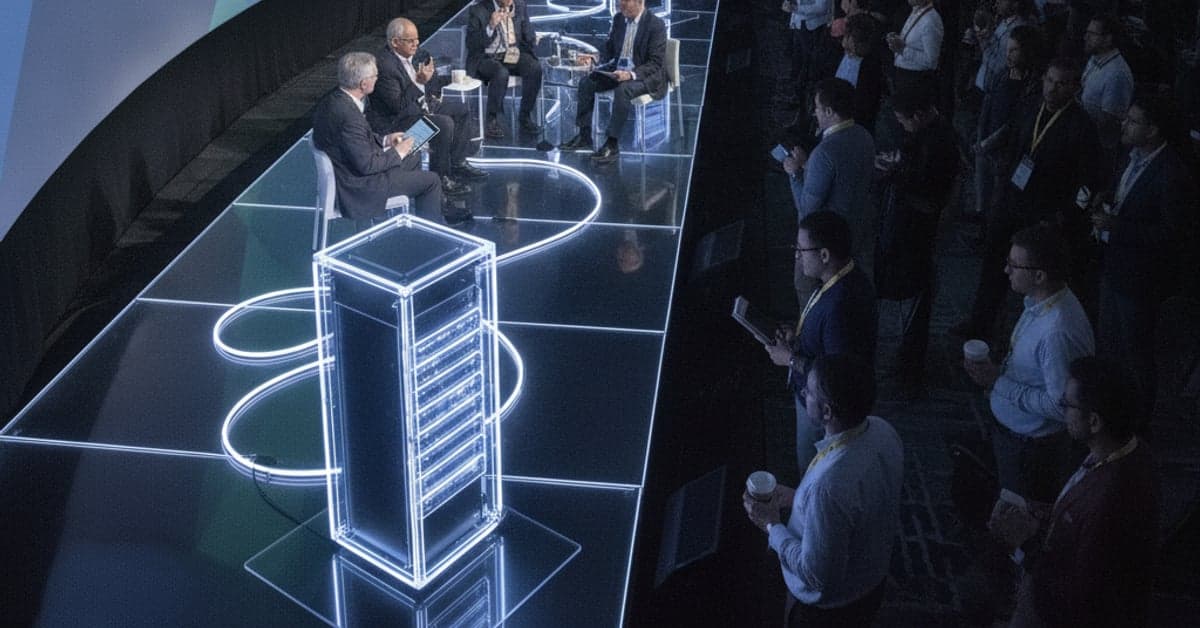
September 29 to October 1, 2026, The AI Conference returns to San Francisco with three days, seven tracks, and more than 120 speakers. The organizers say 5,500 builders, researchers, and leaders will attend, making it one of the larger AI gatherings on the calendar, according to the event site aiconference.com. Beyond the scale, the early speaker list points to a clear agenda: push infrastructure performance while bringing interpretability and education into the same room. That mix is the real news for anyone eyeing AI Conference 2026.
What the AI Conference 2026 lineup already reveals
The first confirmed speakers span the stack, and that alone tells a story. Peter Norvig, a Distinguished Education Fellow at Stanford’s Human-Centered AI Institute and former Google research director, brings decades of applied AI and pedagogy. Emmanuel Ameisen, an interpretability researcher at Anthropic, works on understanding how large language models operate internally, according to the conference site. Illia Polosukhin co-authored “Attention Is All You Need,” the paper that defined modern transformers, and now leads NEAR AI. Malika Aubakirova focuses on AI infrastructure investing at Andreessen Horowitz. Chris Lattner, CEO of Modular and creator of LLVM, Clang, Swift, and MLIR, anchors the compiler and systems angle.
This blend suggests two tracks of gravity. One centers on the internals of models: interpretability, evaluation, and methods that make systems safer and more predictable. The other centers on the compute stack that makes those systems shippable: compilers, runtimes, and deployment tooling. Few lineups carry both signals this strongly at once. If you’re building or scaling models, that’s the conversation you want in one place.
Why this San Francisco AI conference leans infrastructure
Look at the systems talent. Lattner’s presence signals attention on compilers and runtimes. LLVM and MLIR reshaped how code generation and heterogeneous hardware are handled; those decisions ripple into training and inference costs. Modular’s work on a unified compute layer points the same way. Expect code-level details to surface from that camp, not just slideware. For engineers chasing lower latency or better portability, this is the room.
The investing lens supports that read. Aubakirova’s focus on AI infrastructure at a16z reflects where capital is flowing: inference efficiency, orchestration, data pipelines, and observability. When investors and compiler builders share a stage, the subtext is clear. Performance and deployment are strategic, not just technical chores.
Seven tracks over three days gives the organizers room to split infra from model techniques without starving either, according to aiconference.com. That structure should help hands-on attendees plan around code, hardware, and scaling talks while product leaders chase roadmap sessions.
Safety research meets shipping code
The other theme is interpretability. Anthropic has published extensively on model behavior and transparency, and a dedicated interpretability researcher on stage hints at sessions that go past policy talking points. The work matters for production teams: understanding internal circuits and failure modes feeds better evals, safer prompts, and more reliable guardrails.
Norvig’s background bridges practice and education. Expect pragmatic framing: what today’s tools can do, where they fail, and the kind of evidence decision-makers should demand. By pairing that with model internals and systems talks, the conference sets up a rare through-line from research insight to deployable change.
Polosukhin brings a reminder that architecture still shapes everything. The transformer blueprint sits behind nearly every large model in use today. Hearing from a co-author while infra leaders discuss compilers closes a loop: what the model needs and how the stack delivers it. Few events stage that end-to-end conversation cleanly.
How to plan for AI Conference 2026: tickets and scale
The organizers expect 5,500 attendees across the three days, according to the site. That scale shapes the experience: crowded keynotes, but also a deep bench of parallel talks. With seven tracks, block time early for the sessions that hit your goals. The site lists multiple ticket options and, at press time, advertised a discount of $1,800 for some tiers. If your team needs more than hallway serendipity, set up meetings around the program now.
- Founders and product leads: watch for sessions tying model safety findings to roadmap choices, so you can justify when to ship and when to hold.
- Infra and MLOps teams: target compiler, runtime, and deployment talks. Lessons here can move latency and cost numbers this quarter.
- Researchers and educators: use the mix of interpretability and systems sessions to frame course material and lab priorities for the year ahead.
San Francisco is a practical fit for vendor meetings and lab visits around the dates. The timing—late September into early October—lines up with common fall release cycles, which can make the event a useful forcing function for demos and pilots.
What to watch as more speakers land
The site says new speakers and features will be announced weekly, which means the agenda could tilt further toward agents, evaluation tooling, or privacy-preserving techniques as names are added. Watch for two signals in particular: a dedicated track or cluster on interpretability methods, and concrete case studies on inference cost cuts or compiler wins. If both show up, AI Conference 2026 will be a rare place where safety science and shipping speed share specifics on the same day.
Expect strong attendance for any session connecting research artifacts to production metrics. A talk that shows how an interpretability finding changes prompt hardening, which then shaves false positives or live incidents, will draw a crowd. So will a compiler session that turns a messy, multi-backend deployment into a simpler pipeline with measurable throughput gains.
For now, the signal is clear. The early lineup mixes model insiders, system builders, and educators in a way that rewards teams bringing hard questions. If your 2026 plan hinges on safer models and cheaper inference, AI Conference 2026 looks like the place to pressure-test both—and come home with choices you can ship. For more on this, see bloomberg.com and nytimes.com.