
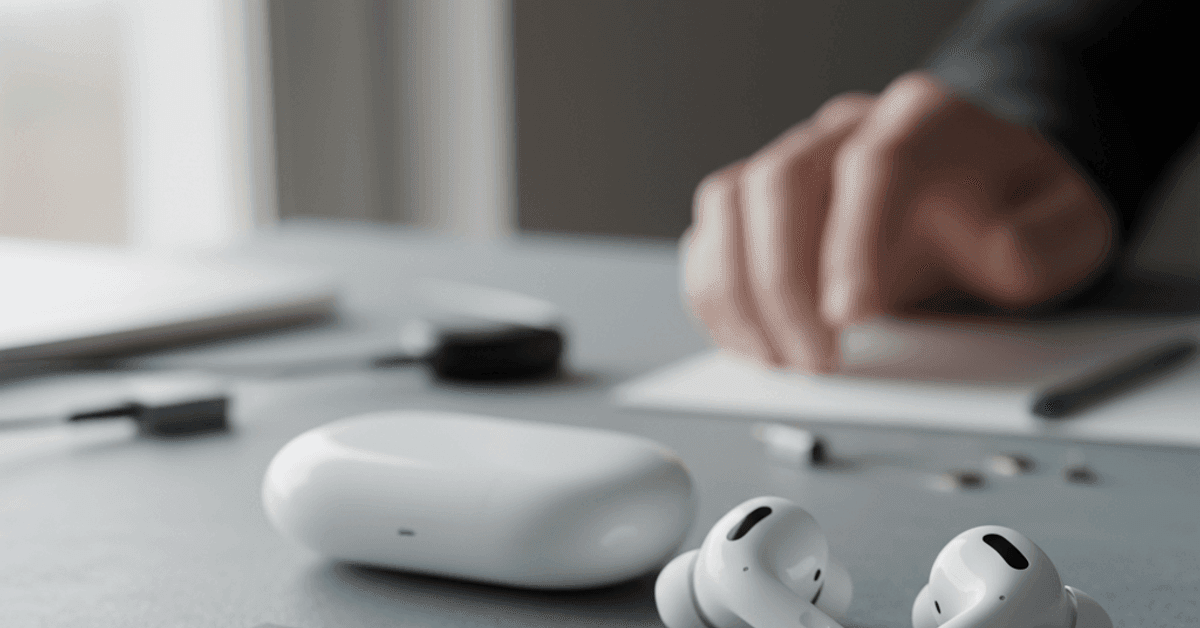
Apple’s latest AirPods updates spotlight a rapid shift in the AI hearables market as on-device features move mainstream. Deep discounts ahead of Black Friday draw attention, yet the real story is the upgraded intelligence now built into everyday earbuds.
AI hearables market impact of AirPods updates
Apple’s new AirPods 4 and AirPods Pro 3 push intelligent earphones beyond incremental sound tweaks. According to Engadget, AirPods Pro 3 add live translation, stronger active noise cancellation, and longer battery life in a familiar design. These shifts matter because they normalize AI-first features at scale, which pressures rivals to respond.
The Verge highlights steep AirPods 4 pricing drops, which will likely accelerate adoption. Wider adoption matters for developers and component suppliers, because it expands the addressable base for AI audio experiences. As a result, platform gravity increases around Apple’s audio stack and iOS services.
For smaller hearable makers, the bar just rose. Competitive differentiation now requires more than decent sound or comfort. Instead, vendors must deliver meaningful AI features, robust privacy, and reliable on-device performance. Consequently, the competitive cycle tightens.
AirPods Pro 3 features and H2 chip upgrades
Engadget notes that AirPods Pro 3 refine nearly every listening layer, while keeping the pocketable form factor. The standout change is live translation that routes through Siri with help from voice isolation, beamforming mics, and upgraded noise control. Travelers and multilingual teams gain immediate utility, which further embeds earbuds into daily communication.
Apple’s H2 chip sits at the center of these improvements. Purpose-built audio silicon enables low-latency processing for noise cancellation and intelligibility. Additionally, the chip provides headroom for ambient features that run continuously without hurting battery life. Apple’s silicon approach creates a durable moat for future earbuds and accessories.
AirPods 4 target a lower price tier with improved audio and deep iOS integration, as The Verge reports. Spatial audio with head tracking, system-level pairing, and seamless handoff extend convenience. Although these features might seem subtle, they reinforce the ecosystem lock-in that competitors must overcome.
Readers can review Engadget’s breakdown of the current AirPods lineup for a fuller look at the feature spread and discounts. These reviews offer practical context for how the new capabilities behave in the real world.
Engadget’s AirPods Pro 3 coverage details live translation and battery gains, while The Verge reports AirPods 4 pricing and integration highlights. A broader overview of seasonal Apple deals also appears in Engadget’s guide.
Wireless earbuds market share and competition
When AI features migrate into mass-market earbuds, the true wireless market evolves in lockstep. Industry trackers like IDC’s wearables program monitor share shifts across premium and midrange segments. Apple’s volume and marketing muscle often shape buyer expectations, which can quickly redefine category baselines.
This cycle raises two clear challenges for competitors. First, they must ship reliable AI features that run locally or with minimal cloud dependence. Second, they must balance battery life, comfort, and thermal limits while maintaining price discipline. Moreover, they need viable software roadmaps that deliver useful upgrades over time.
Brands that lean on platform partnerships may secure an edge. For example, integrating translation services, accessibility tools, or adaptive listening profiles can improve value without heavy hardware costs. Nevertheless, execution quality matters more than feature lists, because audio edge cases expose weak pipelines fast.
Voice isolation technology and privacy considerations
Voice isolation technology is becoming a baseline requirement rather than a premium add-on. Beamforming microphones and enhanced signal processing increase call clarity, especially in noisy spaces. Furthermore, these systems help power live translation and voice assistants by improving input quality.
Privacy expectations rise alongside capability. Users increasingly want on-device processing for sensitive audio tasks, especially during calls and meetings. Therefore, vendors should disclose where data is processed, how long any cloud snippets persist, and what opt-outs exist. Clear privacy dashboards will build trust as earbuds take on more assistant-like roles.
Developers should also plan for accessibility. Real-time captions, hearing wellness insights, and context-aware amplification can assist more people. Additionally, transparent safety framing will reduce friction in workplaces that restrict microphones or recording features.
Apple H2 chip upgrades reshape software roadmaps
The H2 chip’s efficiency enables compact designs to handle continuous listening and adaptive noise control. This permits new classes of low-latency features that feel invisible to users. In practice, that makes intelligent earphones more useful on commutes, in offices, and during travel.
Software teams will likely pivot to features that combine voice isolation, scene detection, and lightweight personalization. For example, earbuds could auto-tune for train cabins or quiet rooms using learned profiles. Meanwhile, developers may ship smaller, on-device models that respect privacy while still adding value.
Because Apple’s silicon cadence is predictable, rivals should map features to their own chip timelines. Timely updates matter. Otherwise, products risk lagging behind ecosystem expectations for audio intelligence, battery life, or latency.
What this means for buyers and builders
For buyers, the takeaway is simple. Intelligent earbuds are no longer niche. With live translation, stronger ANC, and better battery life reaching mainstream models, smart earbuds offer practical gains today. Moreover, deep OS integration reduces friction in daily use.
For builders, the message is urgent. The window to differentiate on basic specs is closing. Teams should ship credible AI use cases that improve clarity, comprehension, and control without adding cognitive load. In addition, they should prioritize privacy-forward designs and transparent settings.
Support ecosystems will matter even more. Partnerships with productivity apps, conferencing tools, or travel platforms can unlock tailored experiences. Consequently, roadmaps that align silicon, software, and services will ship smoother features, sooner.
Outlook: Where the AI hearables market goes next
Over the next year, expect more on-device audio intelligence and tighter OS hooks. As premium features flow down to midrange models, entry-level buyers will still see meaningful gains. Meanwhile, enterprise use cases may expand, especially around translation aid, note capture, and meeting clarity.
Apple’s latest moves set a clear trajectory, and competitors will follow with their own blends of silicon and software. The winners will deliver helpful features that feel seamless, secure, and power efficient. Ultimately, that is how intelligent earphones earn a permanent place in daily workflows.