
On July 30, 2026, Cornell Business News marked a milestone: FarmNet has supported New York farms for 40 years. The headline is brief. The consequence isn’t. The Cornell-affiliated service has become a go-to backstop when a farm faces a make-or-break moment.
Cornell FarmNet 40 years: what the milestone really means
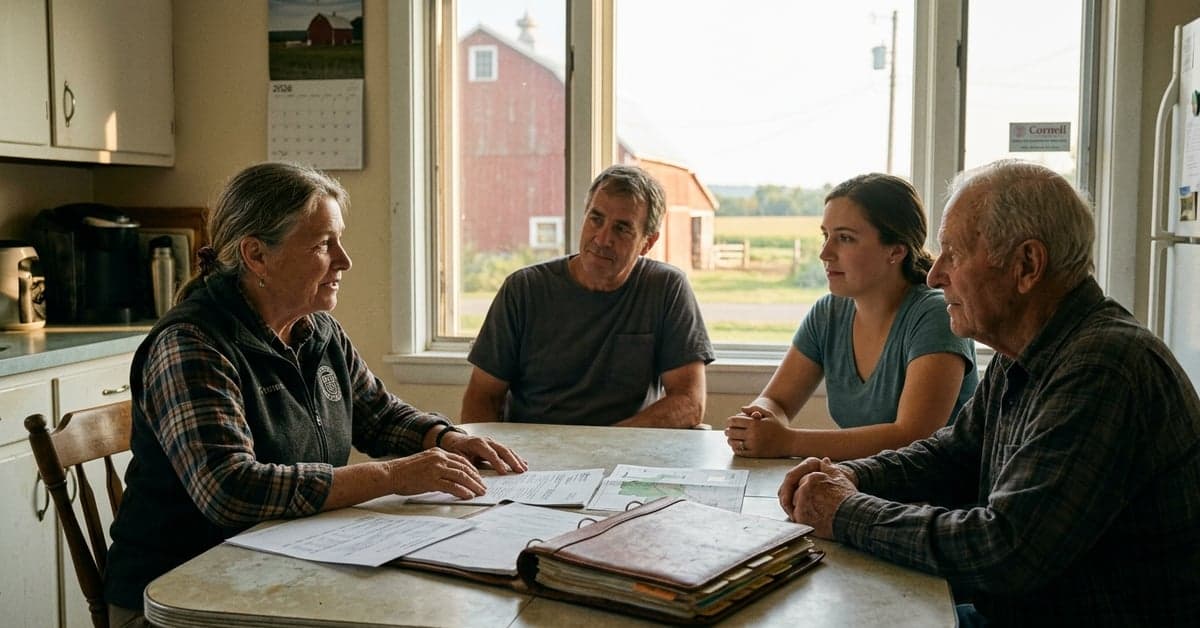
The story isn’t just longevity. It’s design. Cornell FarmNet built a model that treats a farm as both a business and a family. That seems obvious until you try to solve a debt spiral or a succession dispute with spreadsheets alone. According to New York FarmNet, teams pair a financial consultant with a family consultant, meeting on the farm, confidentially, at no cost to the producer. That pairing has held since the 1980s farm crisis that spurred its creation, and it still fits the problems farms bring to the table today.
Cornell’s own note underscores continuity: four decades of cases, across commodities and counties. The missing line is what that consistency signals in 2026. It says farmers keep calling when banks tighten, when weather wrecks a season, and when the next generation wants in but the numbers don’t yet work. It also says a university-backed service can stay neutral in conflicts that start on balance sheets and end at kitchen tables.
Inside the FarmNet model Cornell built
FarmNet’s structure looks simple. It’s anything but in practice. The two-consultant team tackles the immediate cash flow and the human dynamics that can freeze decisions. The organization describes help with budgeting, lender talks, enterprise analysis, and mediation during family meetings—services that match what many producers lack time or expertise to do alone. Because advisors visit on-site, they see the herd, the books, and the people in one pass, which compresses diagnosis and trust-building.
That hybrid—business and family, on the farm—sets Cornell FarmNet 40 years apart from most hotlines or task-specific programs. It reduces the rework that happens when a family lawyer, a tax accountant, and a banker give separate, partial answers. It also fits New York’s mix of small and mid-sized farms, where the owner is also the operator and the HR department.
The program doesn’t run in a vacuum. It sits inside a larger Cornell ecosystem that reaches into every county through Cornell Cooperative Extension. That network, along with local lenders and county agriculture staff, often becomes the referral engine. The result is faster triage when a farm hits a wall—someone nearby knows the number to call.
Why FarmNet’s playbook matters more now
The next decade brings problems tailor‑made for a team approach. Debt service looks less forgiving with higher rates. Volatile input costs strain working capital. And succession can drag, especially when land values and tax questions stall deals between generations. The USDA’s Economic Research Service has flagged how swings in prices and costs push thin margins, which makes timely financial planning matter more. That’s the lane FarmNet occupies.
Farmers also carry stress that creeps into business choices—postponed equipment repairs, delayed lender calls, or family talks that never quite happen. While FarmNet isn’t a clinic, its family consultants are trained to spot when a financial fix won’t stick without a conversation about conflict, grief, or burnout. That’s where the model’s second seat earns its keep.
There’s a regional angle too. New York’s farms sit next to dense markets and a growing downstate food scene. Producers weighing direct-to-consumer sales, agritourism, or value-added products face fresh math and new kinds of risk. A Cornell advisor who can shuttle between cash flow analysis and customer strategy is a force multiplier.
What to watch as Cornell FarmNet enters its fifth decade
Anniversaries are tidy. The work ahead isn’t. Here are signals that would show whether Cornell FarmNet 40 years of experience is translating into future strength:
- Faster time from first call to on-farm visit, especially during peak stress windows like harvest or tax season.
- More documented succession plans completed per year, with clearer timelines for equity transfer and management handoffs.
- Higher lender referral rates, which would indicate stronger trust between FarmNet teams and local banks or credit unions.
- Expanded training for consultants on emerging risks, from extreme weather planning to direct-market pricing and digital sales.
None of these metrics demand glossy reports. A short annual tally would help farmers, lenders, and policymakers see where demand is rising and where extra support could prevent avoidable losses.
How producers and partners can use the model now
Farmers don’t need a crisis to benefit. A pre-season budget check, a mediated family meeting, or an enterprise analysis before adding a new crop can avert landmines. Calling early stacks the odds, because compounding interest and silent resentments are both harder to unwind with time. For lenders and accountants, a warm referral bridges the gap between “here’s what the numbers say” and “here’s how this family can act on them.”
Policymakers have a role too. Stable funding keeps the phone staffed and consultants on the road. Programs that work in step with FarmNet—such as estate-planning clinics or training through extension—extend the impact without reinventing the wheel. New York’s agriculture agencies already support business planning and transfer efforts; linking those to FarmNet’s on-farm teams would tighten the net further. The state’s own Department of Agriculture & Markets is a logical conduit for that alignment.
Cornell Business News captured the headline on July 30, 2026. The fuller read is this: a 40-year experiment in blended consulting still meets the moment. If the next phase brings faster response times, deeper lender ties, and more completed transitions, Cornell FarmNet 40 years in will be remembered as the midpoint, not the finish line. For more on this, see nytimes.com.
Related reading: AI Hardware • ChatGPT • AI Startups & Companies