
The FutureTEX initiative just got a Philadelphia anchor. Drexel University will host a regional node as part of the 10-year, up to $480 million program to modernize domestic textile manufacturing, led by North Carolina State University, according to The Defense Post on August 19, 2026. First-year funding totals $36 million. The effort aims to move U.S. mills toward digital tools, AI-assisted design, and connected production that can respond faster to defense demand.
What Drexel brings to the FutureTEX initiative
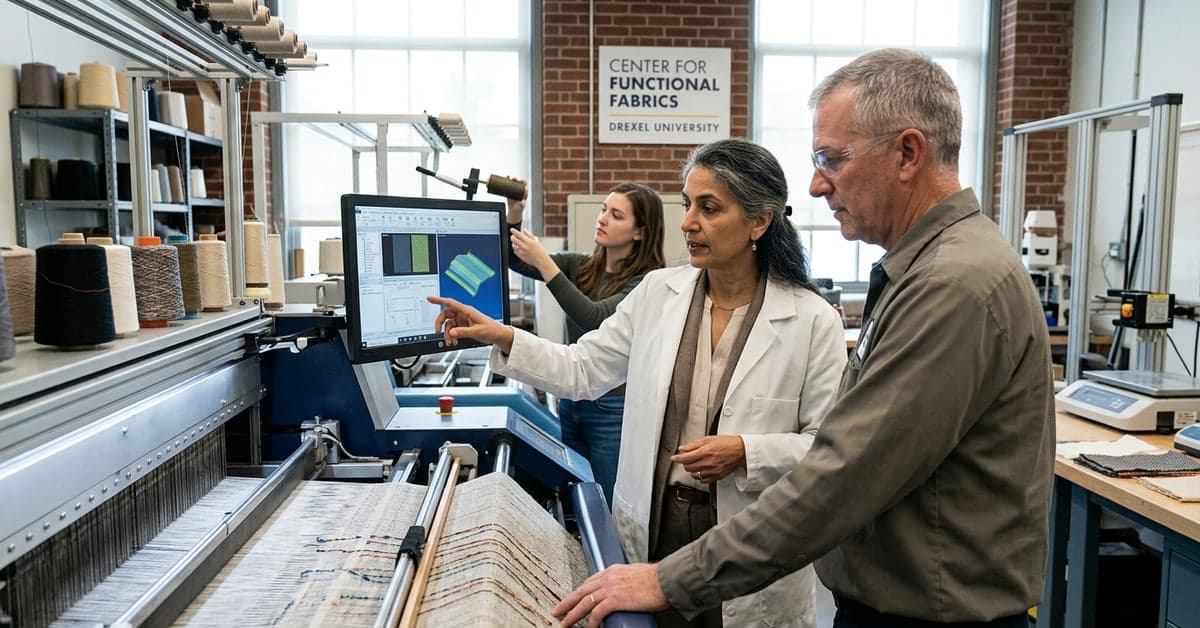
Drexel’s Center for Functional Fabrics (CFF) will run the Philadelphia node and support work across Pennsylvania. The center operates a 10,000-square-foot manufacturing facility and has supported federal advanced manufacturing projects for more than a decade, The Defense Post reported. That footprint matters. It gives small and mid-sized firms a place to test new processes, try advanced looms and knitting equipment, and learn how to move designs from lab to pilot line without a costly reset.
The Drexel node’s remit includes high-performance textiles, digital modeling and design tools, AI-driven platforms, and digital twin technology. A shared repository of materials and manufacturing processes is also in the works, alongside a map of advanced textile capabilities in the region. Put together, those pieces form a practical on-ramp: a mill can tap reference data, simulate a design, prototype with help from CFF, and qualify output for defense use more quickly than in a traditional, paper-first workflow.
FutureTEX’s core partners include Drexel, NC State, Gaston College, Georgia Tech, the Industrial Sewing and Innovation Center, and the University of Massachusetts Lowell, per The Defense Post. That mix spans research universities and workforce engines, which is key for spreading practices beyond a few flagship labs. It also mirrors the applied model of federal manufacturing institutes such as AFFOA—where design, prototyping, and factory training run in parallel.
How digital twins and AI could change textile production
Textiles are complex. A fabric’s behavior depends on fiber chemistry, yarn structure, weave or knit geometry, finishing steps, and how all of that interacts with the end use. Digital twins let engineers model that stack before a single cone of yarn hits a machine. When paired with AI-assisted design tools, mills can explore more options, spot weak points early, and reduce waste in sampling.
For defense programs—uniforms, shelters, ballistic panels, parachutes—those gains translate to shorter qualification cycles and fewer production surprises. According to The Defense Post, FutureTEX aims to help manufacturers adopt the digital infrastructure needed for this kind of work. That includes structured data, version control, and a way to keep designs, machine settings, and test results in sync. It sounds simple. It isn’t when plants run decades-old equipment next to newer CNC lines.
Drexel’s Philadelphia node can be a bridge. By standing up reference models and process libraries, the team can help suppliers avoid starting from scratch on every contract. The same dataset that guides a lab knit can inform a scaled run down the road. That’s where digital twins earn their keep: the simulation becomes a living spec that continues to reflect how fabric behaves as machines, operators, and materials change.
Why the move matters for the defense industrial base
The Defense Department’s textile needs span routine and urgent. Surge capacity during crises has exposed brittle links in the supply chain before, and small mills often struggle to meet cybersecurity and documentation demands required for federal work. FutureTEX, as described by The Defense Post, is aimed at competitiveness as much as invention. A modernized documentation trail and shared design tooling can lower barriers for new suppliers and reduce risk for primes.
There’s a workforce angle too. Training operators to read digital work instructions, run sensor-laden looms, and interpret simulation outputs changes job descriptions. Centers like Drexel’s CFF and NC State’s Wilson College of Textiles provide the labs and classrooms to teach those skills. Readers can track that model in action across the Manufacturing USA network, where institutes focus on both technology transfer and talent pipelines.
Expect spillovers beyond defense. Better digital tooling can help mills make medical fabrics, filtration media, and performance apparel with tighter specs and less waste. When procurement cycles ease and yield improves, those wins tend to carry across product lines.
How the FutureTEX initiative will be judged
Big checks don’t guarantee factory change. The clearest signals that FutureTEX is working will be pragmatic:
- More small and mid-sized mills qualifying as defense suppliers, with documented digital processes.
- Shorter time from concept to first article approval for key fabric categories.
- Reusable process libraries that reduce resampling on similar contracts.
- Training completions tied to specific machine upgrades and software adoption.
Philadelphia’s node offers a test bed to measure those shifts. The repository of materials and processes that Drexel is developing can become the shared language mills and buyers use. If future contracts cite those references—and if simulations track to factory performance—the program reduces guesswork across the chain.
Program governance will matter as much as the tech. Clear IP rules help industry partners share data without losing edge. Standard data formats keep software from locking in suppliers. And steady, multi-year funding gives mills confidence to buy sensors, controllers, and training without fearing a one-and-done grant. The 10-year funding arc of FutureTEX, led by NC State per The Defense Post, is built for that kind of continuity.
What to watch next in Drexel’s Philadelphia node
Look for early projects that tie simulation tightly to production—say, a ballistic panel or shelter fabric where the digital model predicts performance and the factory hit rate matches. Those case studies will set patterns other mills can follow. Keep an eye on collaborations between Drexel’s CFF and nearby manufacturers listed on the forthcoming capability map. When the map routes a company to a lab with the right loom, finishing line, or test rig, the time saved is real.
Readers can follow Drexel’s facility work and past projects on the Center for Functional Fabrics site. For context on NC State’s long-running role in textile R&D, the Wilson College of Textiles offers a window into industry partnerships and workforce programs. Broader policy ties—like supply chain resilience and supplier modernization—sit within the Defense Department’s Office of Industrial Base Policy, which has backed similar modernization pushes in other materials.
In short, the FutureTEX initiative is less about a single breakthrough fabric and more about how U.S. mills work. Drexel’s node gives Pennsylvania manufacturers a place to learn the new playbook—and a reason to believe it will stick. For more on this, see bloomberg.com and nytimes.com.