
August 13–19, 2026 on the JMU Libraries homepage: Canvas training on August 13 at 10:00 a.m., a Gradescope session the same day at 1:00 p.m., Zoom essentials on August 18 at 10:00 a.m., an Open House at Carrier Library on August 18 at 1:00 p.m., and an AI literacy workshop on August 19 at 10:00 a.m. That lineup reads like a semester warm‑up for instructors and students—and a clear signal of where the library is putting its energy.
What the JMU Libraries homepage is prioritizing
According to the JMU Libraries homepage, the top links emphasize day‑one needs: Services for Students and Services for Faculty, Group Study Rooms, and Off‑Campus Access. The page also spotlights Course Reserves, Educational Technology Services, Equipment Loans, Interlibrary Loan, Learning Innovations & Design, The Makery, Special Collections, and a dedicated AI Info & Resources hub. In short, the page is arranged around doing work—teaching, studying, and producing projects—rather than only finding books.
The events calendar fills in the near‑term plan. On August 13, 2026 at 10:00 a.m., Canvas Essentials promises a fast ramp for course setup. That afternoon at 1:00 p.m., the Bubble Sheet and Gradescope session tackles assessment workflows. August 18 brings Zoom: Essentials for Effective Online Classes at 10:00 a.m., followed by the Open House at Carrier Library at 1:00 p.m. On August 19 at 10:00 a.m., From Use to Understanding: AI Literacy and the SKEPTICS Framework signals a shift toward critical AI skills.
AI literacy moves to the front of the house
AI is not tucked away in a submenu. The calendar callout for a dedicated AI literacy workshop, paired with an AI Info & Resources link near the top of the page, suggests the library is treating generative tools and critical evaluation as core competencies for fall 2026. That framing aligns with long‑standing information literacy goals in higher education—think source evaluation, citation, and ethics—now extended to model outputs and data provenance. The ACRL Framework for Information Literacy has for years pushed campuses to teach students how knowledge is produced and valued; AI literacy is a natural extension of that work.
The SKEPTICS framing in the August 19 session title hints at a structured checklist for questioning system outputs. Whether the focus is on prompt design, hallucination spotting, academic integrity, or privacy choices, anchoring the semester with a shared vocabulary can reduce confusion across courses. A scan of the JMU Libraries homepage makes plain that instructors and students will have a common place to start that conversation.
Why this home page lineup matters for fall teaching
Canvas, Zoom, and Gradescope are not niche add‑ons; they’re the backbone of delivery, discussion, and grading on many campuses. The timing—Canvas on August 13, Zoom and the Carrier Library open house on August 18, AI literacy on August 19—creates a clean path: set up courses, fine‑tune live or hybrid teaching, meet the people and spaces that support you, then level‑set on responsible AI use.
These choices lower friction in the most chaotic week of the term. For faculty and TAs, a one‑hour Canvas refresher can prevent weeks of student confusion. Gradescope support helps standardize grading at scale and cut turnaround time. For students, knowing where to find Off‑Campus Access and Group Study Rooms before assignment one is due matters. And everyone benefits from a plain‑language AI session that clarifies what’s encouraged, what’s risky, and how to cite or verify outputs.
The tools named on the page are widely used across higher ed. Instructure’s Canvas remains a default learning management system for course content and submissions (Canvas overview). Gradescope, owned by Turnitin, speeds up rubric‑based grading and provides analytics that make re‑teaching easier (Gradescope site). Zoom is still the standard for virtual lectures, office hours, and guest talks (Zoom support). Putting these workshops in one short window, then ushering people through the door at Carrier Library, is a smart choreography for the first week.
How the home page points to spaces—then community
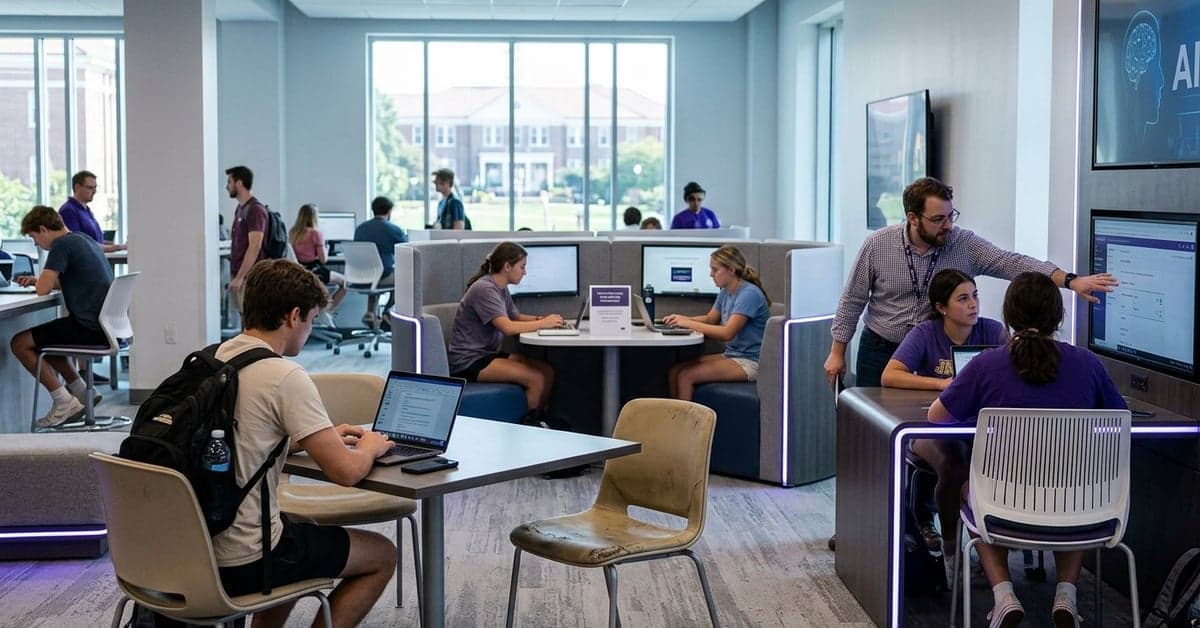
The Open House at Carrier Library on August 18 at 1:00 p.m. lands in the middle of this training burst. That sequencing matters. After instructors get their digital house in order, they can meet the teams running Equipment Loans, The Makery, Learning Innovations & Design, and Special Collections. Those units turn plans into projects—loaning cameras and mics for media assignments, guiding makerspace builds, and pairing classes with primary sources. It is easier to ask for help after you’ve seen the space and met the staff.
The same structure helps students. The top‑level link to Group Study Rooms—visible right on the JMU Libraries homepage—encourages early booking patterns that reduce last‑minute scrambles before midterms. Off‑Campus Access gets first‑week attention too, which limits the “I can’t open the article” emails that flood instructors when reading lists go live.
What to watch next at JMU Libraries
Expect more AI‑focused programming as assignments ramp up. The August 19 AI literacy workshop sets a baseline; demand usually follows as students and faculty test tools in real courses. If the calendar fills with discipline‑specific AI sessions—STEM data work, art and design, business analytics—that would confirm sustained interest. The presence of a prominent AI Info & Resources link on the JMU Libraries homepage suggests that curation and policy guidance will live there, so bookmarking that page is a good hedge against policy drift.
On the teaching side, watch for repeat offerings of Canvas and Gradescope sessions in weeks two and three. Late‑added sections and new TAs often need a second pass. The Carrier Library open house could also preview updates to spaces or services that don’t fit neatly into a workshop, including The Makery’s fall equipment roster or new approaches to learning design support.
One theme ties all of this together: the library is using its most public real estate to reduce first‑week friction, then raise the ceiling on what courses can attempt. If the JMU Libraries homepage keeps front‑loading AI literacy, ed‑tech training, and easy‑access services, expect smoother course launches—and more ambitious assignments—by September. For more on this, see bloomberg.com and nytimes.com.