
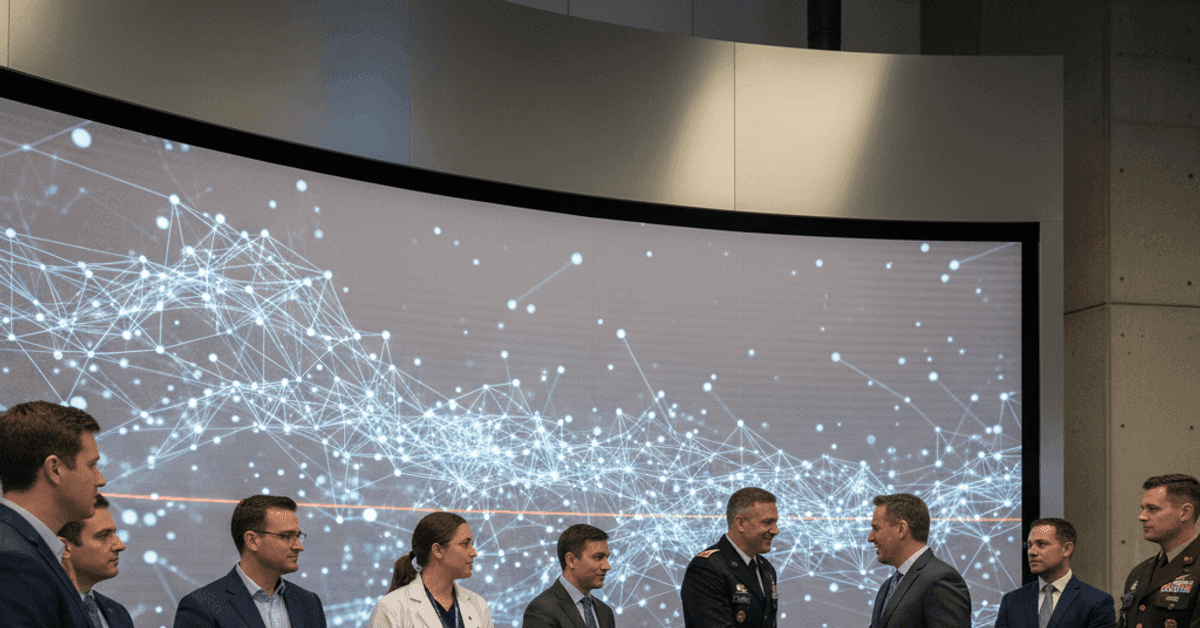
The Pentagon unveiled the GenAI.mil platform with Google’s Gemini as its first model, marking a pivotal generative AI update for U.S. defense. The launch places commercial frontier models inside a secure government portal, with initial use cases tied to paperwork and planning.
Secretary Pete Hegseth framed the release in sweeping terms, while Google stressed administrative tasks. According to Google, the platform will handle summaries, checklist generation, and risk assessments rather than weapon targeting. That distinction aims to ease concerns as adoption begins.
What the GenAI.mil platform will do
Google says Gemini will summarize policy manuals, extract key terms, and build compliance checklists. It will also generate risk assessments for operational planning. These tasks reflect classic generative AI strengths in text analysis.
Moreover, the approach keeps the earliest deployments low risk and auditable. Therefore, agencies can measure accuracy and security before scaling. As a result, the Pentagon can pilot workflows that save time without inviting immediate controversy.
Google outlined these use cases in coverage that detailed the rollout and tone from both sides of the partnership. Readers can review the reported capabilities in The Verge’s write-up on the defense rollout at GenAI.mil with Gemini. Additionally, the announcement underscores how quickly generative AI is moving from pilots to production inside government.
Google Gemini defense use and limits
The company positioned Gemini’s role as administrative and analytical. That framing mirrors how many enterprises first deploy large models. In practice, document-heavy departments often see the fastest returns from summarization and information retrieval.
Still, the military context raises questions about oversight and data handling. Consequently, observers will look for clear boundaries, logging, and human review. Transparency around model updates and prompt safety will also matter.
Furthermore, the choice of Gemini signals confidence in commercial direction. It suggests the DoD intends to tap a marketplace of models, not a single vendor solution. Therefore, future expansions may add alternatives for image, code, or multimodal tasks.
NeurIPS 2025 reinforcement learning momentum
While policy and procurement moved forward, the technical community spotlighted reinforcement learning at NeurIPS 2025. Commentary from attendees pointed to surging interest in RL methods and Google’s strong presence. That energy hints at next-wave techniques that could improve planning and tool use.
RL has resurged as labs attempt to make models reason, act, and learn from feedback. In applied settings, RL-style training could strengthen agents that follow procedures or navigate tools. Therefore, the Pentagon’s early focus on structured workflows may benefit from these advances.
For industry impressions from San Diego, The Verge’s column captured key themes and reactions at NeurIPS 2025 takeaways. Additionally, the conference buzz reinforces how frontier research can translate into practical government use within months.
AI-generated McDonald’s ad backlash
Beyond labs and policy, brand experiments with generative video faced harsh reviews. An AI-generated McDonald’s holiday ad portrayed seasonal misery and urged viewers to hide at the restaurant. Viewers criticized the concept and the uncanny visuals, prompting removal.
Consequently, the episode offers a warning for public-sector deployments. Poorly framed content can backfire when tone and context miss the mark. Therefore, rigorous review and human oversight remain essential wherever AI generates public-facing material.
The reaction followed similar scrutiny of other AI-forward campaigns this season. For details and examples, see The Verge’s coverage of the McDonald’s ad at AI holiday ad backlash. Moreover, the incident shows how generative tools can magnify both speed and reputational risks.
Policy crosswinds and the AI moratorium debate
Washington’s mood on AI remains unsettled, even as agencies deploy tools. Commentary this week underscored bipartisan resistance to an AI moratorium. Lawmakers appear wary of a broad pause, though oversight demands persist.
Because the DoD is embracing generative systems, it will face heightened scrutiny. Procurement transparency, incident reporting, and audits will be key. Congress may push for clearer guardrails on data retention and model choice.
For context on the political backdrop, The Verge’s report on the Hill’s mood details the push and pull at AI moratorium debate. Consequently, the GenAI.mil rollout will likely become a benchmark for responsible federal AI adoption.
What this generative AI update signals
The GenAI.mil platform marks a shift from pilots to institutional use. Early tasks avoid direct operational control and focus on knowledge work. Therefore, the Pentagon can validate accuracy, compliance, and security before wider rollout.
Meanwhile, the research frontier is racing toward agents that plan and act more reliably. Reinforcement learning trends from NeurIPS may soon shape enterprise and defense tools. Additionally, safety research and evaluation standards will influence what agencies adopt next.
In the private sector, brand challenges highlight the limits of current generative media. Public reception favors craft, authenticity, and careful editing. As a result, both corporations and agencies must pair models with tight editorial review and clear human accountability.
Outlook: milestones to watch next
Expect the DoD to expand model offerings and add multimodal capabilities. Image understanding, code assistance, and structured tool use could follow. Furthermore, procurement frameworks will likely introduce stronger evaluation and red-teaming requirements.
Vendors will respond with improved safeguards, tuning, and provenance features. Watermarking and content credentials could become default in government contexts. Additionally, agencies may invest in private model hosting where missions require extra isolation.
Finally, the broader market will test how RL-driven agents handle complex workflows. If reliability improves, document-heavy operations could see step-change gains. Therefore, the next quarter will reveal whether early pilots translate into durable, compliant production systems.
Key takeaway: A cautious, paperwork-first rollout for the GenAI.mil platform aligns with current research and public sentiment, even as capabilities accelerate.