
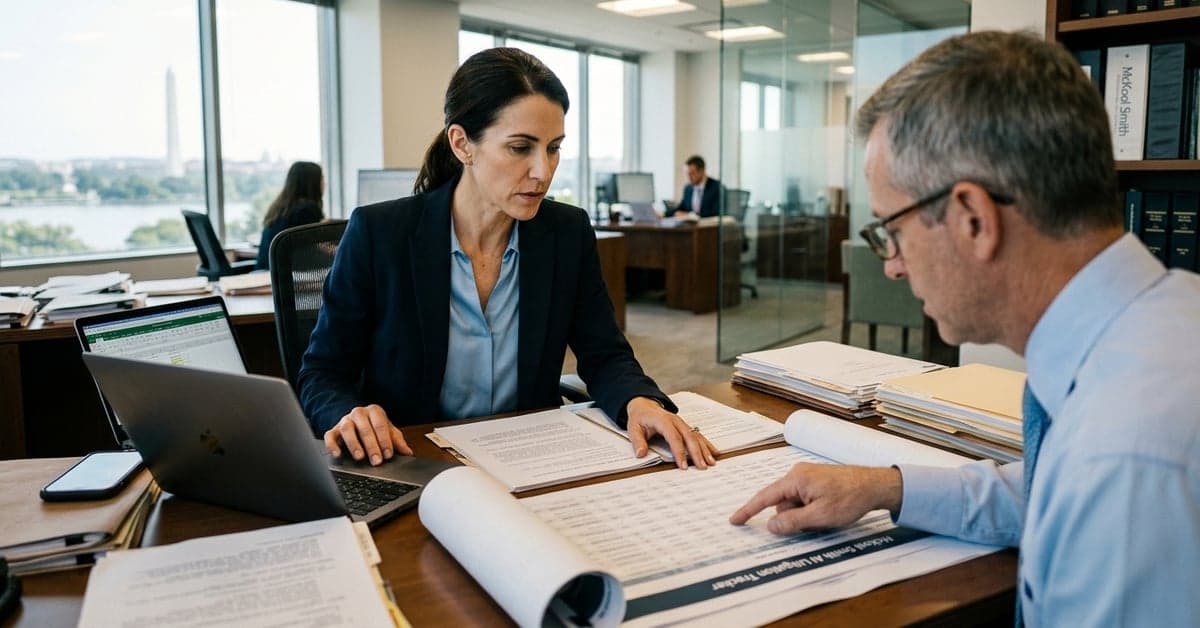
On July 13, 2026, McKool Smith published a fresh roundup in its AI Litigation Tracker focused on media and entertainment disputes. Read across the past six months, the entries sketch a quiet but clear pivot in media AI lawsuits: less headline‑grabbing dismissal drama, more patient trench work in discovery and procedure.
What McKool Smith’s tracker shows about media AI lawsuits
The tracker aggregates week‑by‑week movement that’s easy to miss when following a single docket. Taken together, the spring and early summer notes point to three shifts shaping how courts will set the rules for generative AI in creative industries.
- Pleading battles are giving way to discovery, where data provenance and training workflows face scrutiny.
- Platforms’ anti‑scraping measures, including YouTube’s “rolling cipher” issue, are now live questions tied to access and anti‑circumvention theories.
- Plaintiffs are probing for early appellate guidance on hard questions, rather than waiting for final judgment.
That pattern matters more than any single hearing. It signals how the next wave of rulings will emerge—through depositions, letters rogatory, and evidentiary fights—rather than sweeping early dismissals that end cases fast.
Case‑by‑case signals from spring 2026
Each of the tracker’s dated entries adds a brick to that picture. According to McKool Smith’s AI Litigation Tracker, here’s what moved—and why it hints at a longer arc:
Disney et al. v. MiniMax & Hailuo AI (update posted April 13, 2026): Defendants filed motions to dismiss. Early motions like these set the legal stakes, but the filing alone shows defendants still see room to contest theories before fact development, per the firm’s summary.
Sony v. Uncharted Labs (d/b/a Udio) (April 20, 2026): The court denied the motion to dismiss—for now—keeping claims alive, McKool Smith notes. That single outcome nudges similar matters toward the evidence phase, where dataset sourcing and model behavior get tested under oath.
SDNY Multi‑District Litigation (May 5, 2026): Discovery is “supposed to be closed,” but straggler disputes remain, the tracker reports. That’s a tell. When a court corrals many related cases, late‑stage discovery skirmishes often decide what evidence makes it to summary judgment.
Sarah Andersen et al. v. Stability AI, et al. (May 18, 2026): The court granted requests for letters rogatory, according to the firm. Cross‑border evidence collection can make or break model‑training claims, because key documents or witnesses often sit outside the U.S.
Richard Kadrey, et al. v. Meta (June 18, 2026): Plaintiffs moved to certify summary‑judgment issues for interlocutory appeal, per McKool Smith. That’s an effort to get appellate clarity before a full trial. One week later (June 29, 2026), the tracker logged no major substantive developments.
Across those entries, McKool Smith’s notes on YouTube’s “rolling cipher” appear in the Udio coverage. That thread reaches beyond one platform. If courts treat anti‑scraping measures as meaningful barriers, parties will need to brief the Digital Millennium Copyright Act’s anti‑circumvention provisions and how they intersect with automated data collection.
Why this docket trend matters for the business side
For studios, labels, and major publishers, the next costs likely sit in data and document management rather than blockbuster hearings. Discovery always costs money; in AI cases, it also puts engineering decisions under the microscope. Teams should expect detailed questions about pre‑training corpora, deduplication, filtering, and access methods. That aligns with what the tracker shows and raises the value of clean paper trails.
For startups and model vendors, the same trend cuts two ways. Longer discovery means longer runway before any bright‑line win or loss. It also means evidence on datasets, licenses, and scraping methods will carry more weight than branding or general claims about fair use. If you can’t show where your training data came from, that gap will loom large when depositions start.
Regulatory currents run alongside the dockets. Europe’s AI Act pushes providers toward risk documentation and technical transparency by design. U.S. courts don’t apply that law, but the kind of provenance records it encourages could become decisive exhibits in American discovery. The U.S. Copyright Office’s AI initiative also signals where policy questions are headed, especially on authorship and disclosures.
What to watch next as courts shape media AI lawsuits
Expect more letters rogatory in cross‑border model disputes, building on the Andersen order the tracker flagged on May 18, 2026. Also expect tighter fights over protective orders and source‑code access. If courts keep denying broad dismissal bids, the battleground will be experts. Measurement will matter: similarity metrics, dataset overlap rates, and whether outputs can be traced to specific training works.
Two near‑term markers will show whether the center of gravity keeps moving. First, whether appellate courts agree to hear any certified questions from cases like Kadrey v. Meta. Second, whether judges bless plaintiffs’ theories that scraping around platform defenses violates anti‑circumvention rules, a theme tied to the “rolling cipher” thread in Udio.
Readers who want technical background on how generative systems learn—and why that matters legally—can start with this primer on generative AI. Then map those mechanics onto what the tracker is surfacing: fights over inputs, not just outputs.
The upshot from McKool Smith’s tracker
None of the spring and summer entries delivers a final rule for everyone. Together, they point to a practical playbook. Parties in media AI lawsuits should budget for discovery, lock down provenance records, and prepare experts early. If early appellate gambits land, watch for narrow guidance that clarifies one question at a time.
The signal in the noise is patience. The path to answers on generative models and copyright won’t be a single knockout ruling. It will be months of evidence‑driven steps—the very cadence McKool Smith’s tracker, updated July 13, 2026, has begun to capture for media and entertainment. For more on this, see reuters.com and bloomberg.com and nytimes.com.