
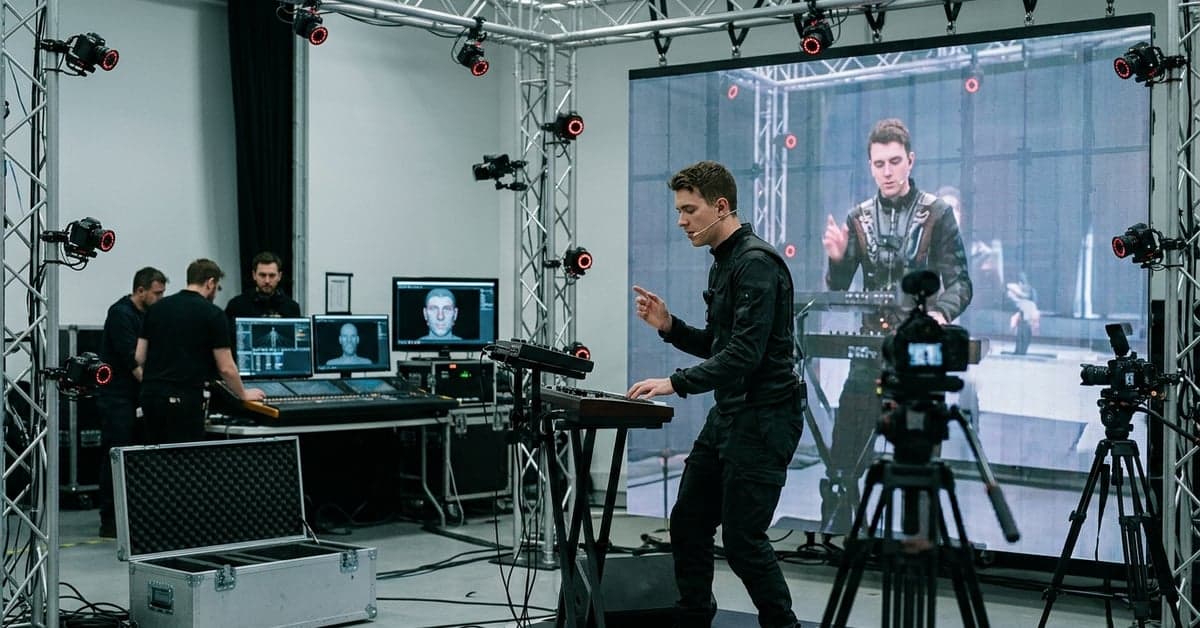
On September 20, 2026, The Guardian reported a UK startup had raised $20m to recreate gigs with “hyper‑realistic” digital avatars — a fresh signal that AI concert avatars are moving from spectacle to strategy (The Guardian AI section).
What this funding really signals for live music
The headline number matters less than the target: full‑length, ticketed shows built around digital stand‑ins. That points to a business bet on repeatable productions that travel lighter than human tours and scale across venues and time zones. The Guardian’s report plants a flag: investor appetite now extends beyond short promo stunts to durable formats aimed at arenas and residencies.
There’s a template. ABBA’s avatar show proved audiences will pay for a polished illusion staged at scale, with a custom venue and rigorous production cycles. The project’s model — industrial pre‑production, tight control over every frame, and a consistent nightly experience — showed that virtual can feel eventful when the staging is right. The official production’s site lays out the premise clearly, down to its purpose‑built arena (ABBA Voyage).
Two forces now converge: falling costs for motion capture and real‑time rendering, and a rights environment that is unsettled but hardening around disclosure and consent. That mix makes the next wave less a novelty and more an operating plan.
How AI concert avatars could reshape touring economics
Touring is constrained by bodies, borders, and burnout. AI concert avatars relax all three. Once an artist’s likeness, movement library, and voice model are captured with consent, a production team can stage multiple shows in parallel or extend a residency without the artist on site. That unlocks more dates with less travel, which lowers risk for promoters and reduces carbon emissions tied to touring logistics.
The margin story is straightforward. Upfront costs shift to capture, asset creation, and a polished real‑time pipeline. Variable costs turn into venue rental, projection or LED, and a smaller touring crew. Where a human tour’s profits depend on routing and recovery days, avatar shows can run tighter calendars and standardize sets. That favors big catalog acts and IP‑rich brands first, but mid‑tier artists with strong followings could benefit as authoring tools improve.
Streaming taught the industry about long‑tail monetization. Avatars could do the same for live. A single captured performance can be re‑lit, re‑choreographed, and localized — new costumes, city‑specific visuals, fresh banter — without rebuilding the core. If the creative stays fresh, repeatability becomes a feature, not a flaw.
Consent, credit, and cash: the rights puzzle
The tech will outpace the paperwork unless contracts catch up. In the UK, performers have specific rights over recordings, broadcast, and exploitation of their performances, but likeness and voice cloning trigger layers that span contract, copyright, and privacy. The UK Intellectual Property Office sets the baseline for performers’ rights, yet avatar‑grade uses demand explicit, future‑proof clauses on derivatives, duration, territory, revenue share, and control over posthumous or illness‑related usage (UK IPO guidance).
Expect disclosure rules to matter on stage too. The EU’s AI Act introduces transparency duties for synthetic media, requiring clear signals when content is AI‑generated or manipulated. That logic will carry into live events: tickets, signage, and streams need unmissable labels if an act uses digital doubles. Failing to label is a trust risk as much as a legal one (see the European Commission’s overview of obligations: EU AI Act).
Producers should also plan for content provenance. Standards like Content Credentials from the Coalition for Content Provenance and Authenticity (C2PA) can embed traceable metadata that signals when visuals or vocals are synthetic. That reduces disputes over edits and provides an audit trail for licensors and collecting societies (C2PA).
What fans will accept — and where they’ll balk
Audience tolerance has edges. A careful production can dazzle, but a sloppy one snaps the spell fast. The uncanny valley — off‑sync lips, rubbery gait, dead eyes — is less a meme than a refund risk. The creative bar is high, and control of lighting, camera angles, and display tech matters as much as the avatar itself.
There’s also a contract with fans. If a show is fully virtual, say it. If a human performer is present part‑time, explain how. Surprise‑and‑delight works for cameos, not for the core premise of a tour. Transparency will decide repeat business more than hype will.
Accessibility can be a win. Virtual residencies can anchor affordable matinees, sensory‑friendly runs, or short‑notice add‑ons that human tours can’t support. For global audiences who rarely see top acts, avatar shows streamed to premium theaters or XR venues would beat nothing at all.
The execution checklist for producers betting on virtual gigs
- Contracts first: obtain explicit consent for likeness and voice, define guardrails, and set revocation and audit terms tied to payouts.
- Label the product: place clear, persistent disclosures on tickets, venue signage, and streams; embed provenance where possible.
- Design for venues, not only headsets: optimize for LED volume stages and projection rigs common to arenas and mid‑size theaters.
- Iterate the show: ship seasonal updates to choreography and visuals to avoid stasis and encourage return visits.
- Price with honesty: reflect lower touring overhead while charging for genuine craft, not the novelty of tech.
What to watch next for AI in live music
If The Guardian’s $20m figure is a tip of the spear, the bigger test is repeatability. Can one avatar production template adapt to multiple artists, or does each require custom tools? Watch for portable capture kits, improved voice models trained under consent, and middleware that cuts latency between animation and display. Those pieces decide whether AI concert avatars stay niche or become a line item in every major promoter’s plan.
Regulators will shape rollout speed. As transparency standards spread, fans will know what they’re buying. That clarity helps honest producers and squeezes bad actors. If rights holders can see, track, and monetize each synthetic element, legal friction eases and investment accelerates.
The near‑term winners are experienced showrunners and artists with strong brand control. The risks cluster around acts with fragmented rights or estates with unclear mandates. Either way, the live business now has a new format to master. Done with care, AI concert avatars expand the stage, not just the screen. For more on this, see reuters.com and bloomberg.com and nytimes.com.
Related reading: Federated Learning • Quantization • Machine Learning