
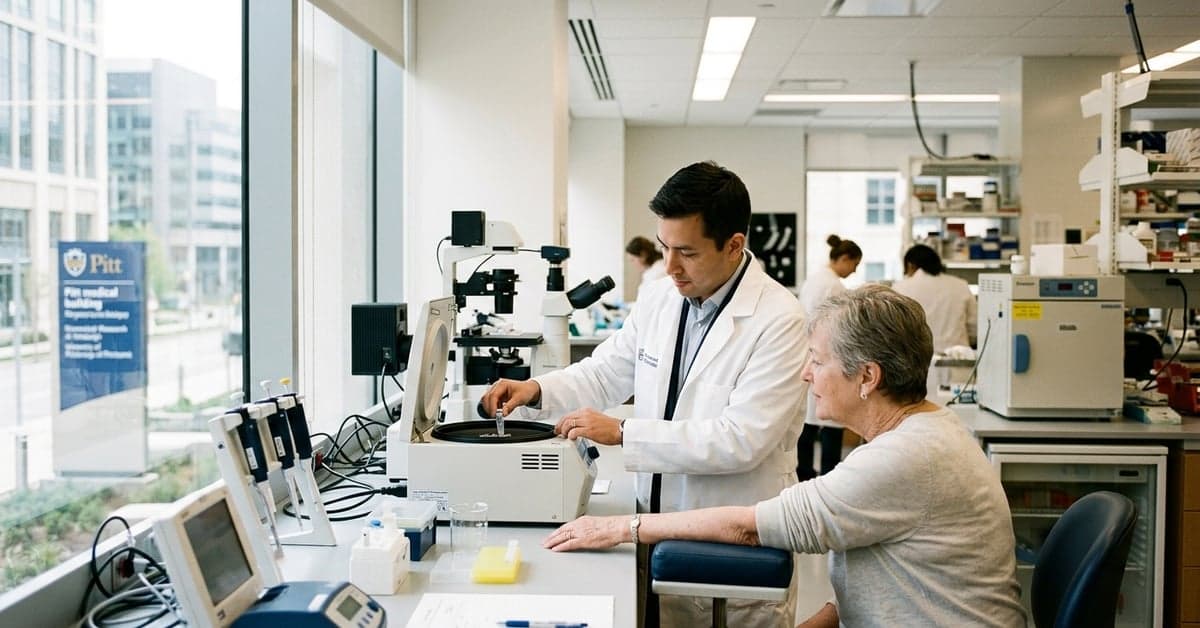
On January 29, 2026, the University of Pittsburgh Health Sciences launched the $25 million Trivedi Institute for Space and Global Biomedicine, one of the first centers built to turn lessons from spaceflight into treatments on Earth, according to the University of Pittsburgh School of Medicine. The new unit signals a clear bet: space is not just an adventure story — it’s a fast‑forward button for human biology.
In orbit, the body changes quickly. Bones thin, muscles waste, immune function shifts, and fluids move toward the head. That accelerated stress can expose mechanisms of disease in weeks rather than years. NASA has documented these effects across multiple missions, building a knowledge base that now feeds translational work on osteoporosis, cardiovascular risk, and vision changes (NASA). The Pitt Trivedi Institute aims to channel that kind of insight into clinical research and care.
What Pitt announced on January 29
The School of Medicine framed the launch as a push to apply spaceflight insights directly to human health on Earth. The Pitt site describes the Trivedi Institute as “one of the first” dedicated to that mission, backed by $25 million in funding. While Pitt has not yet published detailed program mechanics, the intent is clear: make microgravity findings actionable for patients and communities.
The Pitt Trivedi Institute arrives as translational space health matures. NASA’s Human Research Program and the Translational Research Institute for Space Health (TRISH) at Baylor College of Medicine have shown how targeted grants can speed tools from lab to clinic. The International Space Station has also become a stable testbed for disease models and materials that affect medical devices (ISS National Lab). Pitt is positioning itself to plug into — and shape — that pipeline.
Why spaceflight biology can change medicine on Earth
Space is a stress test. Microgravity triggers measurable loss of bone and muscle, immune dysregulation, and cardiovascular remodeling in months. On Earth, similar changes unfold over years in aging or chronic disease. That time compression is a research gift. It lets scientists isolate variables, validate biomarkers faster, and weigh countermeasures with smaller cohorts. NASA’s public summaries of human spaceflight health effects outline these rapid trajectories and the countermeasures under study, from exercise protocols to pharmaceuticals (NASA).
For a medical school with strong basic science and clinical trial capacity, this creates an edge. Design a study that uses microgravity as an accelerator, bring home the data, and test the same pathway in terrestrial patients. The loop can shorten years of discovery. Programs like TRISH have already funded wearables for monitoring, personalized risk models, and remote care tools that serve both astronauts and rural patients back on Earth (TRISH). The Pitt Trivedi Institute can build on that template, tuned to its labs and clinics.
What the Pitt Trivedi Institute could mean for students and labs
Training is the near‑term signal to watch. Space biomedicine is inherently cross‑disciplinary: physiology, bioengineering, omics, radiation science, and data analysis. If the institute funds seed grants tied to graduate or MD‑PhD work, more Pitt trainees will ship code, assays, or devices into tightly constrained environments — whether parabolic flights, analog habitats, or the ISS. That experience translates into clinical research rigor on the ground.
Faculty recruiting is another lever. Institutes often act as magnets, drawing PIs who work at the edges of mechanics and medicine. A well‑publicized $25 million commitment can underwrite high‑risk projects that struggle in traditional paylines. Expect interest from teams exploring bone remodeling signals, immune resilience, vestibular adaptation, and ocular fluid dynamics, where orbital data already point to tractable targets (ISS National Lab).
Infrastructure matters, too. Even without running its own flights, an institute can fund shared cores: bioreactors that simulate unloading, small centrifuges for partial‑gravity studies, or analytics pipelines for omics datasets mapped to flight timelines. Each reduces friction for labs that want to pivot into microgravity questions. The School of Medicine’s announcement implies a focus on translation, so services that bridge bench data to clinical endpoints — protocol design, regulatory guidance, and biostatistics — would have outsize impact (Pitt).
How Pitt can stand out in space health
Being “one of the first” helps for visibility, but the differentiator will be delivery. Three moves would set the tone. First, publish a clear call for proposals tied to defined health outcomes, with rapid review cycles. Second, co‑fund projects with external bodies that already have flight access — TRISH, the ISS National Lab, or NASA’s human research programs — to avoid duplicating procurement cycles. Third, build a public data policy so external teams can reanalyze results, raising citation impact and reducing waste. The National Academies has long urged consistent research streams and open science to turn space biology into repeatable progress.
If the Pitt Trivedi Institute centers measurable translation — validated biomarkers linked to clinical trials, or device prototypes cleared for first‑in‑human testing — it can anchor a research niche that complements national programs rather than chasing them. Space accelerates biology; Pitt can accelerate the paperwork and partnerships that move findings into care.
What to watch next
Three early signals will show whether this launch meets its promise. Look for a public roadmap with funding tracks and review dates. Watch for the first slate of seed grants and whether they span both microgravity mechanisms and Earth‑based validation. And track external ties — memoranda with flight‑access organizations, shared fellowships, or joint seminars that move beyond talk to shared milestones.
Pitt has already planted a flag with the Pitt Trivedi Institute. The value will show in what follows: experiments that compress time, data that bend toward clinical endpoints, and students who learn to translate under constraints. If those pieces click, Pittsburgh could become a reliable stop on the space‑to‑clinic route. For more on this, see bloomberg.com and nytimes.com.
Related reading: Federated Learning • Quantization • Machine Learning