
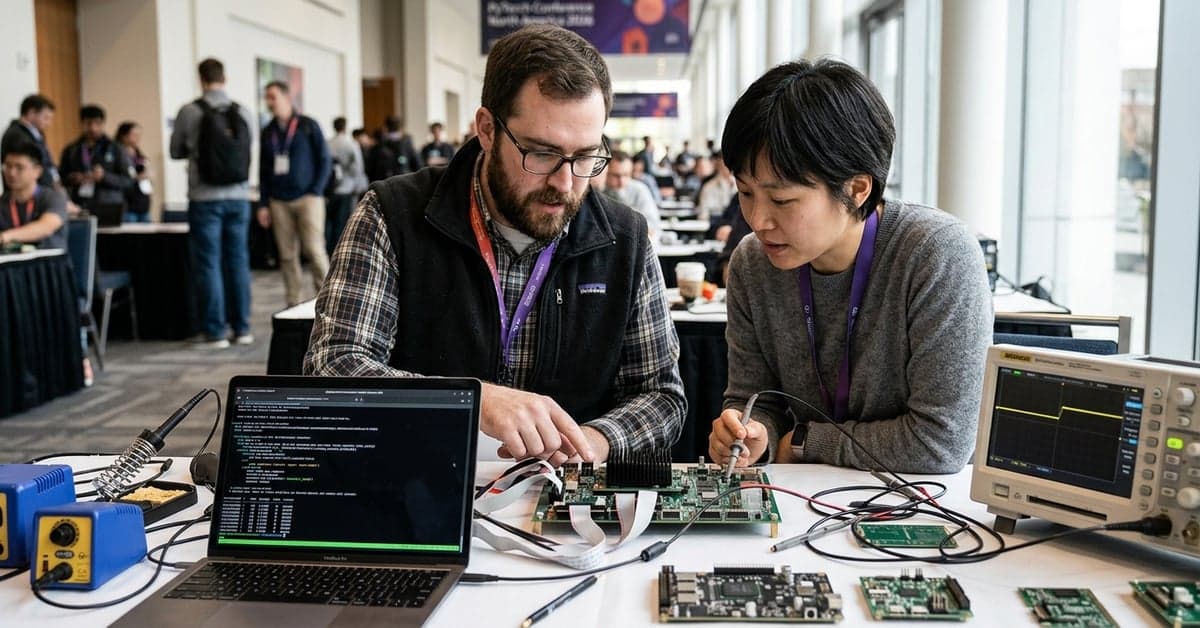
October 20–21, 2026, the PyTorch Conference North America lands in San Jose. The agenda points to a portability-first push: compiler and runtime work, distributed communication, device coverage, and hardening for production. PyTorch.org’s own program notes sessions across those tracks, plus observability, release engineering, CI, and accelerator integration, with a keynote slate that includes a talk on native PyTorch on Trainium (posts dated August 27, 2026 and August 20, 2026 on PyTorch.org). Taken together, PyTorch Conference 2026 looks less like a feature parade and more like a bet on performance portability and reliability at scale.
What the PyTorch Conference 2026 agenda signals
According to PyTorch.org, the core sessions span compiler and runtime internals, distributed communication, device portability, contributor infrastructure, and the plumbing that ships software: release engineering, CI, and observability (August 27, 2026). That balance says a lot about priorities. Compiler and runtime focus means more attention on the path that transforms eager Python into fast kernels, the same path torch.compile travels. Expect talks to zero in on kernel generation, graph capture, and shape specialization, all to keep performance gains without fracturing the user-facing API.
The distributed track underlines the project’s view of scale in 2026. PyTorch’s distributed package and DDP are table stakes now, but the agenda’s wording calls out communication libraries and runtime behavior, which is where contention, memory pressure, and fault handling live. That’s the unglamorous work that decides whether a training run finishes on time or burns a week of cluster credits.
Observability and CI aren’t splashy, yet they dominate the kind of toil that slows teams. By putting them on stage, maintainers are saying the project is tightening the feedback loop: better signals when a nightly breaks, clearer traces when a kernel regresses, and faster promotion of fixes into releases. For developers who ship models, that’s the difference between a 2 a.m. pager and a clean dashboard.
Hardware portability at PyTorch North America: native Trainium on the docket
On August 20, 2026, PyTorch.org highlighted keynote sessions that include “native PyTorch on Trainium,” pointing to deeper integration with Amazon’s ML accelerator. Native support matters because it suggests a first-class path rather than a shim. It fits the event’s emphasis on device portability and accelerator integration, and it broadens the set of viable targets beyond GPUs without rewriting models.
AWS positions Trainium for high-throughput training. If PyTorch delivers a native path, it lowers the switching cost between vendors. That can pressure pricing and availability, especially during supply squeezes. It also nudges the framework closer to true performance portability: write the model once, steer it to different accelerators, and trust the compiler/runtime to do the heavy lifting.
The same logic applies to the rest of the hardware story. PyTorch already spans CPUs and several GPU backends, and its documentation makes portability a design goal. By elevating device coverage and accelerator integration in the conference program, maintainers are signaling that 2026 is about making that promise real in daily workflows, not just in docs.
Production work takes center stage: CI, releases, and observability
Shipping research code is easy. Shipping reliable systems under change is hard. The PyTorch.org program puts release engineering, CI, and observability right next to compilers and distributed training. That triad is how an open-source project hardens for enterprise use: faster release trains, smaller diffs, better tests, and richer telemetry when something goes wrong.
This direction pairs with governance and community investment. The PyTorch Foundation pitches stability and long-lived codebases through shared resources, training, and tooling. Conference sessions on contributor infrastructure echo that pitch. Expect details on how maintainers triage regressions, gate changes, and keep nightly wheels usable, which is exactly what regulated teams ask about when picking a framework.
For practitioners, the takeaway is practical. If you’ve been holding back on upgrades because minor versions felt risky, the focus on CI and observability is an attempt to earn your trust. If you’ve been chasing weird perf cliffs under torch.compile, the runtime sessions should offer reproducible recipes, profiling advice, and fixes.
Ecosystem clues: evaluation and data quality step forward
The ecosystem update on PyTorch.org from August 26, 2026 adds another signal: ten projects joined the PyTorch Ecosystem Landscape, including FiftyOne, VisualTorch, and TorchSurv. That list stretches from visualization to survival analysis and reinforcement learning utilities. The throughline is that model quality is becoming a data and evaluation problem as much as a modeling one.
FiftyOne, for example, centers on dataset curation and error analysis. Its presence in the official landscape suggests that PyTorch wants better support for inspection and evaluation in the toolkit developers actually use day to day. Tools like that pair naturally with the observability thread on the conference agenda: catch issues earlier, measure them better, and close the loop with fixes you can trust in CI.
When you set the ecosystem news beside the PyTorch Conference 2026 tracks, a picture emerges. Compiler/runtime work will squeeze more speed from the same code. Distributed communication will make large jobs steadier. Observability and CI will keep regressions from escaping. And ecosystem projects will help teams see what their models are really doing.
What to watch in San Jose
- Concrete compiler wins under torch.compile: kernel selection, graph breaking fixes, and measurable speedups on real workloads.
- Details on native Trainium support: how to enable it, what model families benefit, and any gaps developers should plan for.
- Distributed stability at scale: communication backends, failure handling, and memory behavior across long jobs.
- Production hygiene: new CI gates, observability hooks, and release processes that make upgrading safer.
The stakes are clear. If this program delivers, moving a model between accelerators should get easier, scaling it should get less fragile, and upgrading should feel safer. That’s the promise on display at the PyTorch Conference 2026—and it’s one that could reset expectations for how often teams ship and where they run. For more on this, see bloomberg.com.