
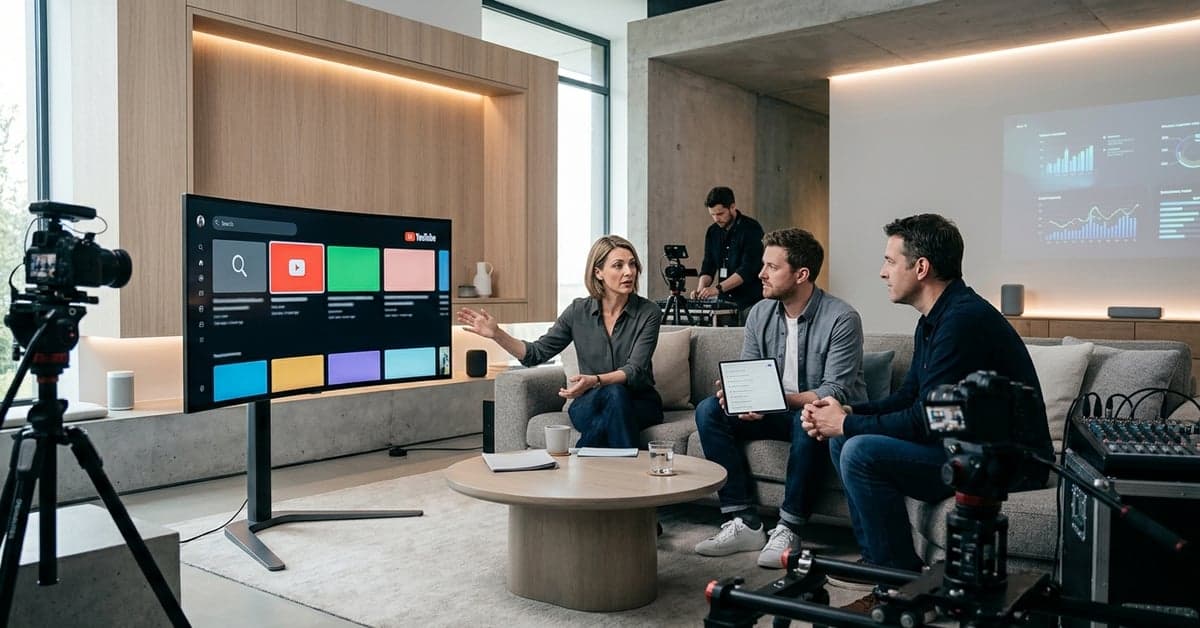
John Lewis AI search just became a strategy story. The Guardian reported on September 3, 2026 that the retailer will launch a YouTube chatshow aimed at improving its results in AI-driven search (source: The Guardian’s AI section). That headline may sound like a marketing stunt. It’s really a signal: big brands now produce video answers so large language model results will quote them first.
What The Guardian’s report signals about AI search
The Guardian’s summary points to intent, not just content volume: create on-platform video designed to be parsed, transcribed, and summarized by answer engines. Google said on May 14, 2024 that AI Overviews pull information from the open web, including sources that are easily cited and verifiable. YouTube sits inside Google’s ecosystem, and its videos ship with structured metadata and transcripts. That makes them low-friction fodder for AI snapshots and the assistants that repackage those answers across devices.
In that frame, the John Lewis AI search move is less about chasing views and more about owning authoritative snippets. If shoppers ask, “Which pan works best on induction?” and an AI summary pulls a few lines from a John Lewis-hosted interview with a chef, the retailer has placed its brand at the point of decision. That’s a very different funnel from ten blue links and a sprinkling of ads.
Why YouTube is the new front door for answer engines
YouTube offers three advantages answer engines can easily digest. First, machine-readable transcripts. YouTube auto-generates captions at scale, and creators can upload their own. Those words become indexable text. Google’s public guidance stresses that captions improve discovery and accessibility, which also means more clean material for AI to summarize.
Second, tight metadata. Titles, descriptions, chapters, and links give models structure. Chapter markers, in particular, break a 20-minute chat into labeled segments that map cleanly to user questions. Third, trust signals. Verified channels with a history of consistent content and stable branding reduce the odds of being down-ranked as spam. That helps when AI systems weigh which sources to cite in an Overview or a voice assistant reply.
Marketers have long optimized blogs for search. The same playbook now applies to video, but with an LLM twist. The John Lewis AI search bet hints at an editorial shift: concise Q&A segments, clear claims that can be quoted, and product pages linked in descriptions for attribution trails. It’s less cinematic, more reference-grade.
How retailers will adapt: an AEO playbook for 2026
Answer engine optimization is maturing fast. A retailer following John Lewis’s lead will likely do four things.
- Script for quotes: Write segments with crisp takeaways (“Three ways to descale a kettle without damaging seals”). Short, declarative lines are easier for AI to cite verbatim.
- Structure aggressively: Use chapters, on-screen lower thirds, and pinned comments to reinforce entities and terms. That structure survives transcription and helps ranking in AI Overviews.
- Publish transcripts and summaries: Host cleaned transcripts on your site alongside the video. Doubling the surface area lets traditional crawlers and LLMs find the same answer in two formats.
- Measure beyond clicks: Track assistant mentions and citation share where possible. Some tools and research methods can estimate how often a brand appears in AI summaries, even when no click occurs.
This is also a hedge against shrinking organic traffic. When an AI result satisfies intent on the page, fewer users scroll to classic links. Owning the snippet becomes the win. The John Lewis AI search push suggests retailers are designing for that attrition rather than fighting it.
Risks: platform shifts and brand trust in AI summaries
There’s risk in building for a moving target. Google’s presentation of AI Overviews has already changed several times since launch, and the company warns that coverage and behavior vary by query. If formats swing again, parts of a YouTube-first plan may lose punch. The fix is portfolio thinking: produce text, video, and structured data that survive format churn.
There’s also a trust question. AI summaries can introduce errors. If a model condenses a John Lewis claim poorly, the brand may get blamed for advice it didn’t quite give. Clear on-screen disclaimers and links to detailed guides help. So does embedding claims in expert interviews where credentials can be checked.
Finally, retailers should expect more disclosure pressure. Industry groups are pushing for content credentials that label synthetic media. Even for fully human-shot chatshows, adopting provenance tags can signal authenticity as AI-generated retail videos proliferate. Any gain in answer engine visibility is fragile if shoppers start distrusting the format.
What to watch next as brands chase AI search
Expect a flood of retailer talk shows, expert Q&As, and product clinics optimized for transcripts and chapters. Some will feel flimsy. The winners will treat the shows as reference libraries, not promos, and they’ll publish accompanying text that models can cite with confidence.
If The Guardian’s report foreshadows a retail shift, the next phase is competitive: who earns the quote in an AI snapshot when five brands say the same thing? Authority, clarity, and structure will decide it more than production polish. The John Lewis AI search experiment is an early test of that new rule.