
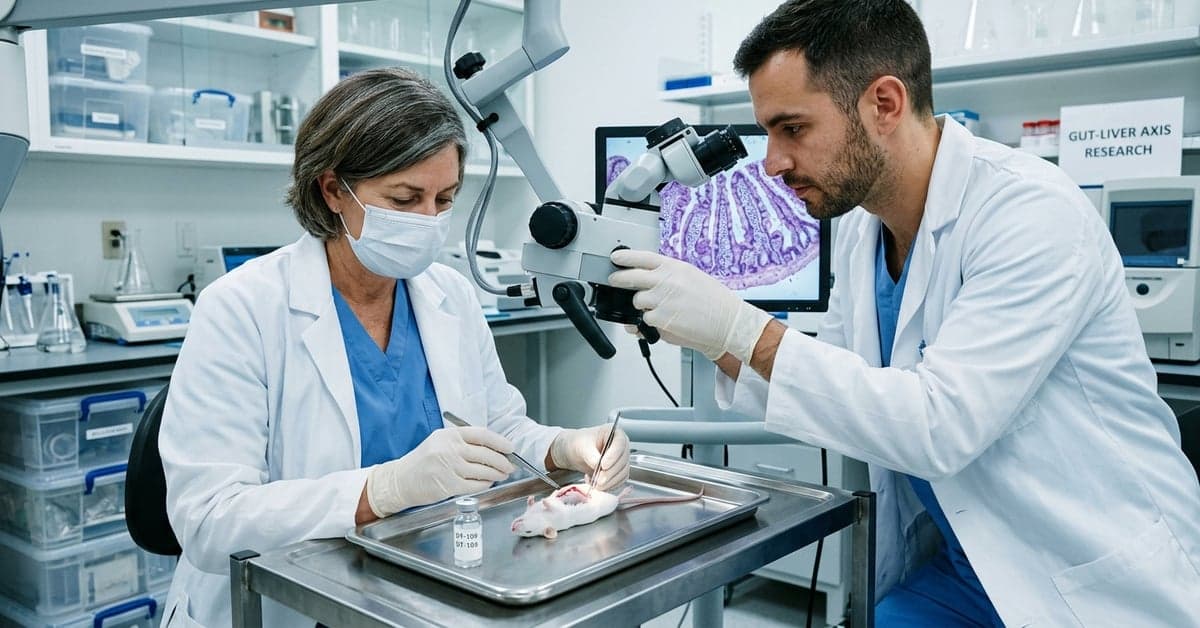
On July 11, 2026, ScienceDaily reported that an experimental drug called DT-109 reversed severe fatty liver disease in animal studies by repairing the gut and blocking harmful toxins from reaching the liver (ScienceDaily). The finding points to a gut-first approach for metabolic dysfunction-associated steatohepatitis (MASH), a field long dominated by liver-targeted metabolic drugs.
What ScienceDaily says about DT-109 fatty liver research
According to ScienceDaily, DT-109 worked upstream of the liver by restoring the intestinal barrier and preventing toxin-driven damage. In the summary, researchers said the results “reversed severe fatty liver disease” in animals and suggested this could open a path to a new class of MASH treatments. That mechanism matters. It targets the gut–liver axis rather than only liver fat metabolism or bile acid signaling.
The summary offers two critical clues. First, the therapy’s main action appears to be gut repair, a shift from typical steatohepatitis candidates. Second, the reversal of severe disease in animals implies effects beyond incremental biomarker change. Both claims remain preclinical, but they set the stage for a different kind of drug-development program centered on barrier function and toxin control.
Why a gut-first MASH therapy could reset the field
Years of evidence link intestinal permeability and bacterial products to liver inflammation. When the gut barrier weakens, microbial fragments and toxins can enter the bloodstream and stoke hepatic injury. Reviews from major journals have charted this pathway and its role in fatty liver progression, often called the gut–liver axis. For plain-language background on fatty liver and steatohepatitis, the National Institute of Diabetes and Digestive and Kidney Diseases explains how fat accumulation and inflammation can lead to scarring over time (NIDDK).
If DT-109 fortifies that barrier and limits toxin transit, it moves the point of intervention earlier in the disease cascade. That’s different from drugs that focus on changing lipid handling inside hepatocytes or modulating bile acids. A gut-repair drug could pair well with metabolic therapies, potentially dialing down inflammatory hits while other agents reduce liver fat or improve insulin sensitivity. It could also shift how clinicians track response, putting more emphasis on permeability and endotoxin-linked biomarkers alongside standard imaging and fibrosis scores.
Context: what today’s MASH drugs do—and don’t
In March 2024, the U.S. Food and Drug Administration approved resmetirom, the first medicine for MASH with fibrosis. The agency framed that decision as a milestone for a condition with high unmet need (FDA). Resmetirom, a thyroid hormone receptor beta agonist, acts inside the liver to improve lipid metabolism. Lifestyle change and weight loss remain the front line of care, and GLP-1-based drugs used for diabetes and obesity have shown liver benefits, but many patients still progress or cannot tolerate certain therapies.
That landscape explains why the ScienceDaily report on DT-109 fatty liver research matters. A barrier-repair strategy aims to reduce the inflammatory drive that helps push fatty liver toward steatohepatitis and fibrosis. If validated in humans, it could expand the toolkit from liver-centric metabolic control to microbiome-adjacent, intestinal targets.
It would also change trial design playbooks. Sponsors might build studies around combined endpoints that mix histology or noninvasive fibrosis markers with measures of barrier integrity. Exploratory biomarkers could include circulating signals linked to permeability and bacterial products. The bet: less toxin trafficking means less hepatic stress, which, over time, could slow or reverse injury.
From animals to people: the translation test
Animal success is only the start. Many liver candidates have cleared preclinical bars but faltered in people. Translational risk is real for steatohepatitis, where complex metabolic and immune drivers vary across patients. To bridge that gap, early human studies will need to show that the same gut-repair effect appears in volunteers, that it is dose dependent, and that it tracks with accepted liver endpoints.
Safety will be central. A gut-directed drug that alters barrier biology must show clean tolerability and avoid unintended shifts in nutrient absorption or microbiome balance. Regulators will look for clear pharmacodynamic signals and a plausible link to meaningful outcomes, not just modest biomarker nudges. Public registries can offer a first look at how sponsors frame those endpoints once trials begin (ClinicalTrials.gov).
Prevalence underscores the stakes. Fatty liver disease affects a large share of adults, and steatohepatitis with fibrosis raises the risk of cirrhosis and liver-related events. MedlinePlus provides a concise primer for patients on causes, risks, and complications, including progression to scarring and liver failure (MedlinePlus). A therapy that works through the gut could be especially attractive for patients who struggle with weight-only strategies or those who need combination regimens.
What to watch next for DT-109 and gut–liver strategies
The next signposts are straightforward. Look for a first-in-human study launch, the choice of primary endpoints, and whether sponsors test DT-109 alone or on top of standard care. If early data suggest consistent barrier repair, pairing with a metabolic agent could follow quickly. Watch, too, for patient selection: trials might enrich for people with signs of increased permeability or markers of toxin exposure, where a gut-targeted drug has the best chance to shine.
The ScienceDaily report leaves many details for upcoming papers and conference abstracts, but the core idea is clear. If DT-109 can reproduce its animal effects in people, a gut-first path could complement existing liver drugs and broaden options for steatohepatitis. That is why the DT-109 fatty liver story reads as more than another preclinical blip. It challenges the field to test whether fixing the gateway can calm the organ downstream.
For now, the evidence is early and the questions are practical. Can a single agent maintain barrier integrity over months? Will responders be identifiable by baseline biomarkers? How will safety hold up with long-term dosing? Those answers will decide whether DT-109 fatty liver research becomes a clinical reality or stays a promising lab result on the path to better MASH care. For more on this, see bloomberg.com and nytimes.com.
Related reading: Hugging Face • Fine-Tuning • Open Source AI