
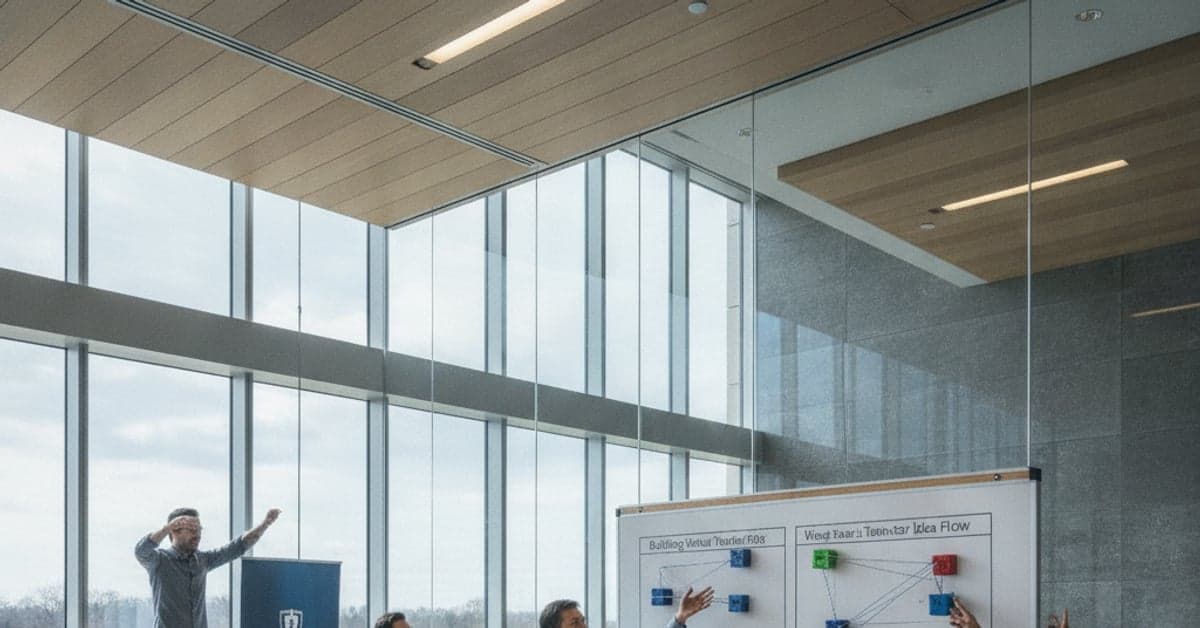
On January 8, 2026, Binghamton University spotlighted new lines of inquiry into how to make virtual work actually work. The study program, led by systems scientist Hiroki Sayama, asks blunt questions about leadership, creativity, and team design online — a shift from where people sit to how teams think. That framing is the real story in the future of remote work.
What researchers agree on about the future of remote work
Binghamton University researchers are centering four practical questions: building virtual teams for idea flow, standing out as a leader online, managing as effectively as in person, and making work-from-home sustainable (Binghamton University, January 8, 2026). Their focus mirrors a broad evidence base: remote and hybrid are staying, but outcomes hinge on management choices.
Data from the Stanford-led WFH Research project shows the share of U.S. workdays done from home settled around one day in four to one in three in 2024, far above pre-2020 levels. Preferences are sticky too. Among workers whose jobs can be done remotely, 35% worked fully from home and 41% worked hybrid in early 2023, with most preferring at least some remote time (Pew Research Center, March 30, 2023).
Across these findings, the future of remote work looks less like a temporary fix and more like a design problem. Organizations that codify how information moves — and when people must be in the same room — see steadier results than those that only toggle days.
Where hybrid shines — and where creativity still breaks
Flexibility, wider access to talent, and less time lost to commuting are clear wins. Binghamton’s agenda adds a missing piece: how to organize work so ideas still collide. That need aligns with evidence from a large-scale Microsoft study that found remote work made collaboration networks more siloed, with fewer new ties and less cross-team exchange (Nature Human Behaviour, September 2021). The study did not show a productivity collapse, but it did flag a creativity risk if teams stay isolated.
Meeting sprawl is another drag. Microsoft’s Work Trend Index reported that time spent in Teams meetings more than tripled since early 2020, adding what it called “digital debt” (Microsoft Work Trend Index, May 2023). That weight crowds out deep work and mentoring.
Put together, these results point to a simple strategy. Treat the calendar as an operating system. Use short written updates for status, reserve live time for synthesis and decisions, and protect maker hours. This is where the future of remote work will be won: fewer, better meetings and persistent documents that carry context across time zones.
Leading virtual teams: signals that travel on Zoom
Binghamton’s researchers zero in on leadership in digital settings: how to stand out and manage at parity with in-person teams. Their questions hint at the answers. Leaders must make their signals visible in channels people actually check — artifacts, not vibe.
Three moves keep virtual teams aligned:
- Write the plan. A one-page brief per project clarifies goals, owners, risks, and deadlines. Share it in a place everyone can find.
- Time-box live work. Cap routine meetings and end with a written decision and next steps. Record decisions in the project doc.
- Make mentoring explicit. Pair new hires with named guides. Track first-90-day skills and network goals in writing.
These habits map cleanly to Binghamton’s focus on organizing for idea flow and sustainable work-from-home practice. They also counter the documented risks — network silos and meeting bloat — highlighted by Microsoft’s research.
How the future of remote work reshapes hiring and offices
Expect hiring to widen and office demand to narrow, while training budgets grow. Flexibility expands applicant pools. But without better onboarding and manager coaching, the benefits vanish. The future of remote work rewards companies that teach written communication, define response time norms, and set clear reasons for office days.
One practical model is purpose-based presence. Use the office for what screens do worst: onboarding, tricky planning, conflict resolution, and serendipitous mixing across teams. Codify that purpose, then schedule in-person days around it. According to the WFH Research dataset, hybrid schedules are now the plurality for eligible roles; tying those days to real tasks helps teams feel the trade is worth it.
For finance leaders, this shift argues for smaller, higher-quality space and better remote tooling. For HR, it argues for repeatable manager training. Binghamton’s research agenda puts a final point on it: treat team design as a science problem, not a perk decision.
What to watch next in a hybrid-first decade
Two tests will show whether employers learned the lessons. First, whether onboarding cohorts three years from now report strong networks and faster time-to-impact. Second, whether product teams sustain novelty, not just delivery, across quarters. If those needles move, the future of remote work will feel settled.
Binghamton University’s questions give managers a checklist and a challenge. Stand out as a leader where attention is thin. Build teams whose documents carry the load. Pick office days for the right reasons. That is how this era of work — hybrid by default, digital by design — becomes sustainable. For more on this, see bloomberg.com.