
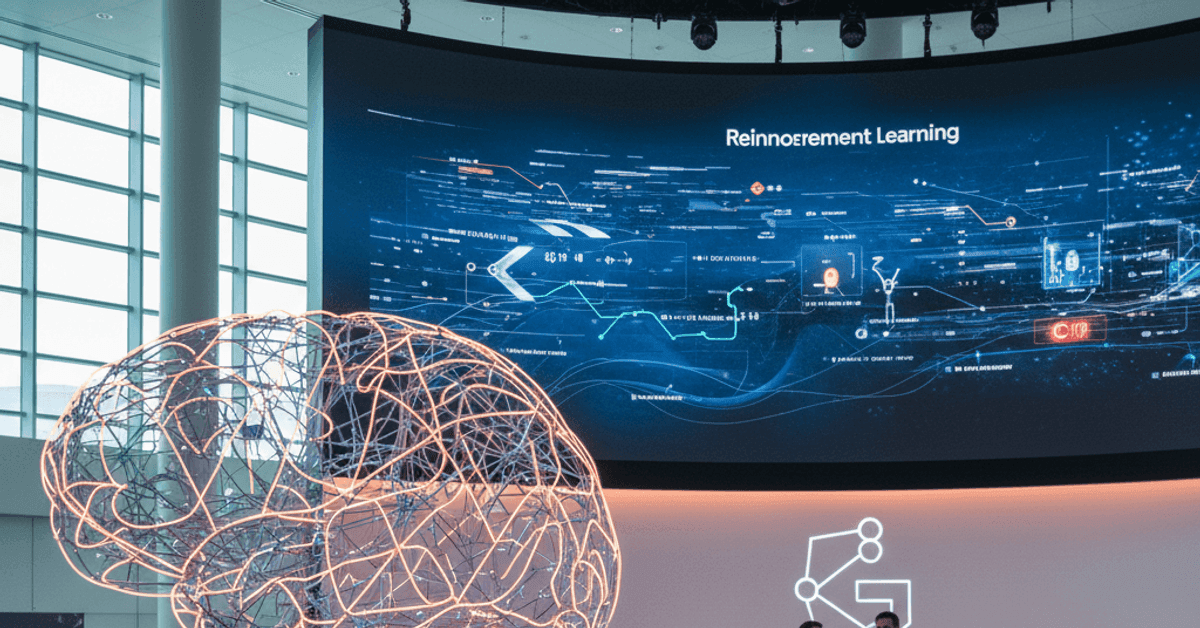
Reinforcement learning took center stage in San Diego as NeurIPS wrapped, and NeurIPS 2025 trends now signal a sharper push toward practical productivity gains. At the same time, Washington’s rhetoric toward an election-year AI moratorium intensified, while Google’s Gemini entered government workflows. Together, these developments redefine where AI may drive work efficiencies next.
NeurIPS 2025 trends for builders
Industry leaders framed this year’s NeurIPS as a turning point for reinforcement learning. According to attendee accounts and curated takeaways, Google’s research and platform momentum stood out, while startups chased RL-heavy roadmaps. That mix suggests teams will build AI that learns from feedback, improves iteratively, and plugs into daily work more smoothly.
Conference veterans described an event that now blends academic rigor with recruiting and product scouting. As The Verge summarized from Sources, reinforcement learning dominated conversations, and Google appeared to surge across papers and demos. Consequently, product groups will likely translate RL advances into features that automate multi-step tasks, score outcomes, and self-correct.
For knowledge workers, these shifts matter. RL-powered systems can prioritize tickets, refine code suggestions, and tune scheduling assistants based on team feedback. They also reduce repetitive rework because policies adapt over time. RL can help long-running agents evaluate their own plans and choose faster paths to completion. That capability should tighten loops between drafting, review, and final delivery.
Builders should still pace themselves. RL often needs high-quality reward signals, safe exploration strategies, and human oversight. Therefore, leaders should budget for monitoring, experimentation, and audit trails. Clear guardrails make RL outputs predictable, which, in turn, keeps trust high inside enterprise workflows.
Policy whiplash from the AI moratorium debate
Political attention to AI escalated again, creating near-term planning risks. As The Verge reported, both parties criticized the prospect of an AI moratorium tied to the midterms. That rare point of bipartisan alignment still leaves open questions about executive orders, enforcement, and scope.
Operations leaders should watch regulatory drafts closely because ambiguity delays deployments. Moreover, compliance teams must prepare playbooks for content risk, training data practices, and model provenance. In many organizations, these checklists now gate new features. As a result, product launches could hinge on clear documentation and red-team results rather than feature depth alone.
Planning assumptions should include throttles and quick off-ramps. Teams can stage rollouts by domain, limit external integrations, and track incident metrics. Additionally, contracts should preserve flexibility in the face of shifting obligations. The goal is simple. Keep productivity benefits moving while maintaining room to adapt if rules tighten.
Google Gemini for DoD shows pragmatic task automation
Government use cases for AI edged into the spotlight. The Department of Defense introduced a new platform that will feature Google Cloud’s Gemini for administrative and planning tasks. As The Verge detailed, examples include summarizing policy handbooks, generating compliance checklists, extracting key terms, and drafting risk assessments.
These are classic productivity targets. They absorb time, require careful reading, and benefit from consistent formatting. Consequently, the signal is clear for enterprises. Document-heavy workflows are ripe for copilots that reduce manual summarization, apply templates, and elevate exceptions to human review. Furthermore, tools that trace citations and flag uncertainty will strengthen adoption.
Procurement teams should note the pattern. First, low-risk automations normalize usage. Next, confidence expands toward planning and scenario analysis with stronger oversight. Therefore, private-sector leaders can mirror that path. Start with policy digests, meeting briefs, and risk registers. Then add structured approvals, governance, and metrics as usage scales.
AI-generated ad backlash resets creative guardrails
Marketers received a cautionary tale about synthetic storytelling at scale. An AI-produced holiday spot for McDonald’s Netherlands drew sharp criticism and was subsequently delisted from YouTube. As The Verge reported, viewers panned both the message and the uncanny execution.
The lesson is practical. Productivity does not excuse weak creative judgment. Generative tools can accelerate mood boards and script drafts. However, brands still need human review, cultural checks, and pilot testing. Additionally, previewing with small audiences can surface tone risks before a wide release. Those habits protect equity while preserving speed.
Creative teams should document quality gates. For example, require alt concepts, mandate disclosure policies, and test for brand fit across channels. Moreover, maintain a manual veto for sensitive moments, such as holidays and crises. These guardrails ensure AI augments craft rather than replacing it.
What these shifts mean for workplace productivity
Several patterns cut across this week’s updates. RL research is maturing into features that learn from real usage. Second, regulatory noise demands stronger governance and clear documentation. Third, document-centric copilots are moving into regulated environments, which validates practical gains. Finally, creative teams are sharpening review processes to avoid reputational damage.
Leaders can act on three fronts now. Standardize evaluation metrics for AI features so improvements are visible and auditable. Invest in data pipelines that feed feedback, labels, and policy checks back into models. And run change management alongside deployment, because workflows succeed only when people trust the outcomes.
Tooling choices should reflect these realities. Pick systems that show sources, expose configurable policies, and allow human-in-the-loop corrections. In addition, monitor latency and cost curves, since savings often arrive through optimization rather than headline features. Consequently, the best productivity wins will come from iterative improvements that compound over quarters.
Outlook: steady gains, fewer gimmicks
AI at work is settling into a pragmatic phase. Research focus, political scrutiny, and real deployments all point away from spectacle and toward measurable value. Therefore, expect smaller launches that cut meeting prep time, shrink paperwork queues, and reduce rework. Those wins may not trend on social media, but they compound on the balance sheet.
NeurIPS 2025 trends underscored this shift. RL traction, disciplined governance, and careful creative testing will define the next wave. The companies that align their processes now will ship faster, adapt quicker, and capture the most benefit when the next big breakthrough arrives.