
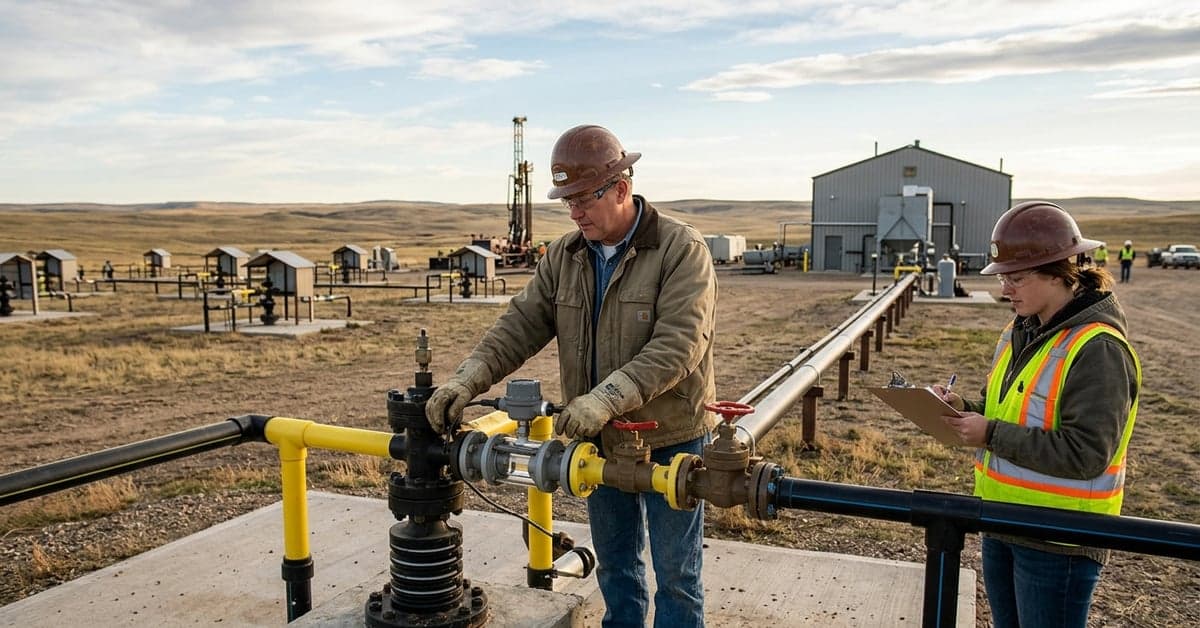
On August 28, 2026, the U.S. Energy Information Administration (EIA) reported that U.S. uranium production reached 2.1 million pounds of U3O8 in 2025, more than triple 2024’s output and the highest since 2017. That sharp swing matters beyond mining. It reshapes near-term fuel security debates and reframes the research agenda for nuclear materials, extraction methods, and environmental monitoring.
What the EIA numbers say about U.S. uranium production
According to the EIA’s Today in Energy post on August 28, 2026, U.S. miners produced 2.1 million pounds of triuranium octoxide (U3O8) in 2025, the base component of reactor fuel. The agency noted the total was the most since 2017 and more than triple the volume in 2024, a swing captured in its Quarterly Domestic Uranium Production Report and Monthly Energy Review. The headline is simple. The implications are not.
Production rebounds this steep usually reflect a mix of price signals, restarted capacity, and expectations about future demand. The EIA’s data does not unpack each driver, but the timing lines up with a broader policy focus on nuclear power’s role in decarbonization and energy security. The core fact remains: U.S. uranium production is growing from a very low base.
Why the mining rebound matters for reactor fuel
Mining is only the first step in the nuclear fuel chain. Reactor fuel requires conversion, enrichment, and fabrication before assemblies reach a plant. For readers who track supply risk rather than ore grades, this distinction is the one that counts. The U.S. Nuclear Regulatory Commission outlines the fuel cycle from mining through fabrication; each stage can become a bottleneck, and improvements upstream don’t automatically clear constraints downstream.
The rebound in domestic uranium output has two direct effects. First, it reduces exposure to mined supply disruptions abroad. Second, it creates room for new operating practices to be proven at field scale, especially in extraction and groundwater management. Many U.S. deposits are developed with in-situ recovery (ISR), where solutions are circulated underground to dissolve and bring uranium to the surface. The NRC’s guidance on ISR highlights the permitting and monitoring steps that keep operations within hydrogeologic boundaries.
There is a separate, growing need for advanced fuels. Some future reactors will require high-assay low-enriched uranium (HALEU), which involves enrichment beyond today’s standard levels. Mining more U3O8 does not produce HALEU by itself, but a healthier front end can support a broader domestic supply effort. The U.S. Department of Energy has described plans to expand HALEU availability for demonstration projects and early deployments; its HALEU program page provides current context.
Where researchers can move the needle
The jump in output is a live-fire test for methods long discussed in journals and conference halls. For researchers publishing in Energy Science & Engineering, three questions stand out.
- Make ISR cleaner and sharper. Field-scale chemistry that cuts reagent use and limits excursions would shrink operating footprints. This is a fit-for-purpose target for hydrogeology, geochemistry, and process control teams, and it is measurable in water quality logs and recovery rates.
- Predictive monitoring that works in dirt, not just in slides. Passive seismic, electromagnetic imaging, and downhole sensor fusion can turn monitoring wells into early-warning systems. The goal: catch plume drift before it leaves the production zone, and document it with time-stamped data.
- Close the loop on waste and energy use. Lower-temperature resins, smarter elution steps, and improved yellowcake drying could push kilowatt-hours per pound down. Pair that with water treatment advances and post-closure aquifer stabilization methods that stand up in long-term sampling.
Beyond extraction, the nuclear fuel cycle invites engineering work that tightens handoffs. Conversion and enrichment rely on assets that are capital intensive and long lived. Systems papers that map queue times, transit risks, and inventory buffers across mining, conversion, enrichment, and fabrication can turn anecdote into evidence. The World Nuclear Association’s overview of the fuel cycle is a useful primer for framing these models.
Traceability is another near-term win. If domestic pounds are to carry a premium on security or environmental performance, they need auditable data trails from wellfield to fuel assembly. That means common schemas for sampling, assay, reagent volumes, power use, and emissions at each step, written so regulators and buyers can parse them without a PhD.
Domestic uranium production: signals to track in 2026–2027
Several indicators will show whether the 2025 rebound sticks or fades. The EIA’s quarterly uranium report will capture mine-level status changes and volumes. The agency’s Today in Energy notes often flag turning points before annual compendia do, so they’re worth watching between big data drops.
Permitting cadence is next on the list. ISR projects pass through federal and state reviews, including aquifer exemptions and restoration plans. The NRC’s licensing materials describe the steps in detail; the lag between application, hearing, and construction decision will determine how quickly new wellfields move from plan to production.
Mill availability and processing choices matter too. As more material flows, operators face choices about toll milling, resin hauling, or on-site circuits. Each choice affects cost, logistics, and environmental metrics that engineers can measure and improve. None of these issues make headlines, but they decide whether a production bump becomes a sustained base.
What this surge means—and what it doesn’t
The EIA data shows momentum. It does not, by itself, guarantee fuel independence. U.S. uranium production can ease supply risk and create a lab for better methods, yet the path from ore to assembly still runs through conversion, enrichment, and fabrication stages that require separate investment and oversight.
For operators, the task is execution: bring wells online, manage water, and meet sampling plans. For researchers, the opportunity is to turn pilot ideas into field results with time-series data, public methods, and clear comparisons. For policymakers, the job is to keep permitting predictable and keep data flowing so investors and communities can judge progress.
If those pieces align, the 2.1 million pounds that marked 2025 could be remembered less as a spike and more as the start of a steadier climb. That’s the test the next two years will set for U.S. uranium production—and for the science that supports it. For more on this, see bloomberg.com.
Related reading: Copilot • OpenAI • Productivity & AI