
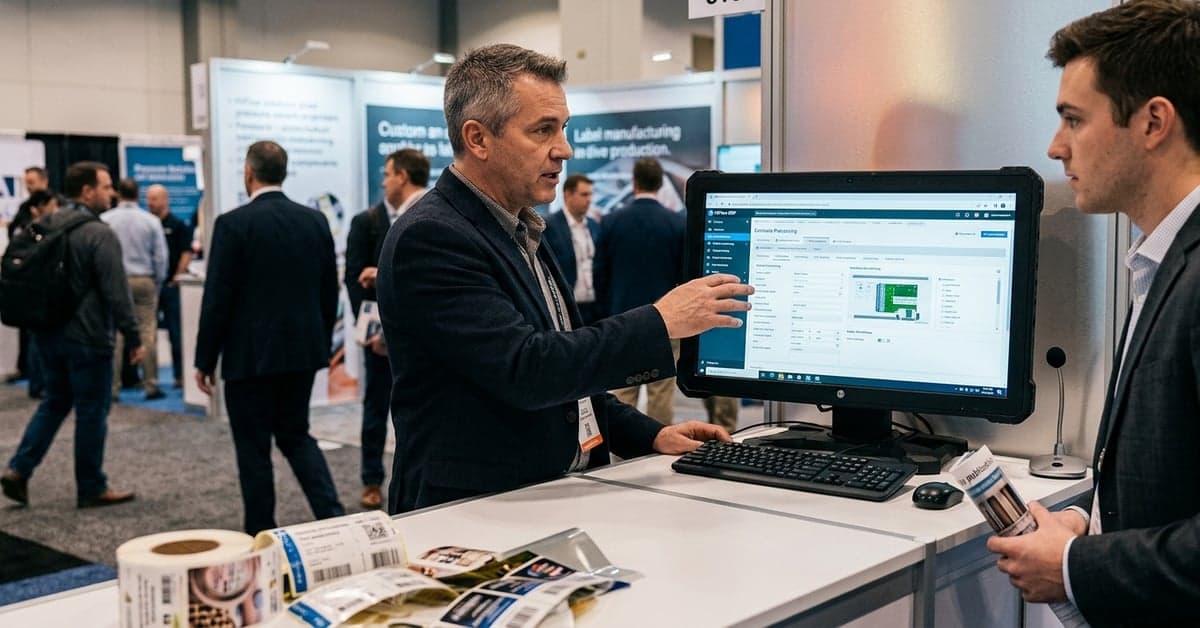
September 15–17, 2026 in Chicago, HiFlow Solutions plans to demo six live AI workflows and a conversational agent inside its HiFlow ERP at LOUPE Americas, Booth 3131, according to WhatTheyThink. The company is pitching an all‑in‑one system for label and flexible packaging producers that connects estimating, orders, production, warehouse, and analytics under one roof.
Where HiFlow ERP puts AI to work
The announcement highlights AI running inside six day‑to‑day workflows for converters: Estimate Processing, Order Processing, Supplier Delivery Processing, Supplier Price List Update Processing, BOL Processing, and AP Processing. Each sits where keystrokes and handoffs pile up. Bills of lading drive shipping accuracy and claims; BOLs are often retyped from PDFs. Accounts payable can bog down on mismatched line items and short pays. Supplier price updates ripple across costs and quotes. Automating those steps inside the system of record should mean fewer clicks, fewer copy‑paste errors, and faster cycle times.
That focus matters. Many shops are fighting more SKUs and shorter runs at the same time they face hiring gaps on the office side. Industry analyses have documented how SKU growth strains planning and replenishment; the same dynamic squeezes prepress and admin in converting. AI that quietly strips out clerical work from those chokepoints is more likely to lift margins than another shiny demo that never reaches production.
Why AI inside ERP matters for label plants
Plenty of tools promise OCR, data extraction, or quote assistants. The practical win is when those smarts live where permissions, audit trails, and master data already sit. An embedded approach avoids yet another swivel‑chair integration and reduces shadow spreadsheets. It also makes exception handling clearer: when a delivery notice is incomplete, the ERP can route it to the right queue, log the touch, and learn from the correction.
That’s the pitch HiFlow is taking on the LOUPE stage. The company says its platform is designed to expand with new equipment, sites, and product lines rather than become a constraint. If the AI pieces inherit that design, converters get one place to manage skills, roles, and changes. That aligns with how “intelligent ERP” is framed by analysts as AI working natively across core processes, not tacked on as a bot. For readers comparing models, Gartner’s glossary on intelligent ERP is a helpful primer on what to expect from modern suites.
The inclusion of a conversational AI agent could help pull more value from data already living in the system. A sales rep asking, “Show all open quotes for SKU families above 5,000 units,” or a scheduler asking, “What orders will miss ship date if press 3 goes down?” sounds compelling. It’s also where guardrails are essential. NIST’s Generative AI Profile lays out risks like false confidence and stale context—problems that get expensive when a chatbot’s answer triggers a production change.
Questions converters should ask at LOUPE
Press‑release promises are easy. Show‑floor questions separate workable automation from theater. If you’re heading to Booth 3131, bring a short list:
- Data in, data out: What formats can the AI read for BOLs, invoices, and price lists (PDF, EDI, email, portal scrape)? How are mappings maintained?
- Accuracy and exceptions: What share of documents post straight‑through in live customer plants? How are exceptions queued, and who tunes the models?
- Supplier updates: When a supplier changes a price catalog mid‑quarter, how fast does it roll into estimating, and how are downstream quotes flagged?
- User in the loop: Can operators approve, edit, and teach the system without opening tickets? Is there a clear audit trail for every automated post?
- Security and roles: Do AI features respect existing ERP permissions? How are sensitive fields masked in the conversational agent?
- Cost model: Is pricing per seat, per document, or both? What are the overage fees during seasonal spikes?
- Change management: What training is included for estimators, CSRs, and AP clerks? How long does it take to go from pilot to plant‑wide use?
- Integration: How does it connect to presses, finishing, and QA systems already on your floor? Any certified interfaces or only custom work?
AP teams can benchmark gains by tracking touches per invoice and first‑pass yield before and after rollout. Groups like APQC publish widely used definitions for AP automation measures. A similar discipline helps in estimating: measure quote turnaround time and quote win rates, then see whether automation moves either number in 90 days.
Inside the six workflows: where value likely shows up
Estimate Processing: Intake speed is money when runs are short and frequent. If AI can extract specs from emails and attachments with fewer misses, reps quote faster and waste less prepress time on rework.
Order Processing: Converting order text into clean jobs reduces misprints and back‑and‑forth with customers. Look for strong validation against item masters and die libraries.
Supplier Delivery Processing: The lag between a supplier notice and a scheduler’s plan often means idle time. An AI‑read delivery notice that updates material availability in minutes, inside the ERP, helps planners pick the right jobs for the right window.
Supplier Price List Update Processing: Frequent updates make manual maintenance risky. Automated ingestion that ties directly into estimating and costed BOMs keeps quotes honest and margins intact when resin or ink prices swing.
BOL Processing: OCR is only part of the job. The system needs to match loads to orders, validate quantities, and raise flags on damage or shortages. Understanding what a bill of lading must contain helps you test a demo with real‑world documents.
AP Processing: Three‑way match and dispute handling decide how often you pay the right amount on time. Ask to see how the model handles partial receipts and price variances without routing everything to manual review.
What to watch after LOUPE to prove HiFlow ERP value
Demos inspire. Paychecks come from results. If you trial the system, define three targets before kickoff: hours removed from a named process, error rates on a named document type, and cycle time for a named queue. Then set 30‑, 60‑, and 90‑day check‑ins. A conversational agent should reduce time to insight for routine questions; the document automations should trim touches. Treat every metric as a before/after comparison inside your plant.
Organizations wrestling with whether to pick suite or best‑of‑breed can keep an open mind. An embedded approach like the one HiFlow describes has the advantage of shared data models and single sign‑on. Best‑of‑breed may still win for niche steps. Your test is simple: which path removes more work with less babysitting?
HiFlow’s message at Chicago is that the whole‑operation approach beats bolt‑ons for the label sector. The real proof will come from production floors that see fewer clicks and cleaner data in the next fiscal quarter. If those six flows and the agent deliver that kind of work removal, HiFlow ERP will have earned attention beyond the booth. For more on this, see bloomberg.com and nytimes.com.
Context: HiFlow says its AI features will be shown live at LOUPE Americas 2026 in Chicago, Booth 3131, and that its platform links estimating, orders, production, warehouse, and analytics for labels and flexible packaging (WhatTheyThink).
Related reading: Copilot • OpenAI • Productivity & AI