
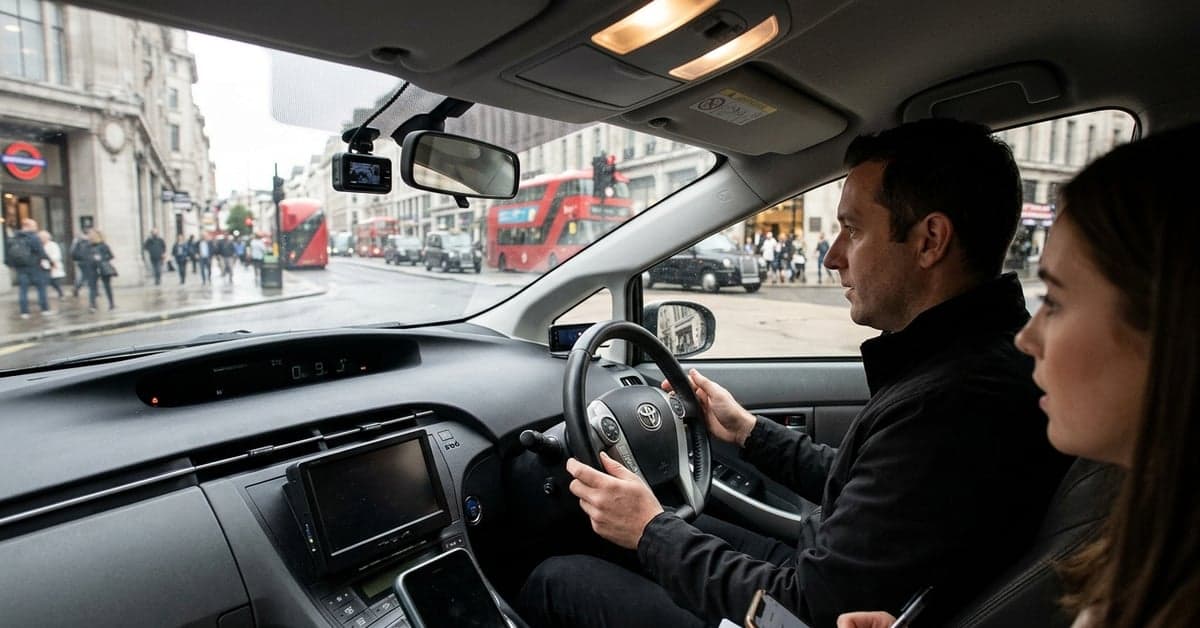
On September 3, 2026, BBC News Technology posted a ride-along in a self-driving Uber around London, alongside a report billing it as the UK’s first “robotaxis” with a driver. The footage shows the car handling streets on its own while a human stays at the wheel. The headline-grabber is clear; the subtext is bigger. London is entering an autonomous era by design, not by hype, and the person in the seat is the bridge between a demo and a service.
What the self-driving Uber London demo actually proved
According to BBC News Technology, the test ride ran with on-board autonomy but retained a trained operator in the driver’s seat. That’s not a fudge. It’s the configuration regulators expect during early urban trials. The car demonstrated lane-keeping, negotiating traffic, and responding to signals without visible driver input, which is what the BBC’s reporting set out to show: current capabilities on public roads, under supervision.
Two paired items on the BBC’s technology feed—one a ride video and another explaining what it’s like inside—frame the moment well: the engineering now handles routine street driving, and the public can see it work in familiar neighborhoods. The remaining gap is legal authority and operational evidence, not whether the software can follow a bus lane or yield to a crossing. That’s why the human stayed put.
Why a safety driver is still required under UK rules
Britain’s policy has been to greenlight testing while keeping a human in charge until the next regulatory phase begins. The government’s Code of Practice for Automated Vehicle Trialling sets expectations for risk assessments, remote monitoring, and clear lines of control during pilots. A trained operator can take over instantly, which is the core safety backstop for city trials like this.
The broader change is already on the books. The Automated Vehicles Act 2024 establishes the regime that will let genuinely self-driving vehicles—ones that do not rely on a human to be legally in charge—operate when they meet a defined safety threshold. Until that regime is in force and a vehicle is authorized under it, companies must run with safety driver rules, which is precisely what Londoners saw in the BBC’s video. The self-driving Uber London trial is a compliance move, not a workaround.
The Act also sketches who is responsible for what. Once a system is approved as self-driving, the legal “user-in-charge” concept shifts liability away from a passenger and toward the company operating the automated system, backed by insurance. The Association of British Insurers has already welcomed the clarity, because clear accountability is the precondition for mass-market cover.
From demo to service: the economics behind the driver seat
Keeping a trained human in every car is safe and sensible during trials, but it limits scale and economics. A supervised pilot can prove capability and gather data; it cannot deliver the price or availability change many associate with autonomy. Operators know this. The short-term goal is to build an evidence base—interventions per mile, edge cases catalogued, system performance in rain or at night—that unlocks authorization under the new law. The longer play is to transition from an on-board safety driver to remote oversight, where one person can monitor multiple vehicles, but only after the legal and technical thresholds are satisfied.
That means the right question for London is not “Why is there a driver?” but “What does the driver presence tell us?” It shows the company is testing in the environment where it intends to operate, under the same expectations Transport for London applies to licensed services. It also signals a bid to build public trust by letting media ride, rather than pitching autonomy as a black box. In other words, the self-driving Uber London pilot is part safety case, part social license.
Regulatory timing: how the AV Act shapes the next 12–24 months
The Automated Vehicles Act 2024 sets the structure for approvals, safety standards, and enforcement. Bringing that framework to life requires secondary regulations, a functioning authorization process, and a regulator with the power to demand logs, pause operations, or require software updates when risk indicators spike. Policymakers have flagged 2026 as the start of meaningful deployment, which aligns with companies running supervised trials today.
Expect three steps before driverless rides are common: first, more supervised routes at broader hours to test operational design domains; second, limited driver-out pilots in tightly defined areas once authorization begins; third, gradual expansion based on real safety metrics rather than marketing milestones. The trialling code remains the backbone until approvals under the Act take over, and both point to staged growth, not a flip of a switch.
What it means for riders, drivers and the city
For riders, the short-term experience is curiosity and continuity: you can book a ride that largely drives itself, yet a professional still sits up front. Fare structures will look familiar during this phase. For professional drivers, today’s supervised deployments create new roles—safety operators and trainers—while the longer-term picture depends on how quickly remote supervision becomes viable and how TfL scopes any conditions on self-driving fleets as licensed services.
For the city, the prize is safer, more predictable traffic flow if authorized systems consistently beat human baselines on collisions and near-misses. That’s the standard the AV Act envisions: performance that is “as safe as a careful and competent human driver,” with a regulator empowered to intervene when data shows drift. The business case will follow the safety case. Until then, the self-driving Uber London tests are about gathering proof, not replacing people.
BBC’s decision to ride along makes the progress tangible. The car did the driving; the human made it lawful. That’s where autonomy in London sits in September 2026. The next headline to watch isn’t a glossier demo. It’s the first authorization under the new regime that lets a service go driver-out on defined streets. When that arrives, the self-driving Uber London story shifts from spectacle to schedule. For more on this, see nytimes.com.
Related reading: AI in Education • Data Privacy • AI in Society